
Drywall Repair Services in Kent, WA
Repairs come first here, starting with water, the damage that gets more expensive the longer it waits.
Water-Damaged Drywall Repair
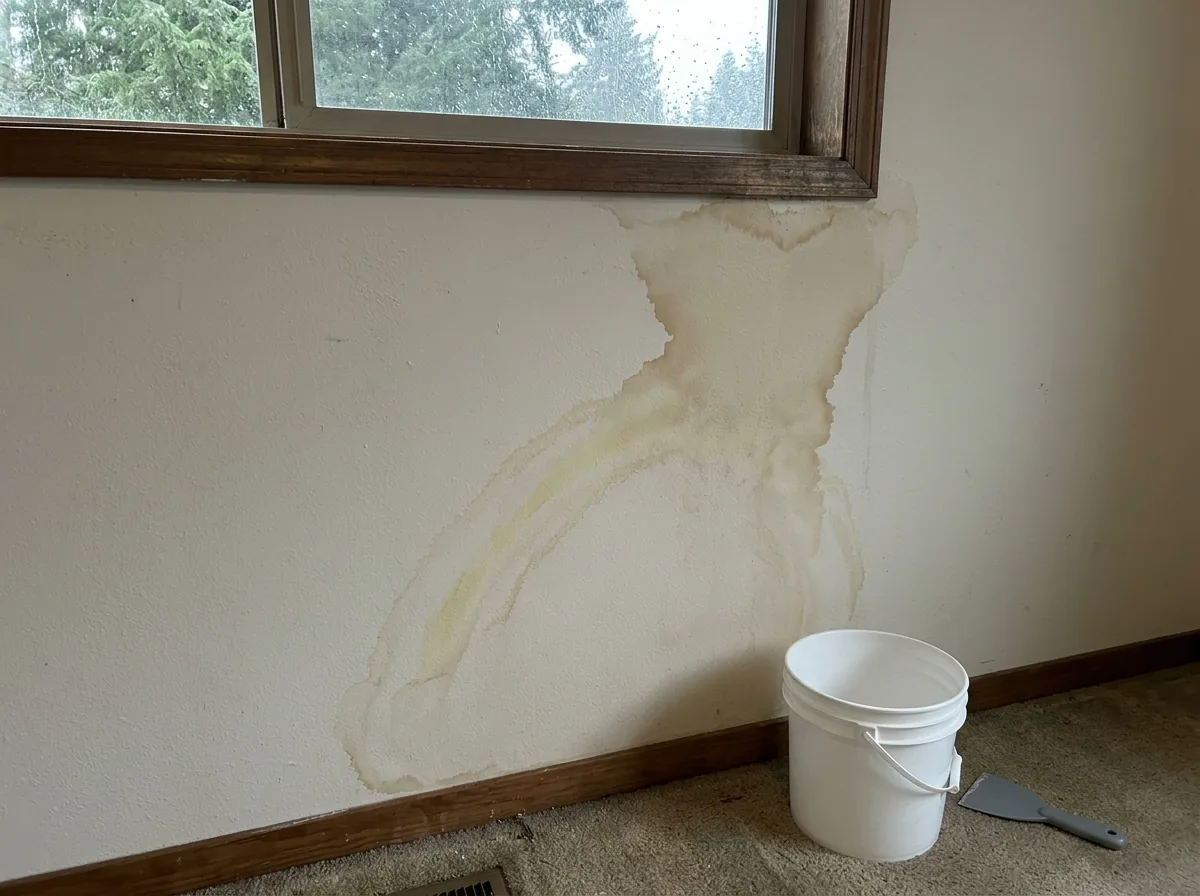
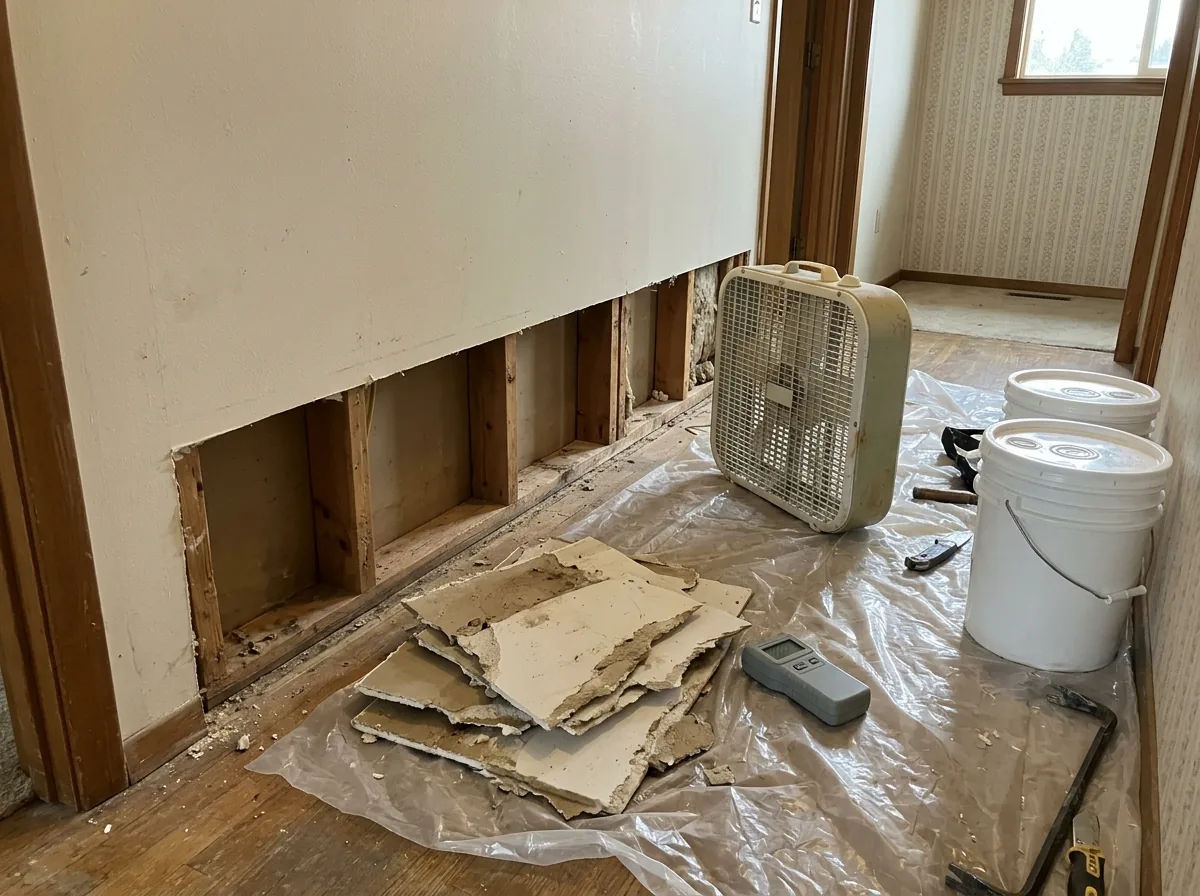
Wet drywall is a mold risk even when the front looks fine: EPA notes that mold can grow on the back side of drywall, out of sight. EPA's advice is to dry water-damaged areas within 24 to 48 hours. In practice that usually means cutting the wet board out in a straight line and letting the studs dry; ask how the contractor will confirm they're dry before new board goes in. HomeAdvisor puts water damage at $600 to $1,550, among the priciest drywall repairs because whole sections come out, and that's before the leak itself is fixed. Kent's rain comes in winter: SeaTac, the nearest NOAA station, records 6.31 inches of rain in an average November and only 0.60 in July.
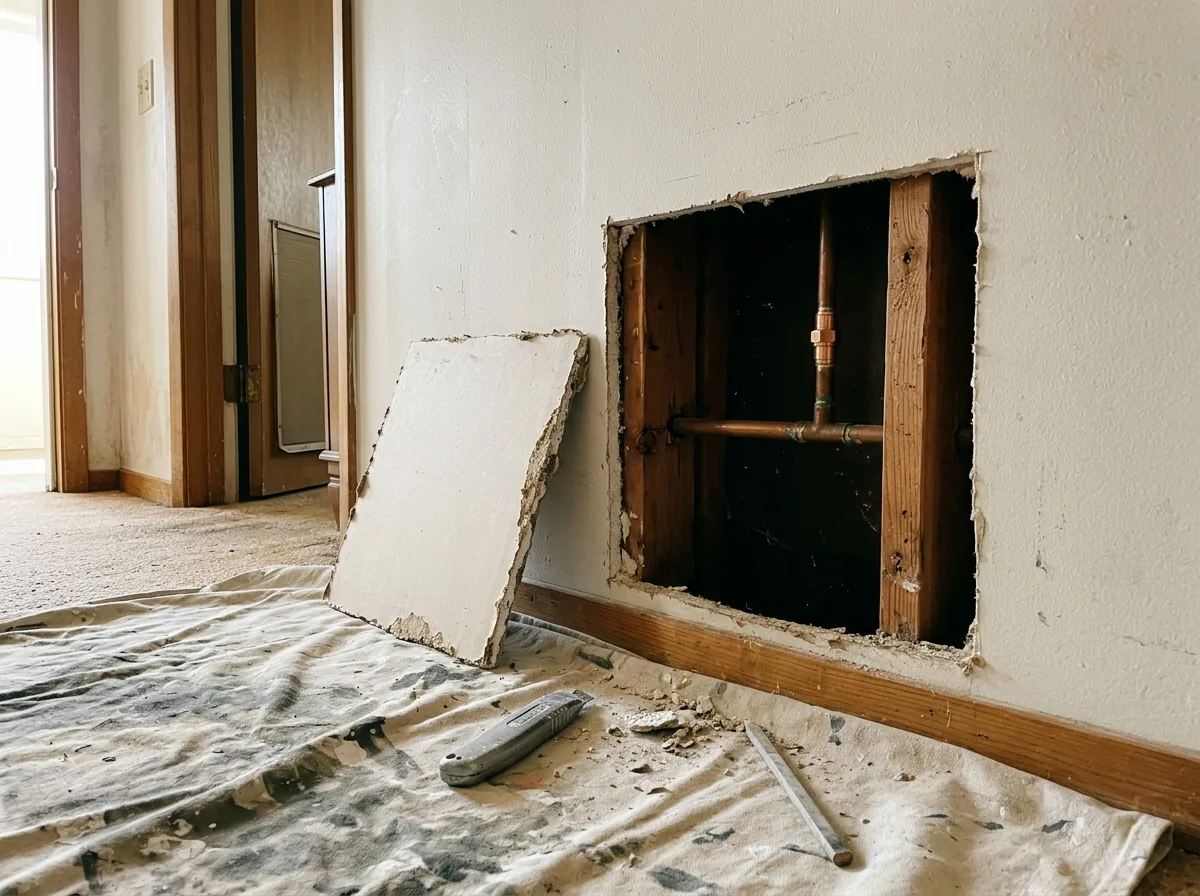
See drywall water damage repair for when a wet wall can stay and when it has to come out, or drywall repair after plumbing if a plumber has already opened it.
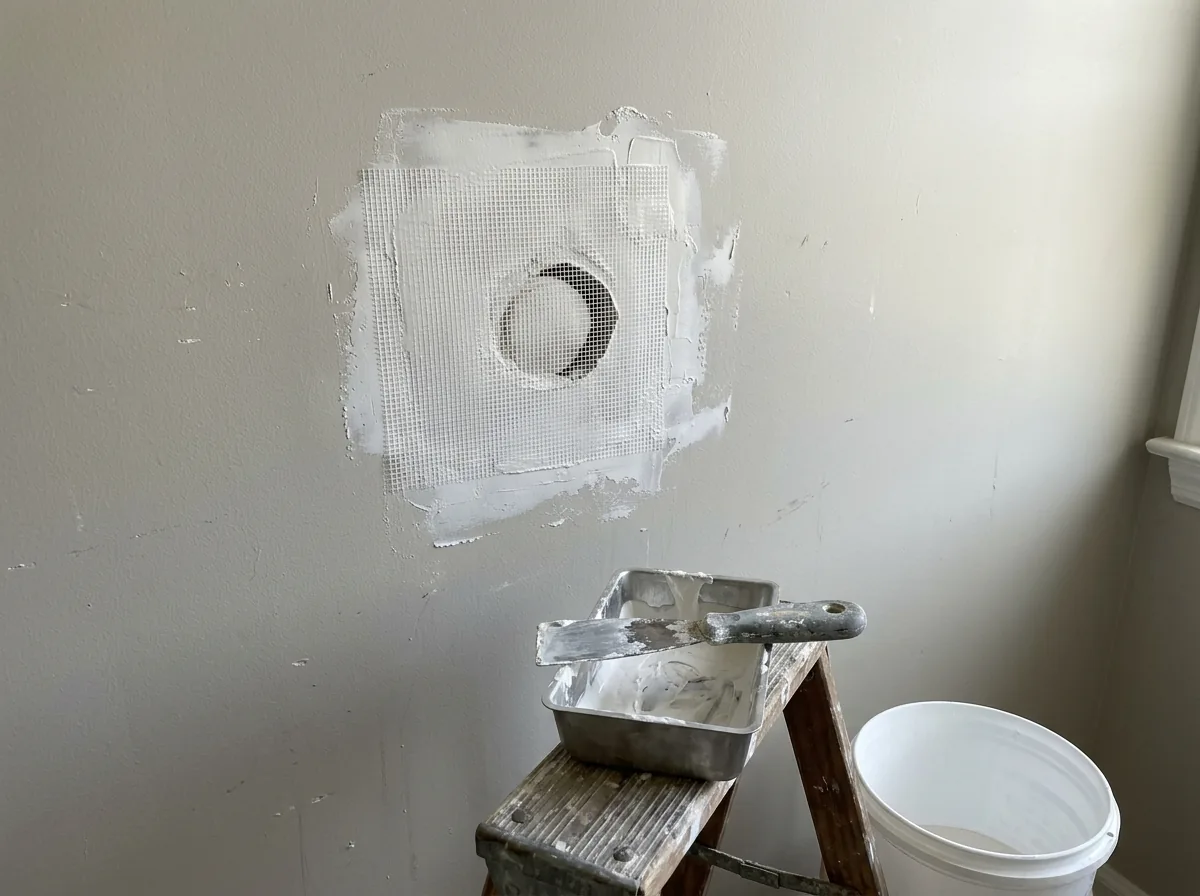
Hole and Crack Patching
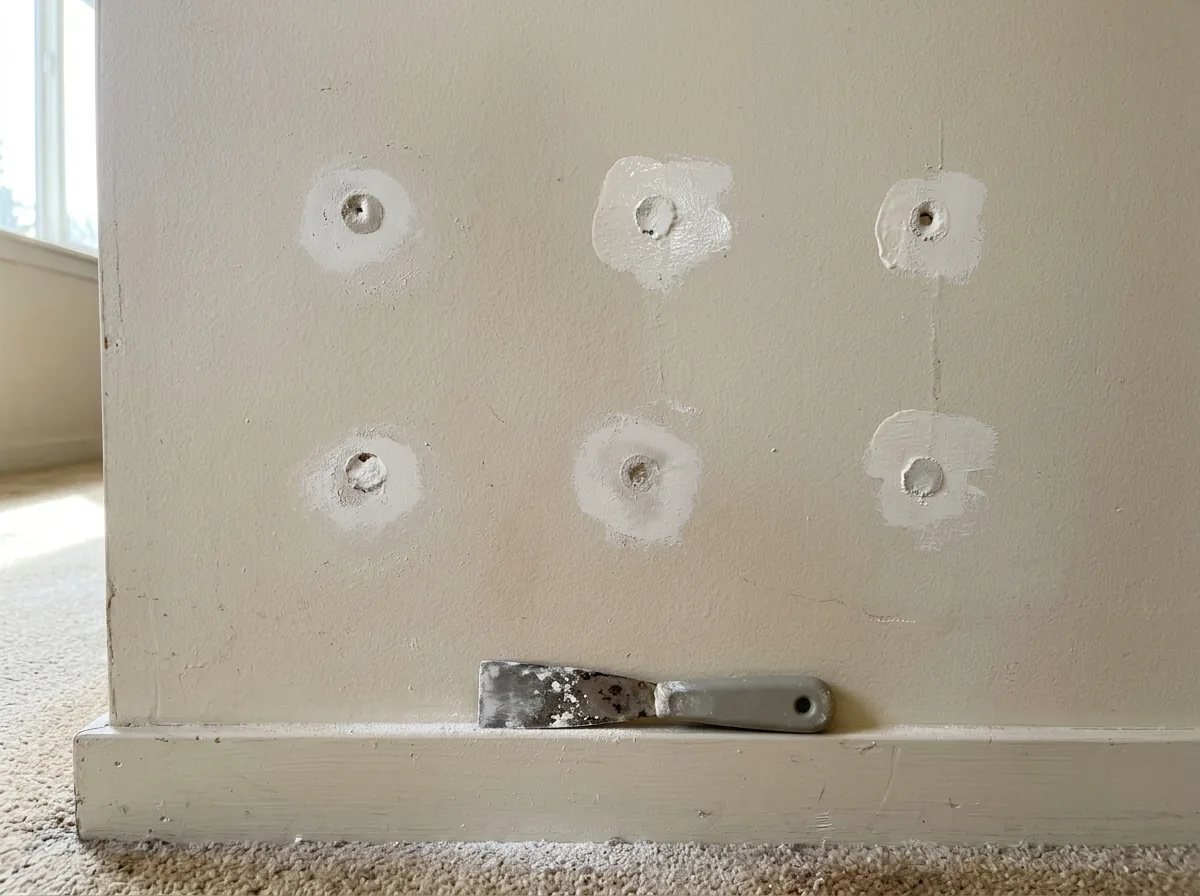
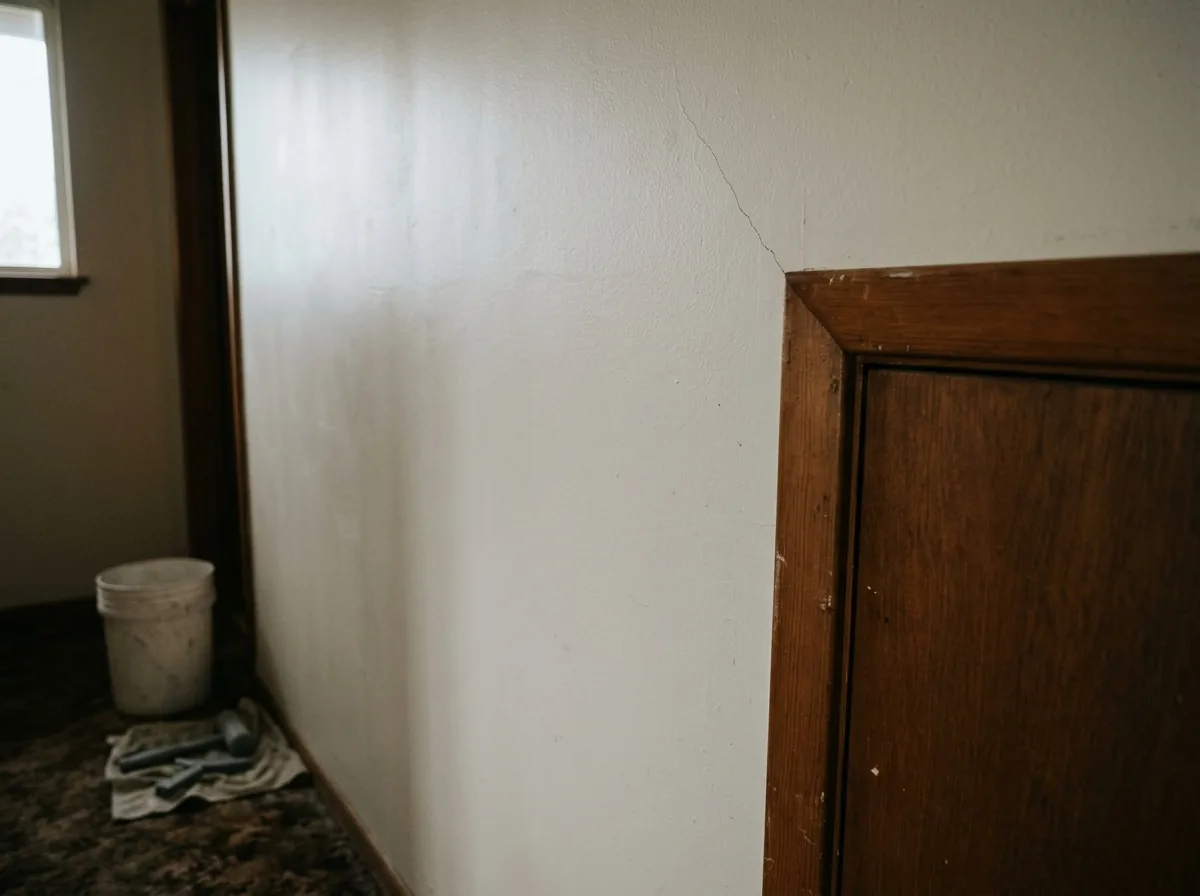
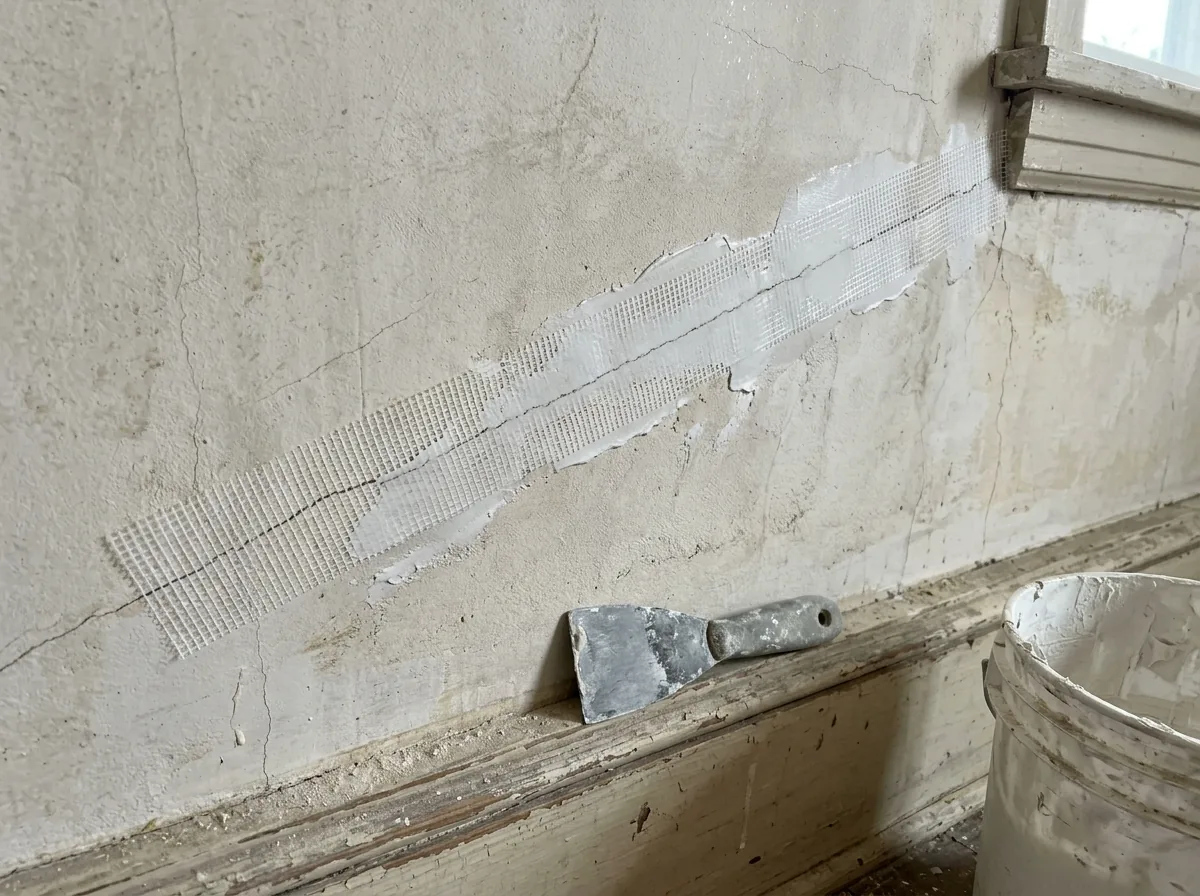
A doorknob hole, a torn anchor or a crack running off a door corner are the small jobs most houses collect over the years. Holes up to a few inches take a mesh patch or a "California patch" with its paper flange; anything bigger gets a cut-in piece screwed to backing. HomeAdvisor lists nail pops at $10 to $60 and cracks or chips at $60 to $400. Nail pops show up more in older houses, because newer construction is screwed off. A crack that comes back after it's been taped twice is usually telling you something moved, so ask why before paying for a third patch.
See drywall patching for patch types by hole size; older lath walls are on the plaster and lath repair page.
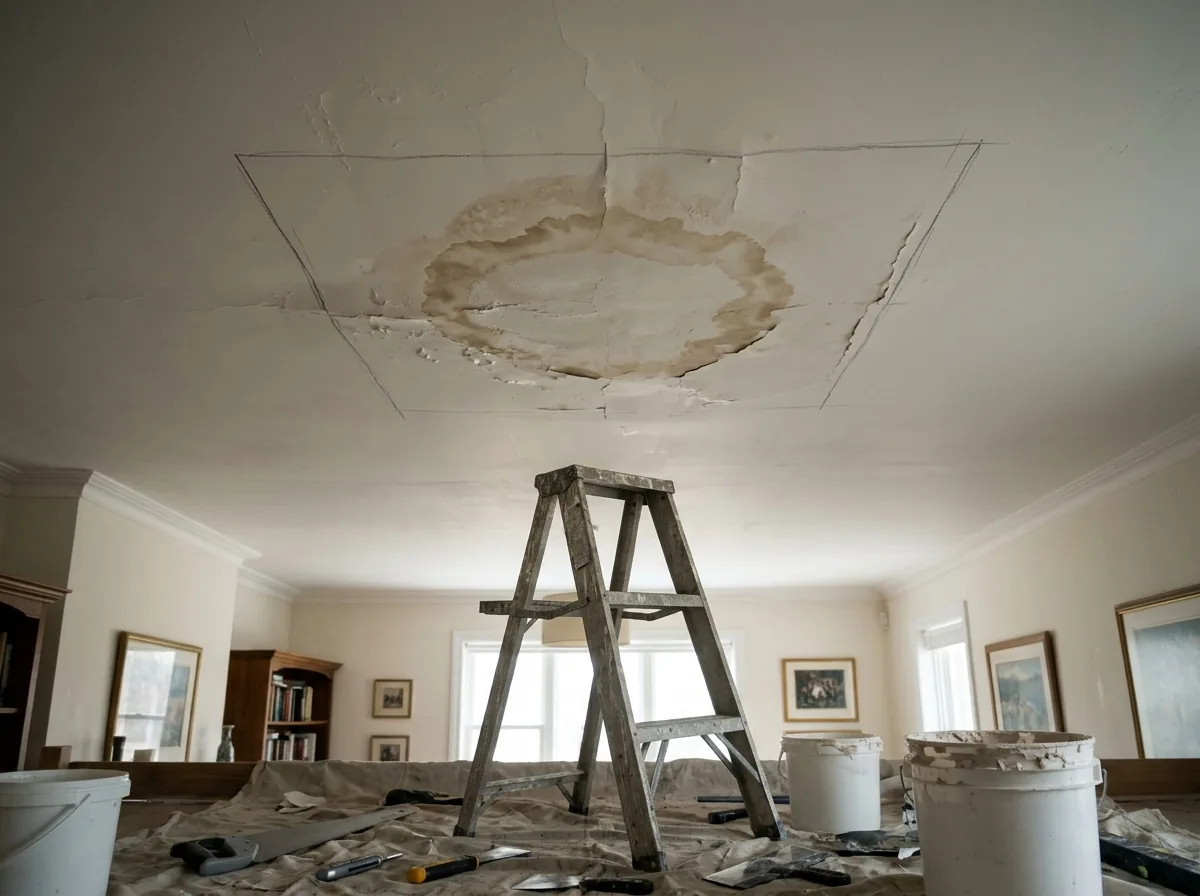
Ceiling Drywall Repair
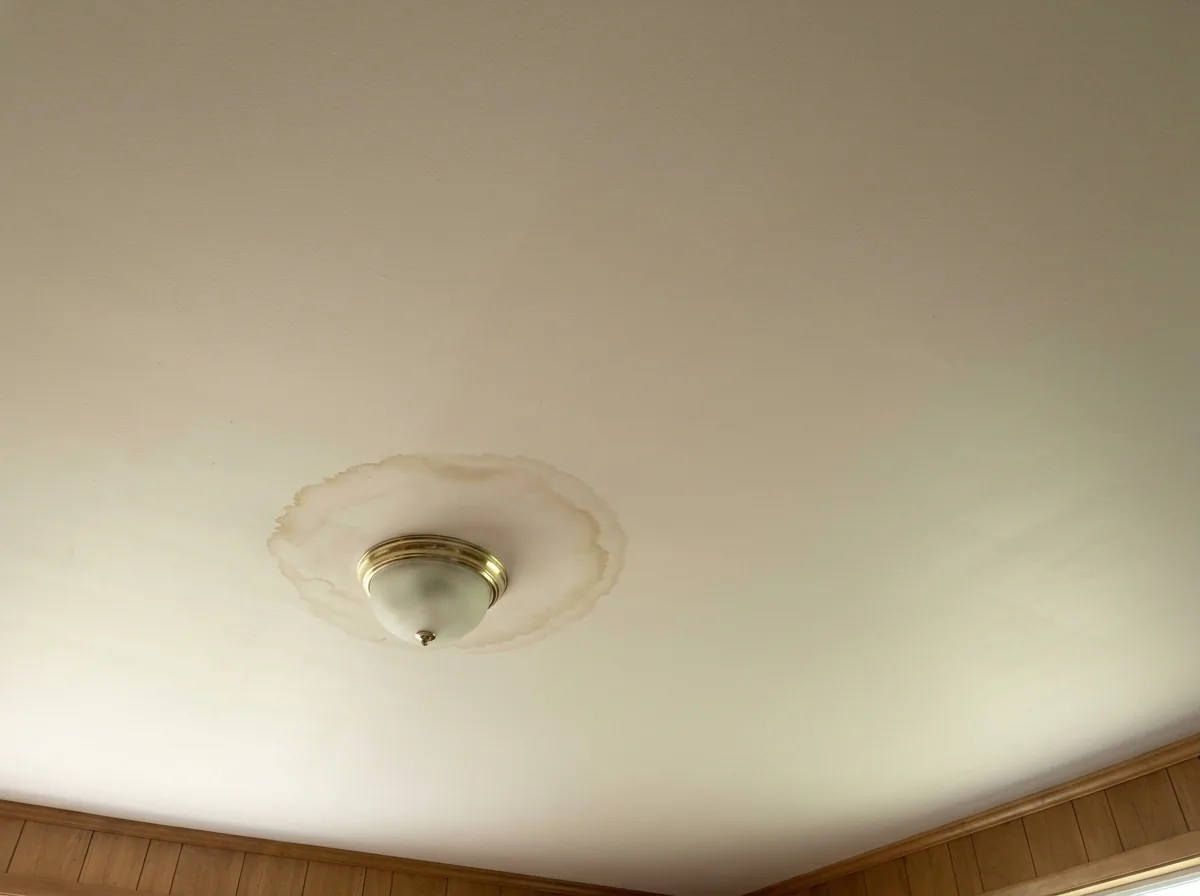
A brown ring on the ceiling under a bathroom or below the roof line usually means a leak above it, past or present. The fix is to find and stop the leak, cut out the stained board back to the joists, and set new board with taped seams. HomeAdvisor's ceiling page runs $439 to $1,718 for a professional repair, or $45 to $55 per square foot for drywall ceilings. Ceilings are slower than walls: every coat goes on overhead and a textured ceiling has to be blended over a wider area than the patch.
Ceiling water damage repair walks through a leak from stain to new board, and ceiling drywall repair covers sags, cracks and nail pops overhead.
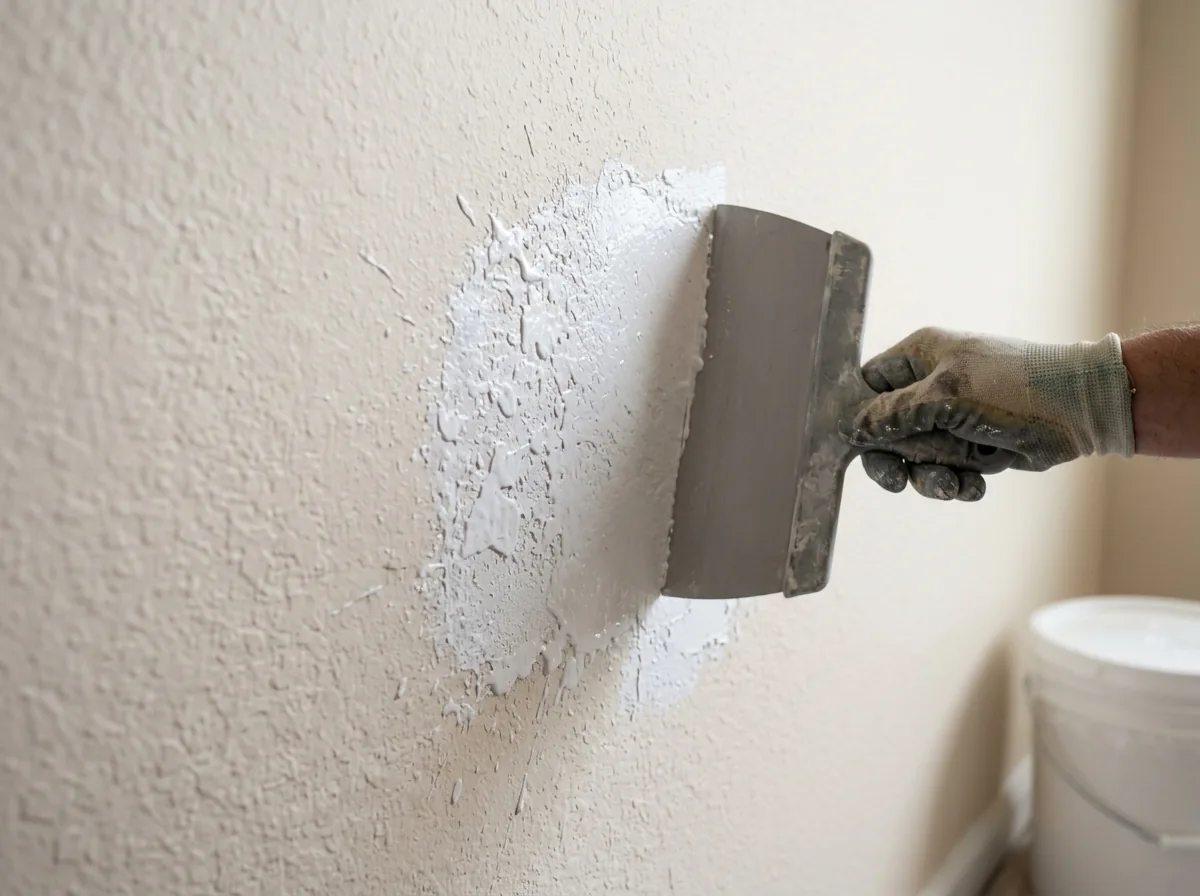
Texture Matching: Knockdown, Orange Peel and Smooth Walls
A flat patch on a textured wall is easy to spot from across the room. Orange peel is sprayed fine, knockdown is sprayed heavier and flattened with a wide knife, and hand textures are troweled. A good match starts on a scrap piece, not the wall. HomeGuide and HomeAdvisor both put texturing at $0.80 to $2.00 per square foot, with sprayed textures at the low end and hand work at the top. Some owners use a repair as the moment to go smooth: removing texture runs $1 to $3 per square foot, or $300 to $1,200 for a typical job, on HomeAdvisor's numbers.
More on matching each texture is on the drywall texture matching page.
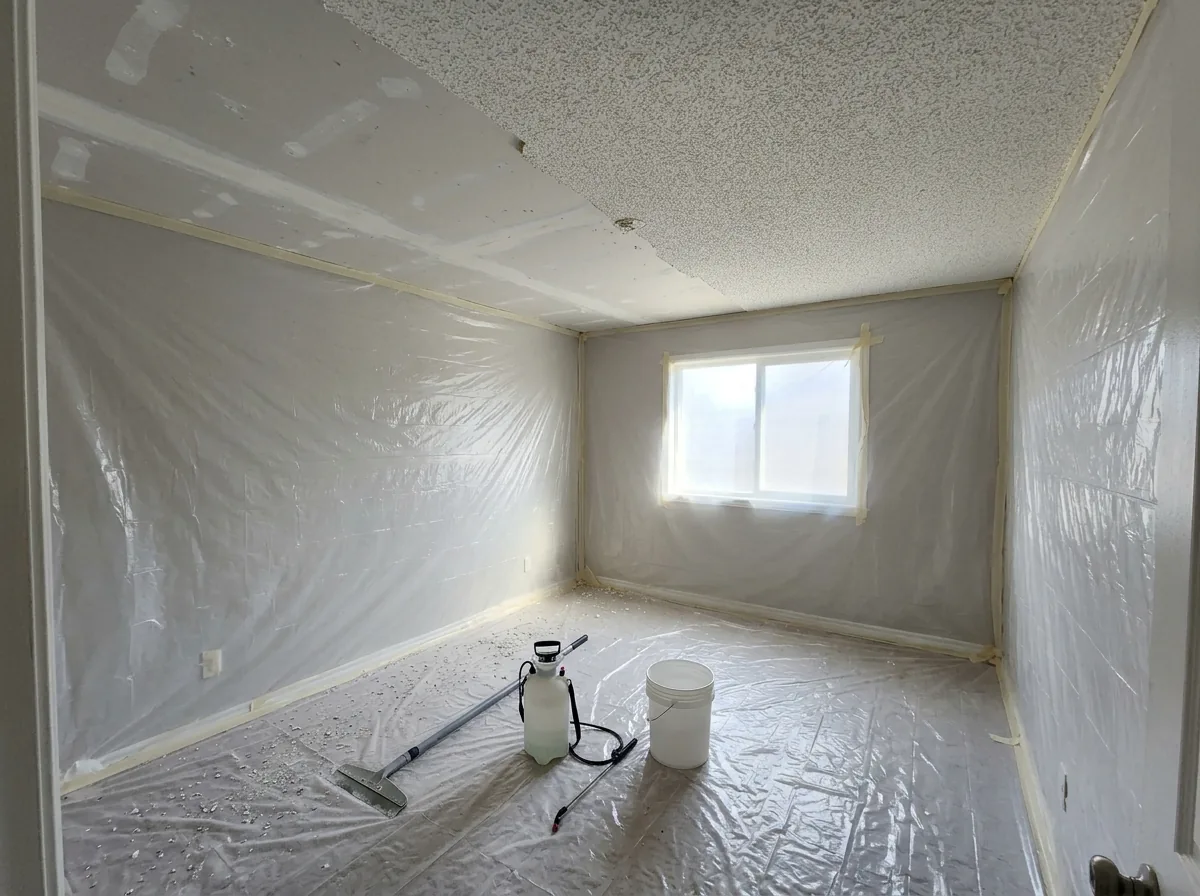
Popcorn Ceiling Removal
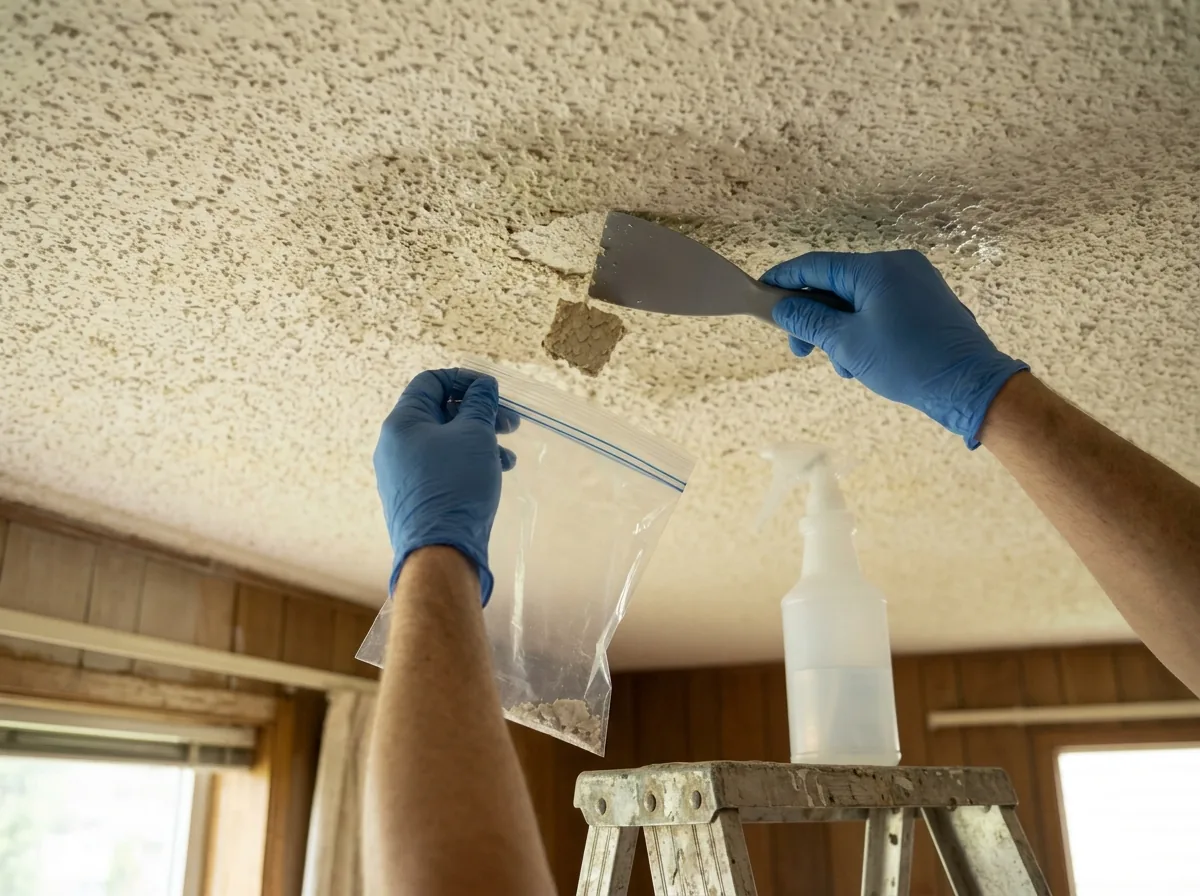
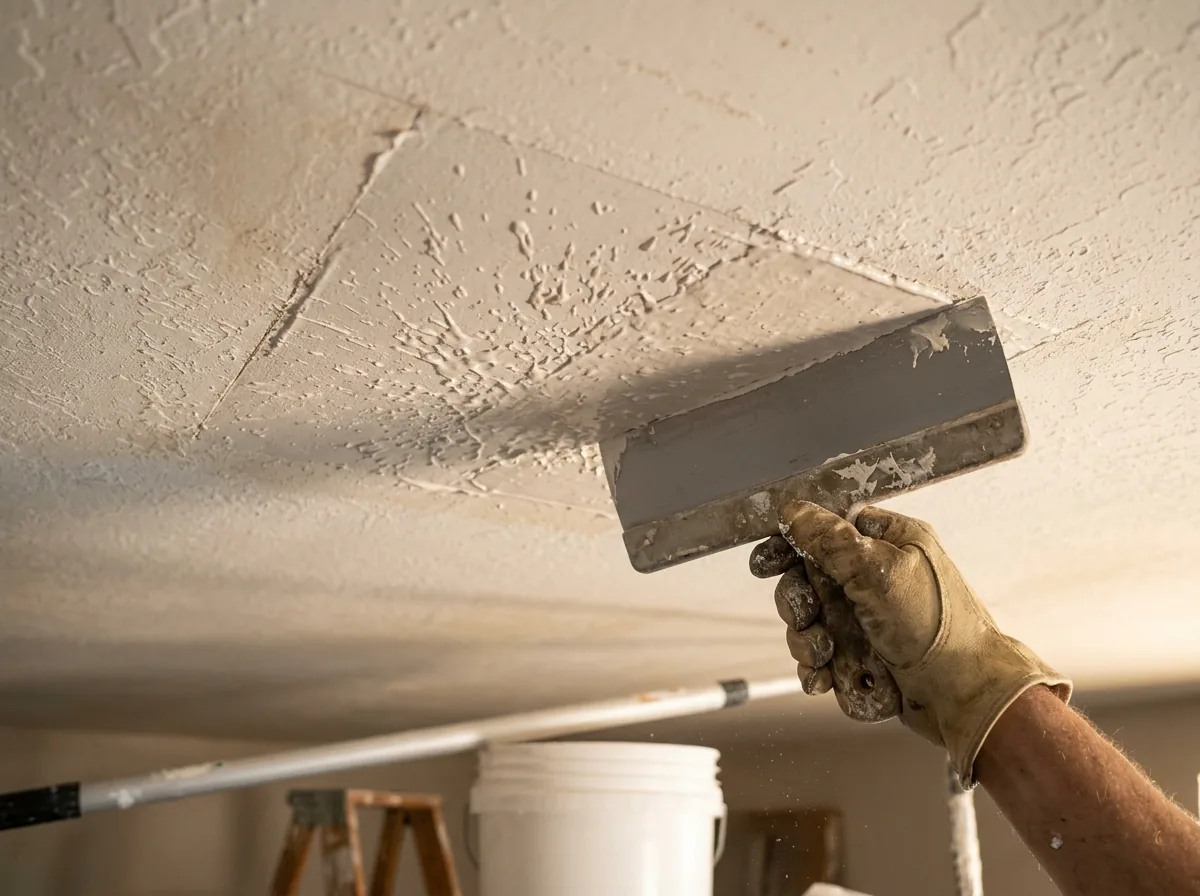
HomeGuide dates popcorn's heyday to the 1950s through the 1990s, and about 4 in 10 Kent homes were built before 1980 (Census ACS, 2020-2024). Before anyone scrapes, test it: the Puget Sound Clean Air Agency names spray-on popcorn among asbestos products (the survey rule is under older homes below). When the test comes back clean, the ceiling is misted, scraped, skimmed and painted. HomeGuide prices scraping alone at $1 to $2 per square foot and $2 to $6 with retexture and paint, over 1 to 5 days. A popcorn ceiling that has been painted over is harder to scrape, and one that got wet can come down in clumps.
See popcorn ceiling removal and retexturing for testing, scraping and the cover-over option.
Drywall Finishing and Skim Coating
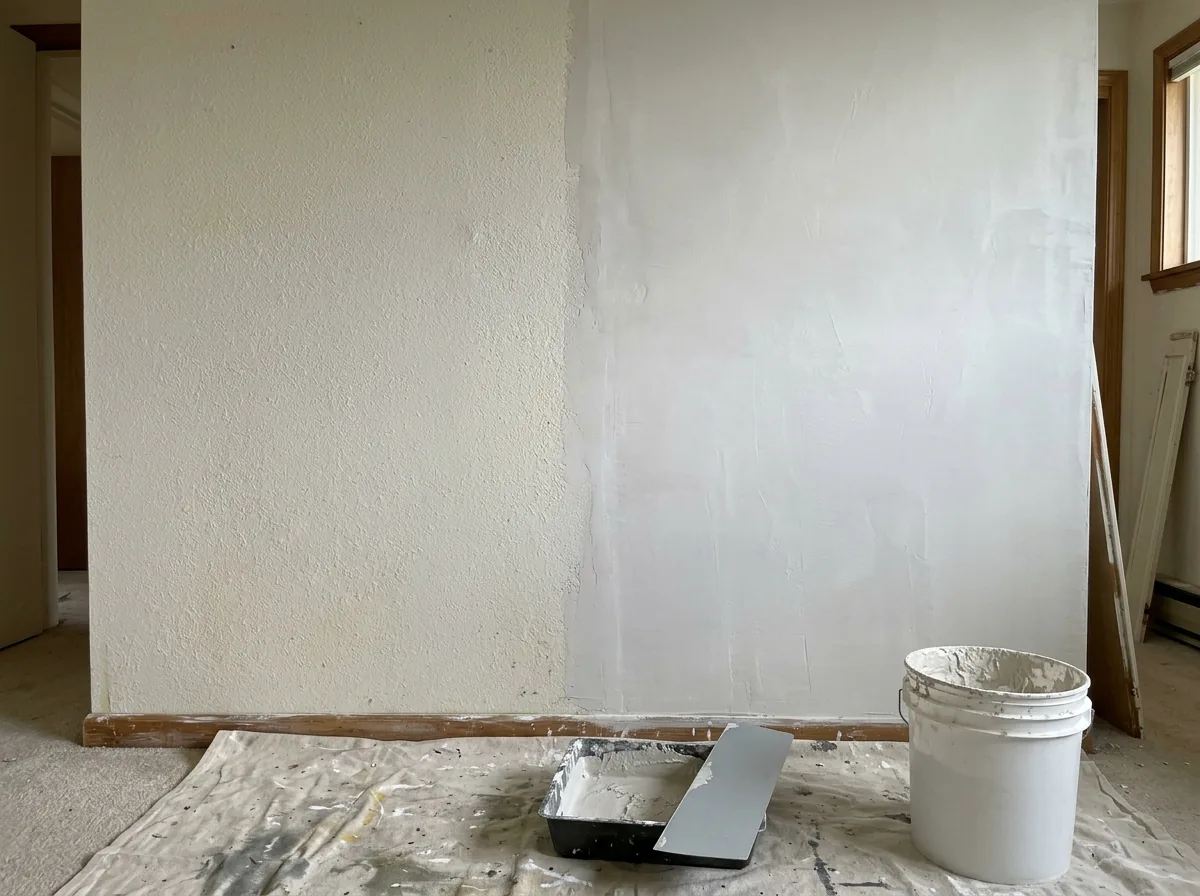
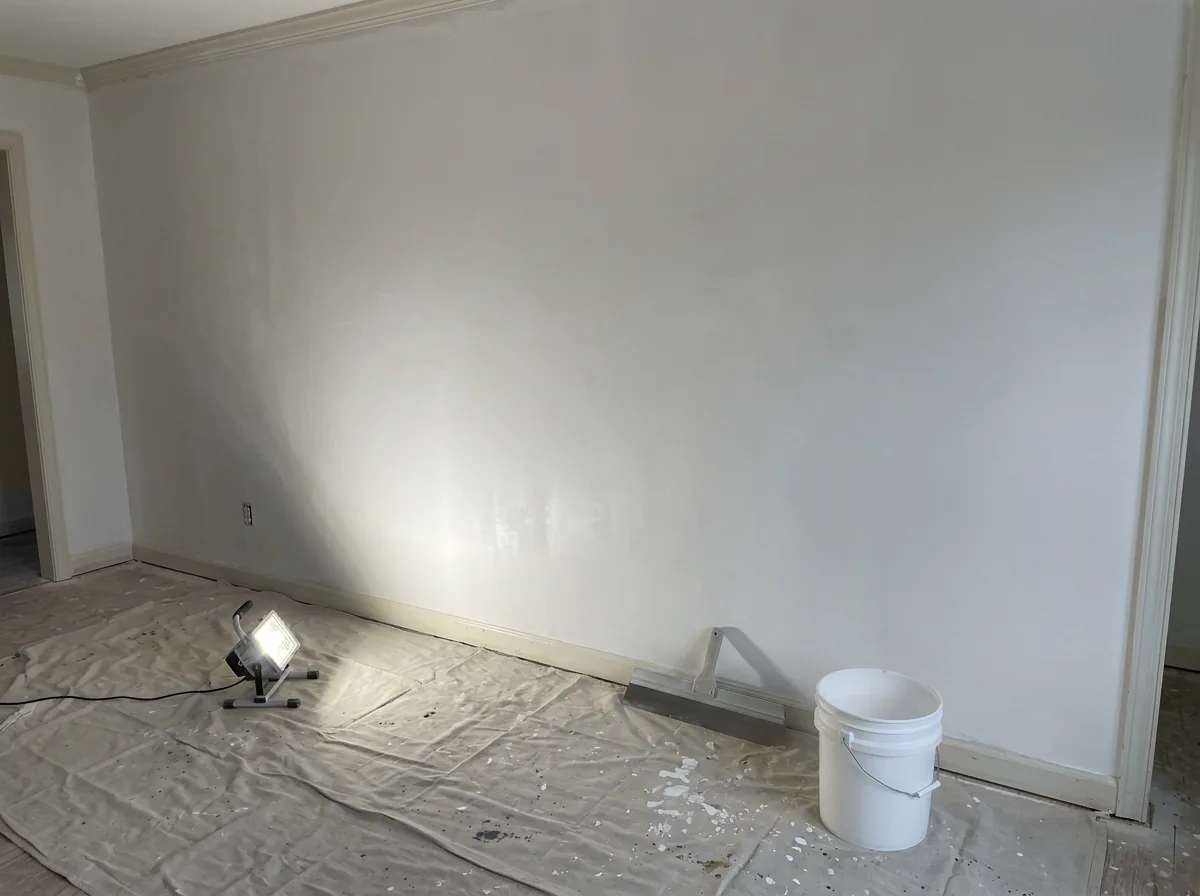
The Gypsum Association's GA-214 sorts finishing into Levels 0 to 5, and naming the level is the simplest way to compare two bids. Level 3 sits under medium or heavy texture. Level 4 suits flat paint and light texture. Level 5 adds a skim coat over the whole surface and is the one to ask for under glossy or dark paint, or on a long wall lit sideways by a window, where every seam would otherwise show. In HomeGuide's table, Level 4 runs $1.70 to $3.20 per square foot installed and Level 5 $1.75 to $3.50.
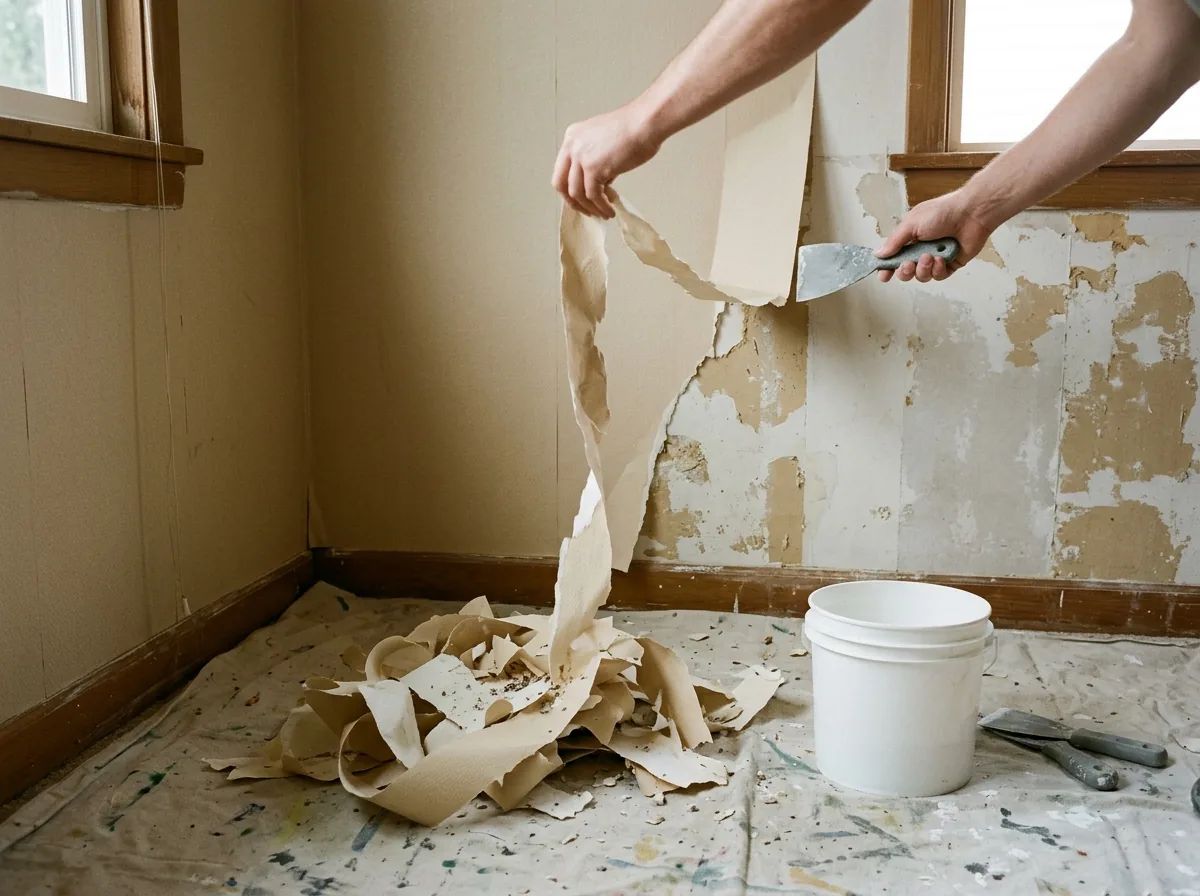
For tape and coats, read drywall finishing and mudding; skim coating and wallpaper removal and wall repair cover walls that need a fresh surface.
Corner Bead and Seam Repair
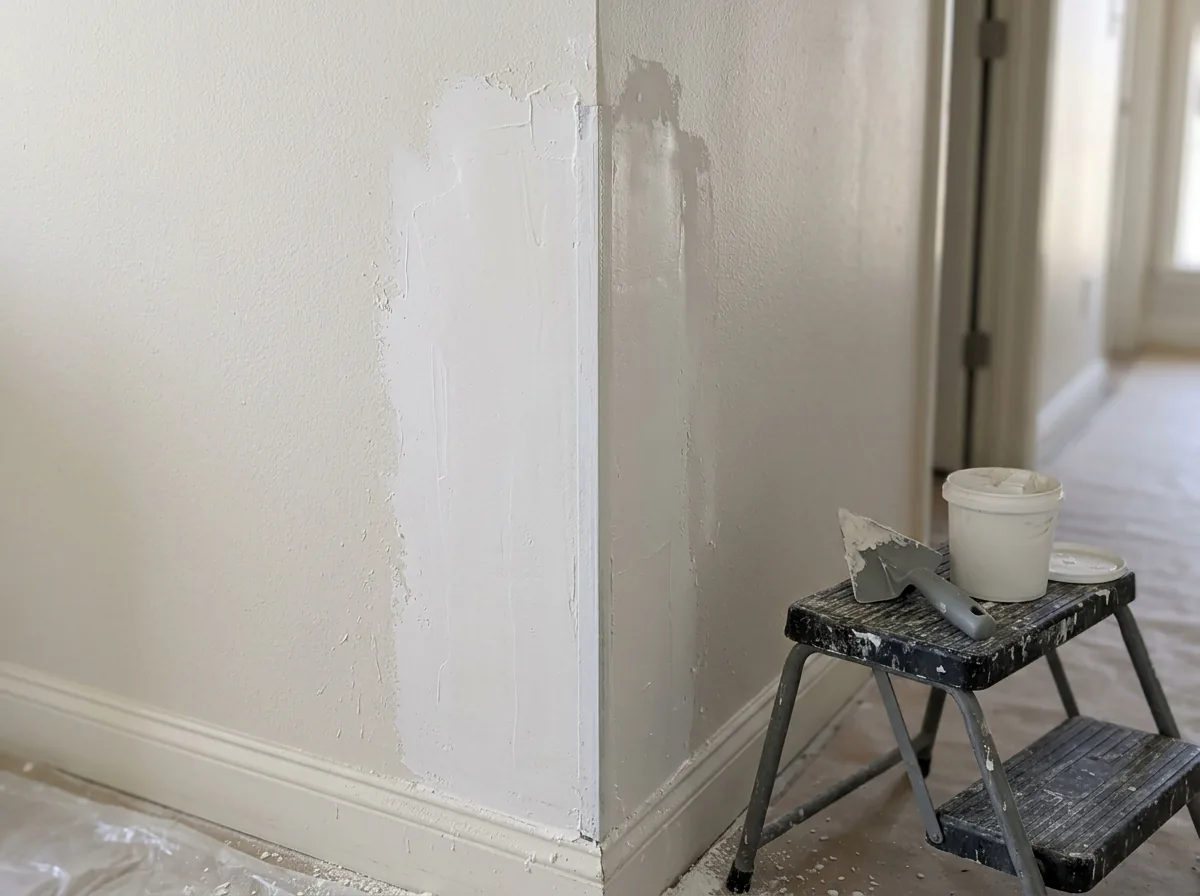
Outside corners take every hit from a vacuum or a moving box, and dented or cracked metal bead doesn't straighten well. The fix is to cut out the damaged run, fasten new bead and feather it out over three coats. Bubbled or peeling tape along a seam is a related job: the loose tape is cut out and re-embedded. USG's own instructions call for at least three coats over fasteners, corner bead and inside corners. HomeGuide lists settling, humidity swings, poor installation and foundation movement as the usual causes when cracks keep coming back.
Recurring cracks, popped fasteners and bubbled tape have their own page: drywall crack repair.
Mold-Damaged Drywall Replacement
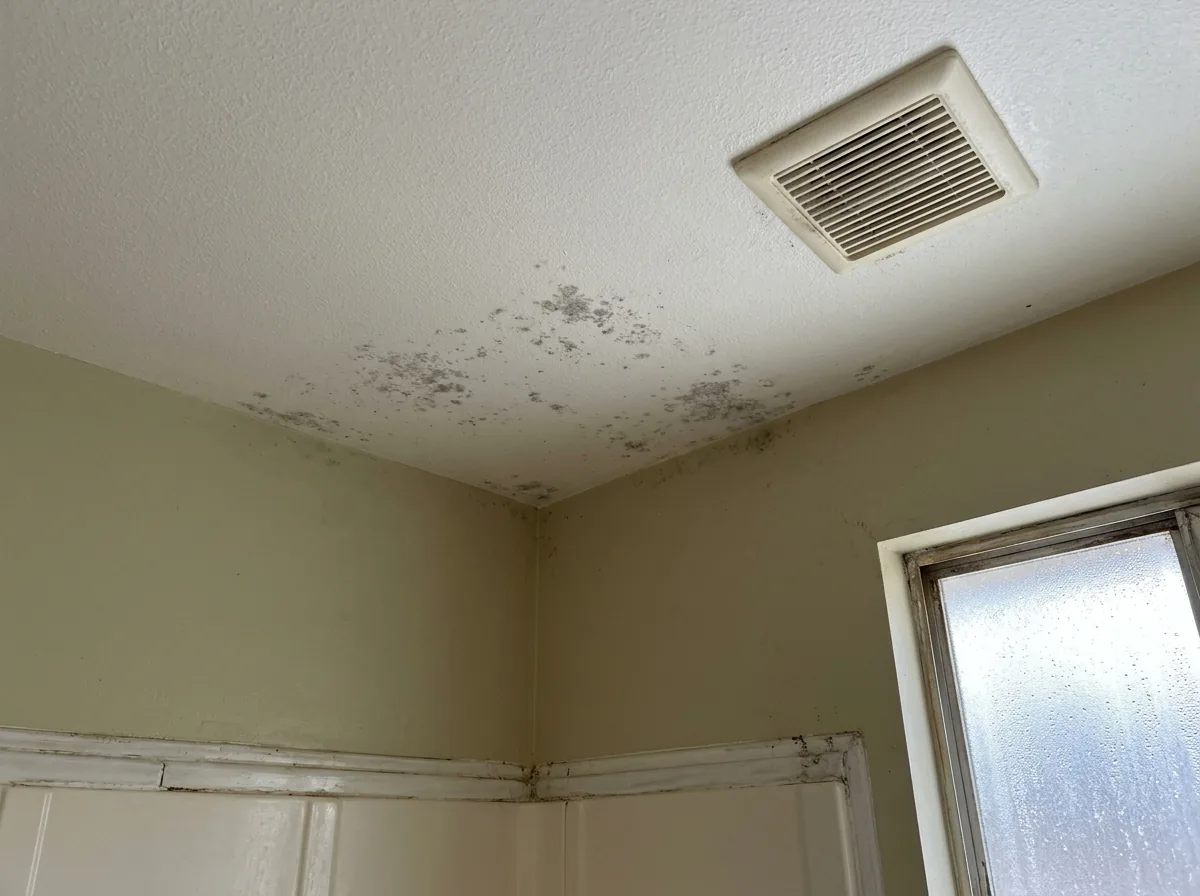
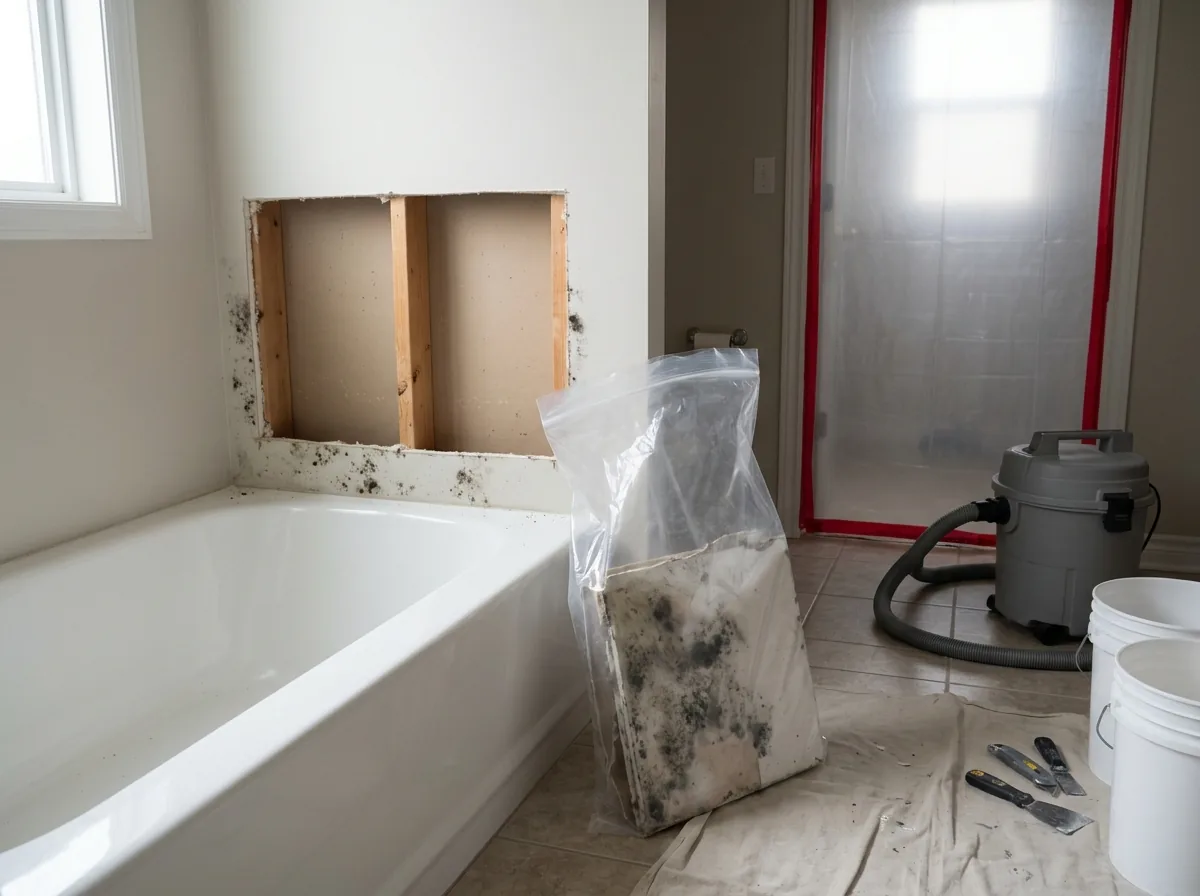
Because drywall soaks up water, a moldy section is usually cut out and replaced rather than scrubbed (EPA's guidance on absorbent materials is on the moldy drywall page). EPA's line is about 10 square feet, roughly 3 feet by 3: smaller patches a homeowner can usually handle, larger ones call for EPA's remediation guidance. Mold may also sit on the back of the board, so ask for the cut to be opened past the visible spots. The replacement board in a bathroom or basement is usually moisture- or mold-resistant ("green" or "purple" board); Fixr puts it at $1.65 to $2.75 per square foot installed. Fix the humidity too: EPA advises keeping it under 60 percent.
See moldy drywall replacement for how far the cut usually goes and what goes back in.
Get a free drywall repair estimate in Kent
- Your request goes to one independent local drywall contractor, not a bidding list
- The referral is free, and booking is up to you
- Ask for the finish level, texture and paint as separate lines
- Check L&I registration and bond before work starts
- Keep the deposit small and pay as the coats are finished
New Drywall Installation in Kent
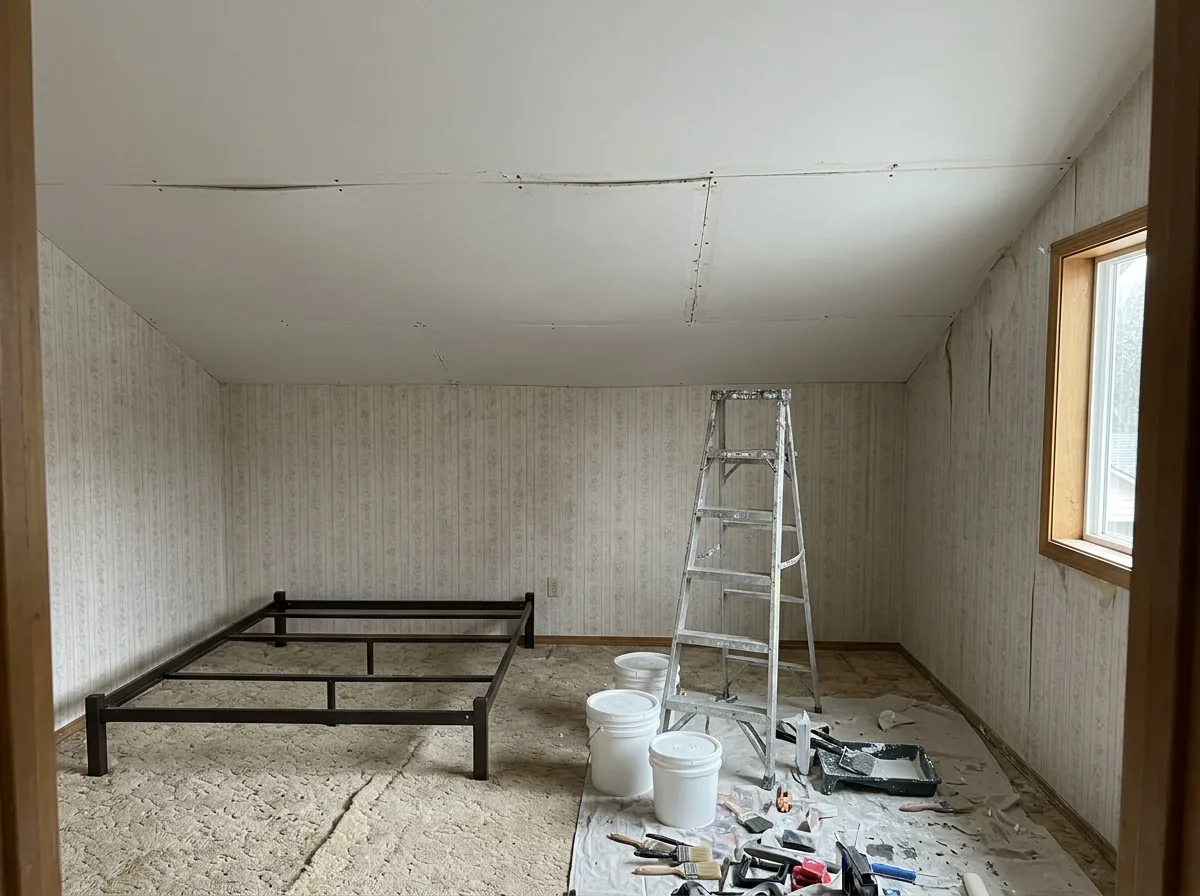
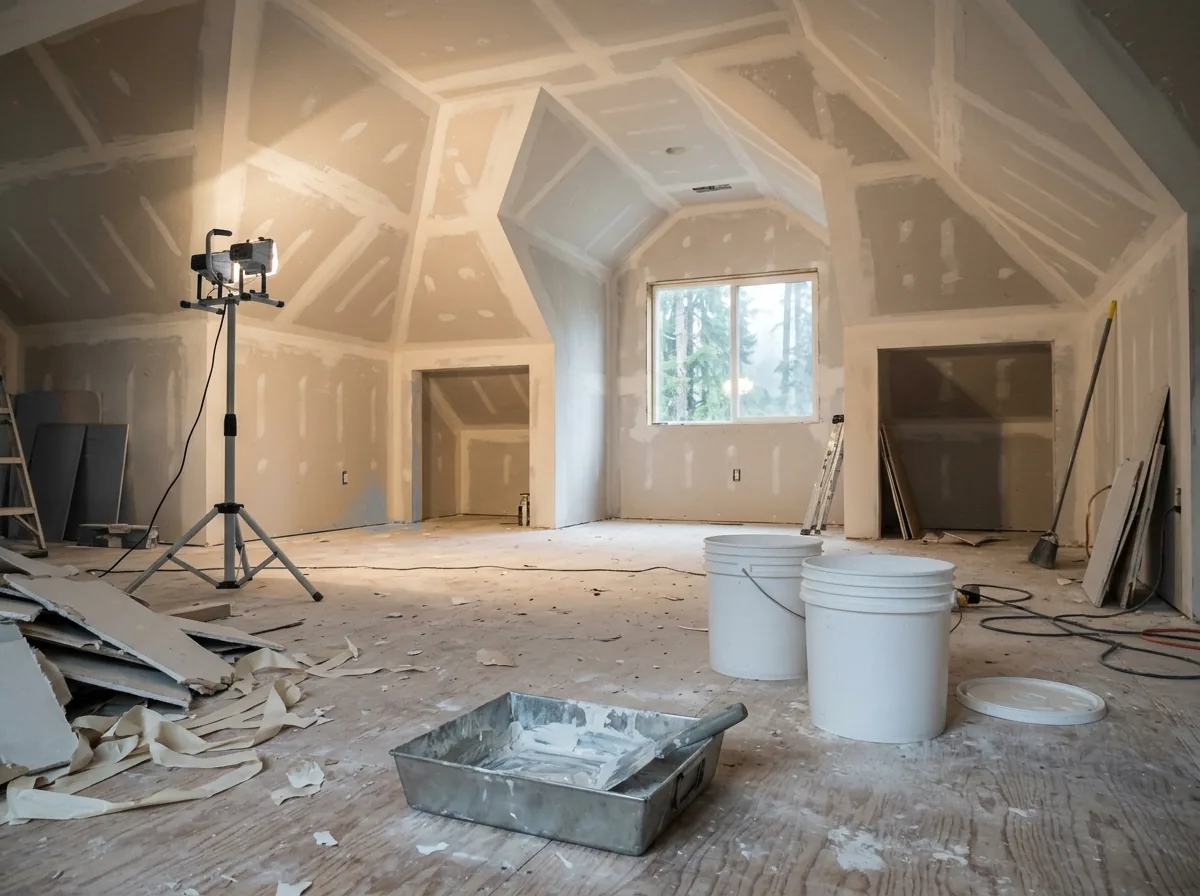
New board is priced by the square foot and by the finish. HomeGuide's range is $1.50 to $3.50 per square foot of wall, or $30 to $70 a sheet hung, taped and finished, and it says most homeowners spend $1,000 to $3,000. HomeGuide gives 1/2 inch and 5/8 inch as the standard thicknesses, and fire-rated Type X is usually the 5/8-inch board.
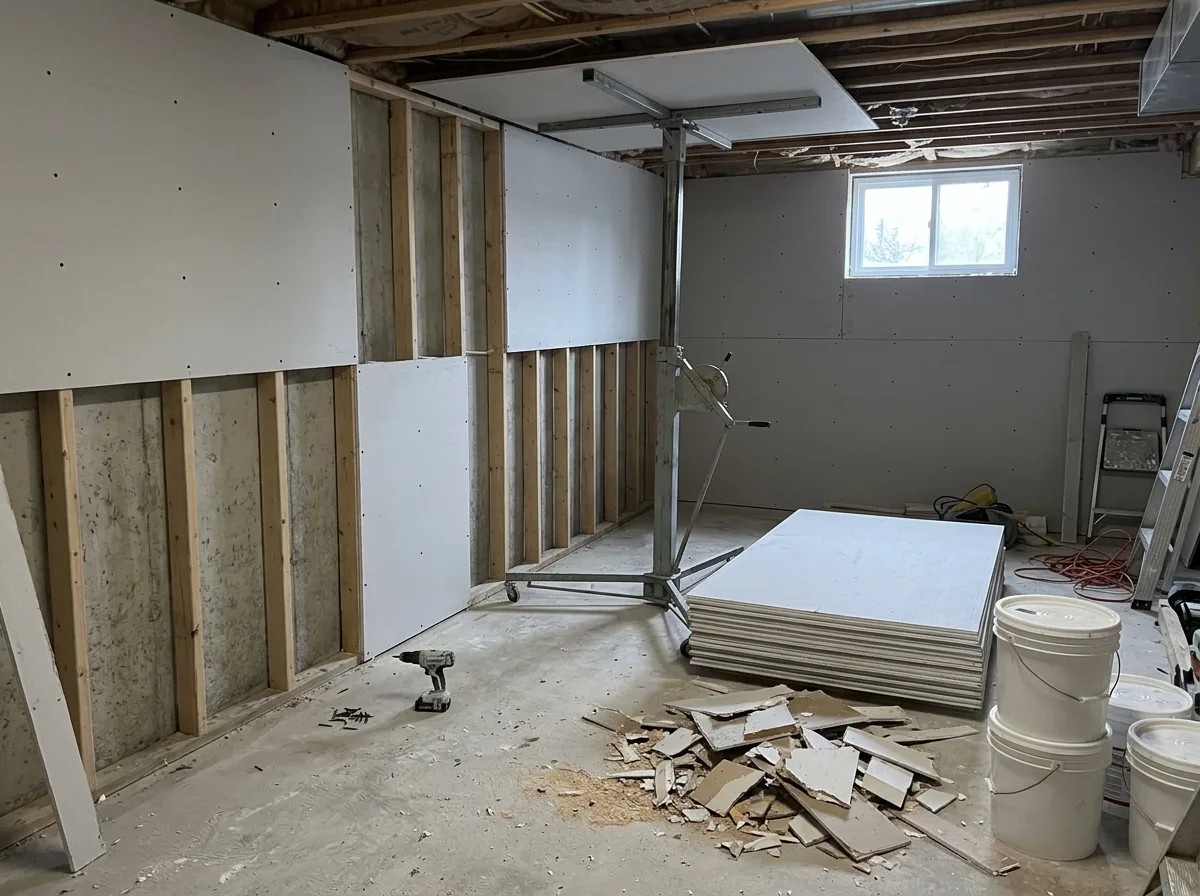
Basement Drywall
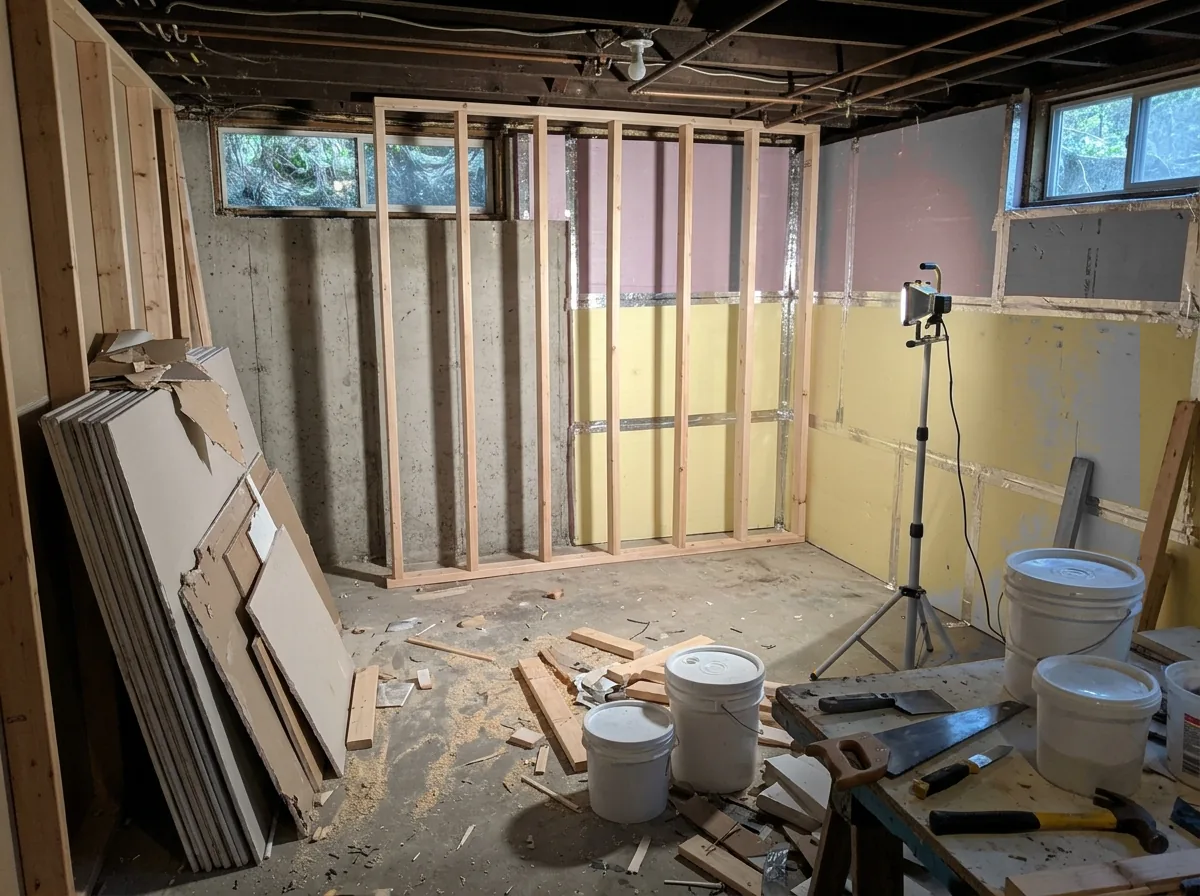
Finishing a basement is the biggest drywall job most households take on: HomeGuide's estimate for 1,000 square feet runs $1,500 to $7,000. Cost guides recommend moisture- or mold-resistant board below grade, and Washington's code amendment R302.13 asks for a 1/2-inch gypsum layer on the underside of floor framing that isn't otherwise fire-rated. A basement finish changes living space, which Kent lists among the work that needs a residential permit, so ask whether the framing, wiring and insulation have been inspected before the board goes up.
Basement drywall has the board choices for foundation walls and ceilings.
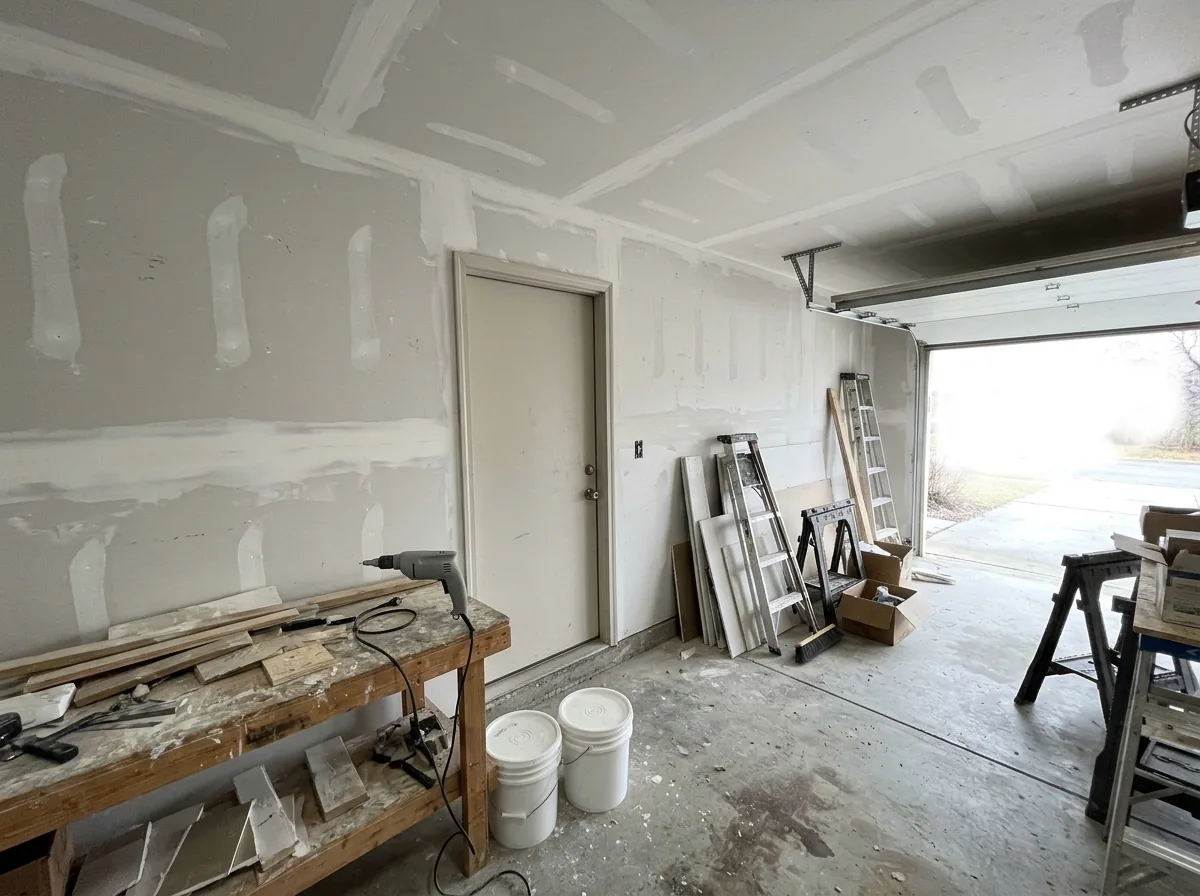
Garage Drywall and Fire-Rated Walls
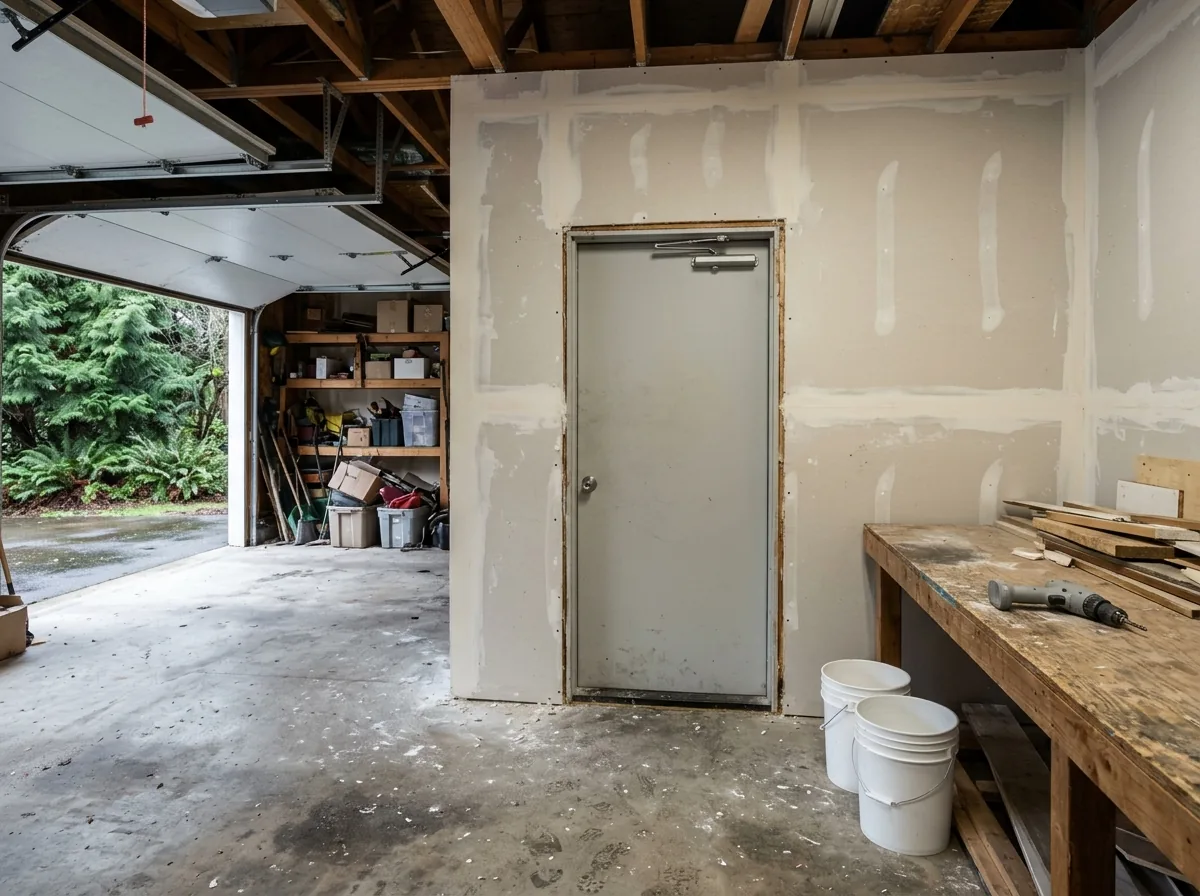
The wall between an attached garage and the house is a fire separation, not a finish choice. Washington's residential code, which adopts the 2021 IRC table unchanged here, wants at least 1/2-inch gypsum on the garage side of walls next to the house, and 5/8-inch Type X on the garage ceiling when there are bedrooms or living space above. Kent's own alteration checklist repeats the Type X rule. Garage walls are often finished only to Level 2 with taped seams. HomeGuide puts a two-car garage at $1,000 to $3,900.
The full separation rule and fastening are on the garage firewall drywall page.
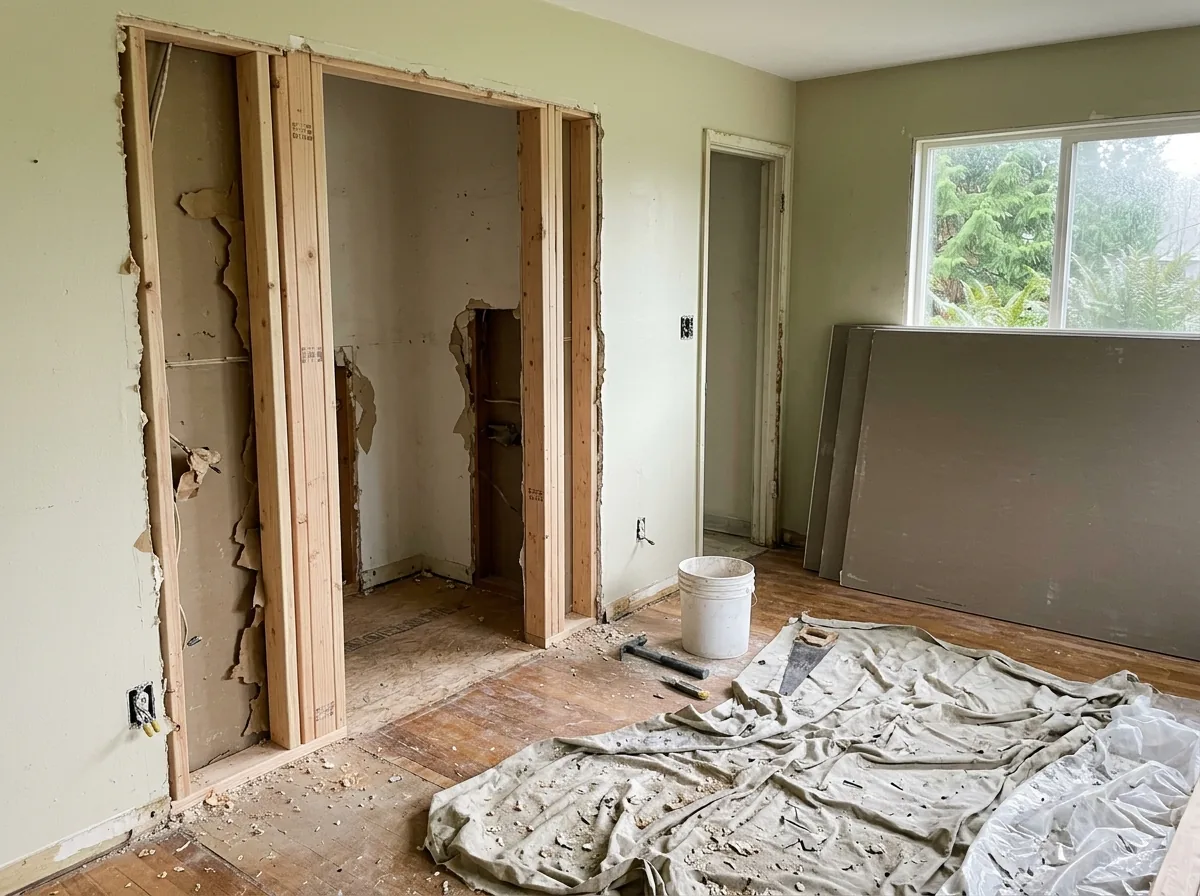
Remodels, Additions and Room Conversions
Moving a wall, closing in a doorway or adding a room means new framing, and Kent's alteration handout says the altered work has to meet the 2021 IRC. That brings in a building permit and a framing inspection before drywall covers anything. HomeGuide's install time for a 12x12 room is 2 to 3 days including dry time between coats. Ask for the finish level in writing, and for old drywall removal (another $0.50 to $2.50 per square foot) to be listed on its own line.
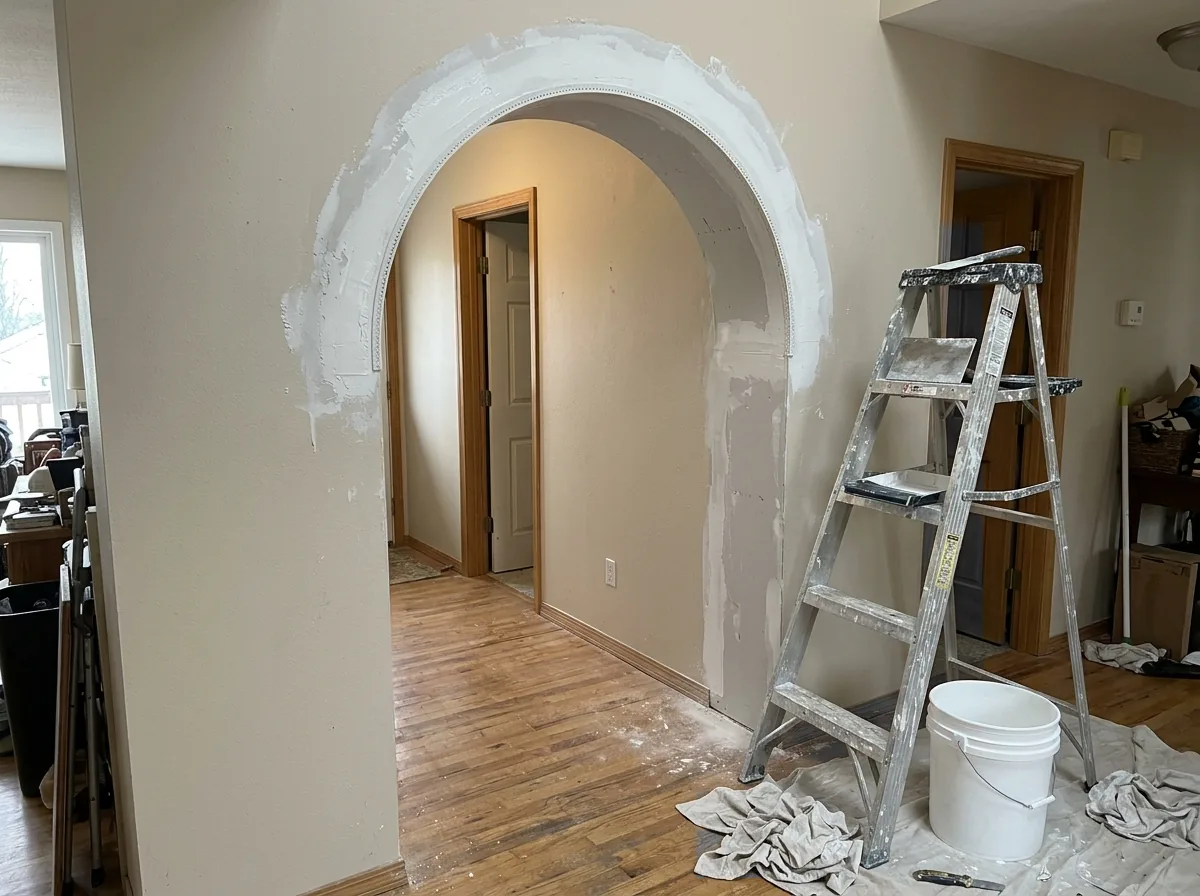
See new drywall installation for board types and prices, or drywall arches and niches for curved openings and built-in shelves.
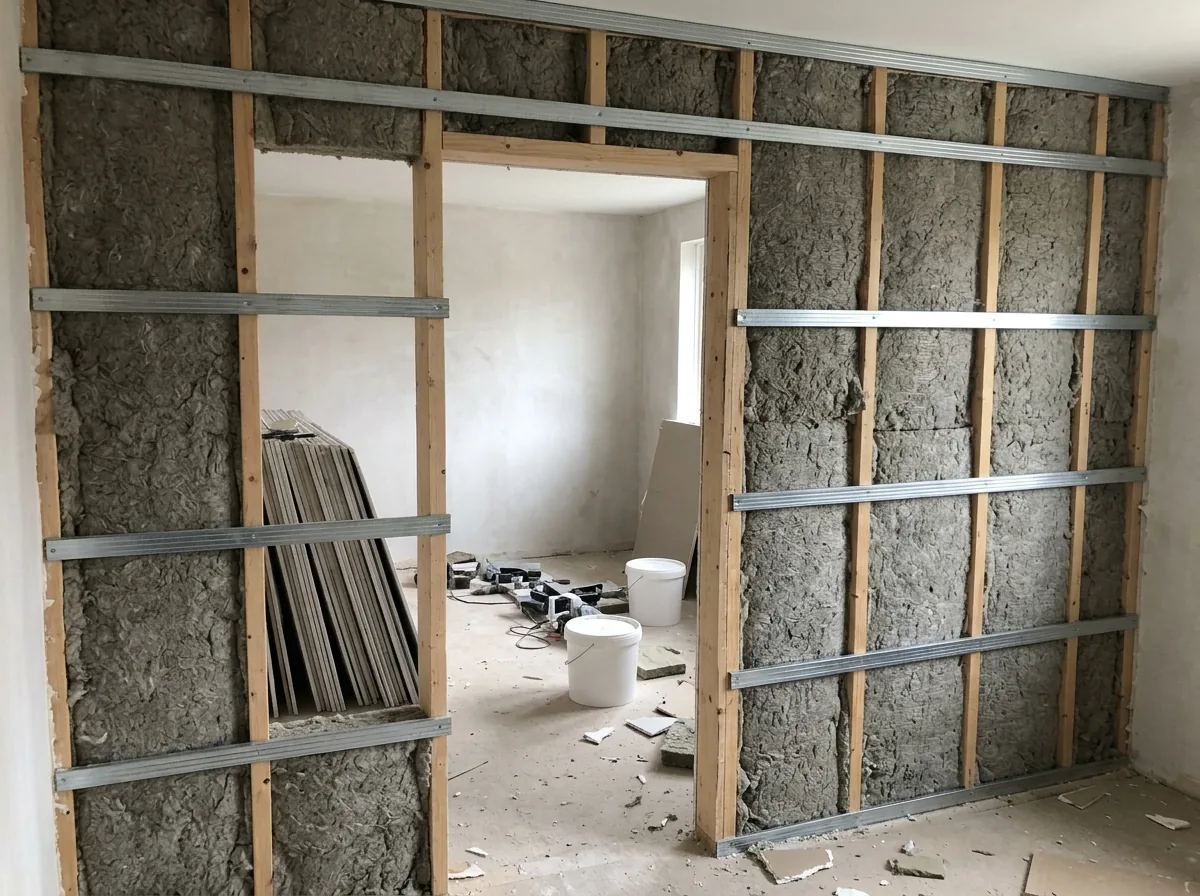
Soundproofing Walls and Ceilings
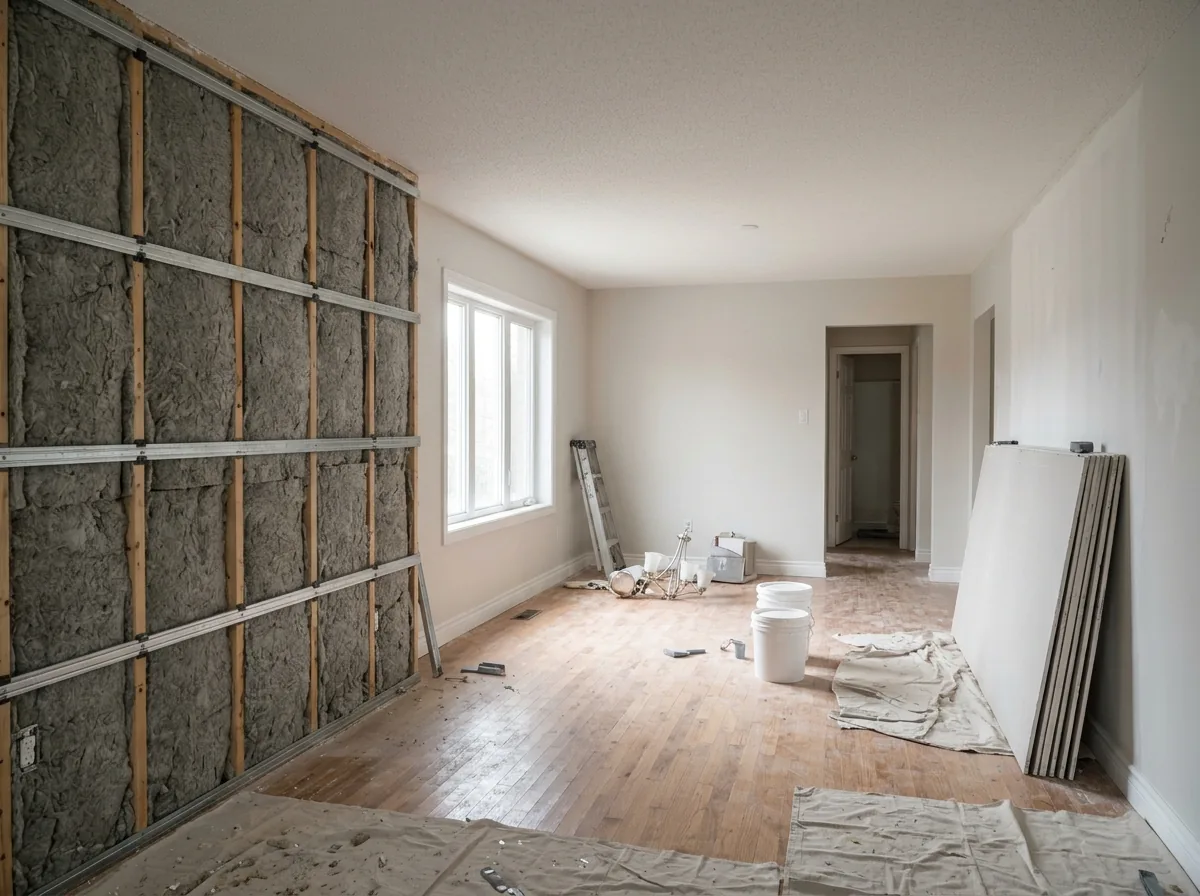
Most noise complaints come down to a bedroom next to a TV room or a basement under a kitchen. Common upgrades are mineral wool in the stud bays, metal resilient channel so the board isn't fastened straight to the framing, and a second layer of board or a sound-rated panel. Ask the contractor which of these the quote includes and what each adds to the price, and mention doors, outlets and ducts on the same wall.
Assemblies and prices are compared on the soundproof drywall installation page.
Commercial Drywall in Kent
Commercial work runs on different schedules and drawings, and fire-rated assemblies are spelled out by the building's design rather than chosen on site.
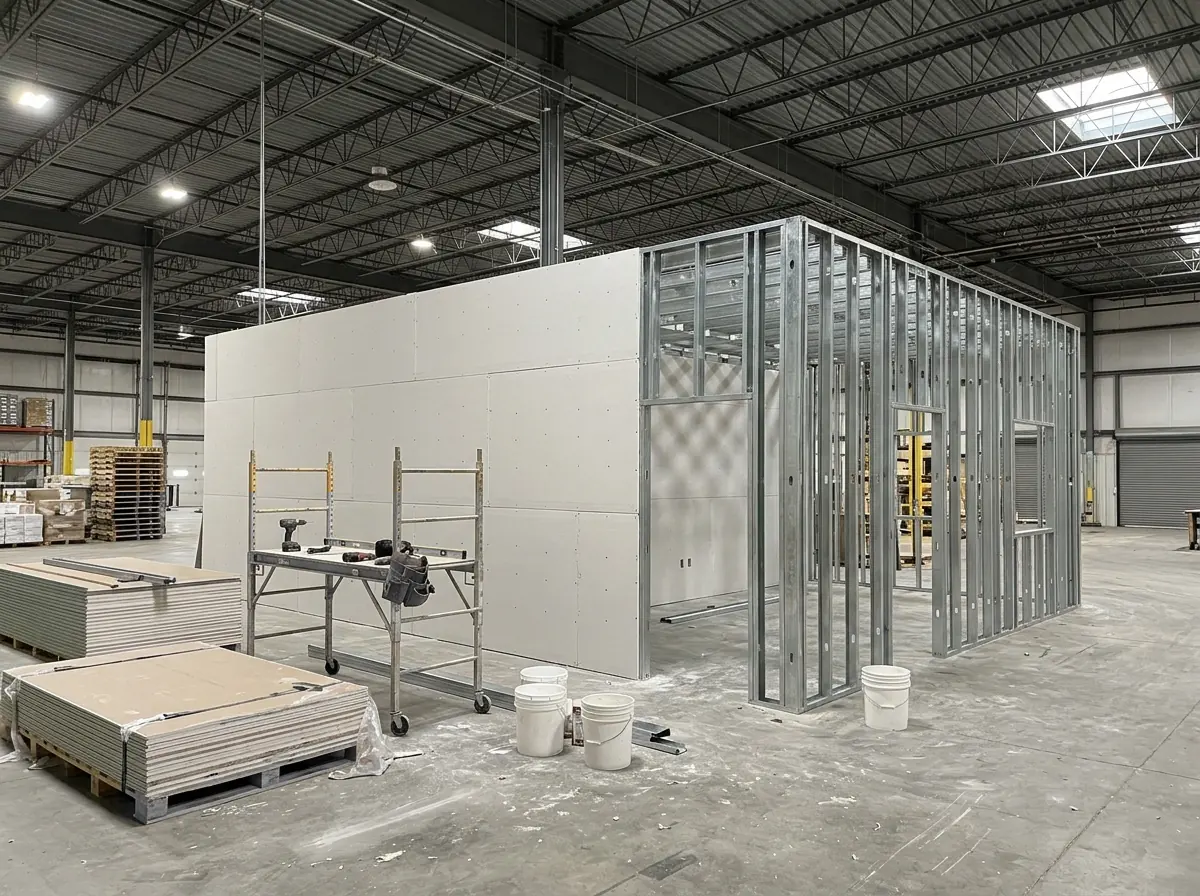
Warehouse Offices and Tenant Improvements
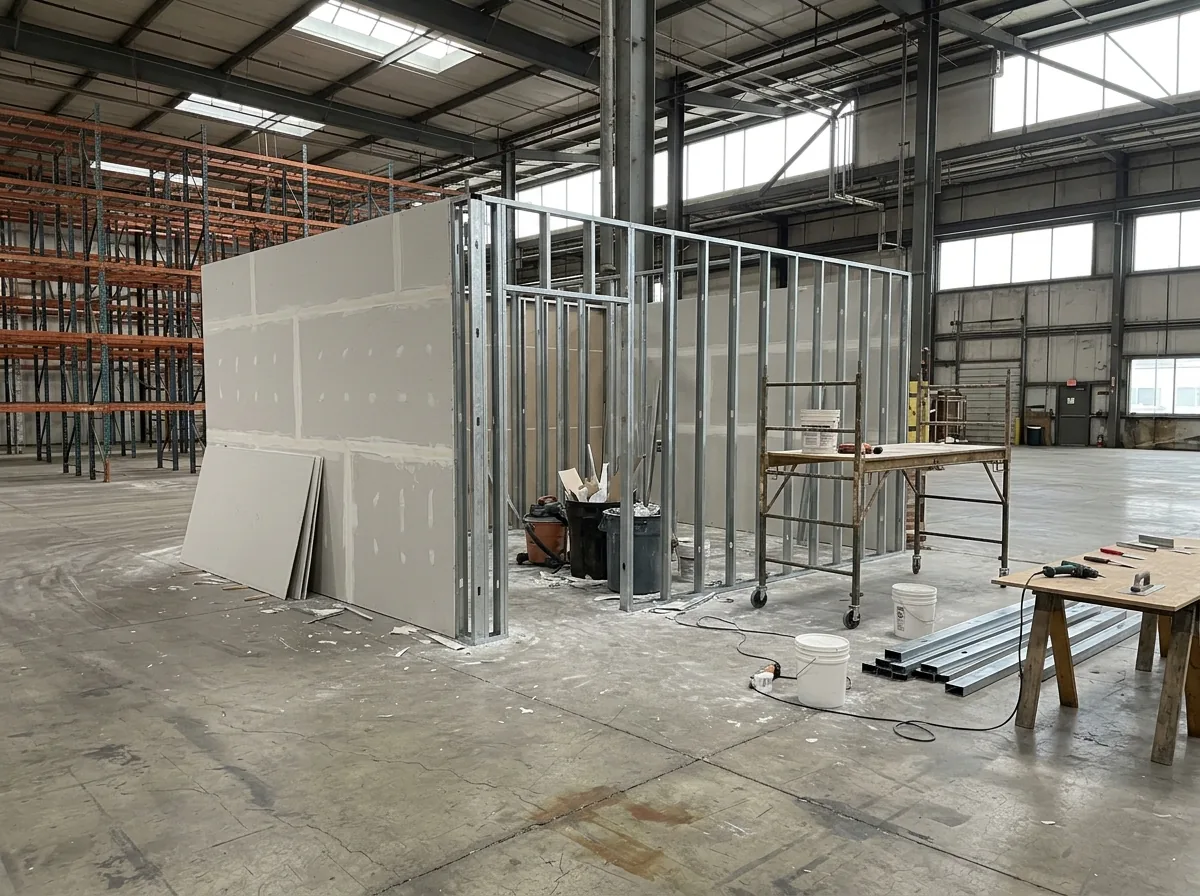
Office build-outs inside warehouse and flex buildings are framed in galvanized metal studs, then hung and finished like any other wall. The building owner's drawings usually set the board type, fire ratings and finish level. Washington's L&I lists drywall as its own contractor specialty: layout, hanging, taping, primer and texture, plus interior lath and plaster repair.
See tenant improvement drywall for steel studs, rated walls and Kent's commercial permit steps.
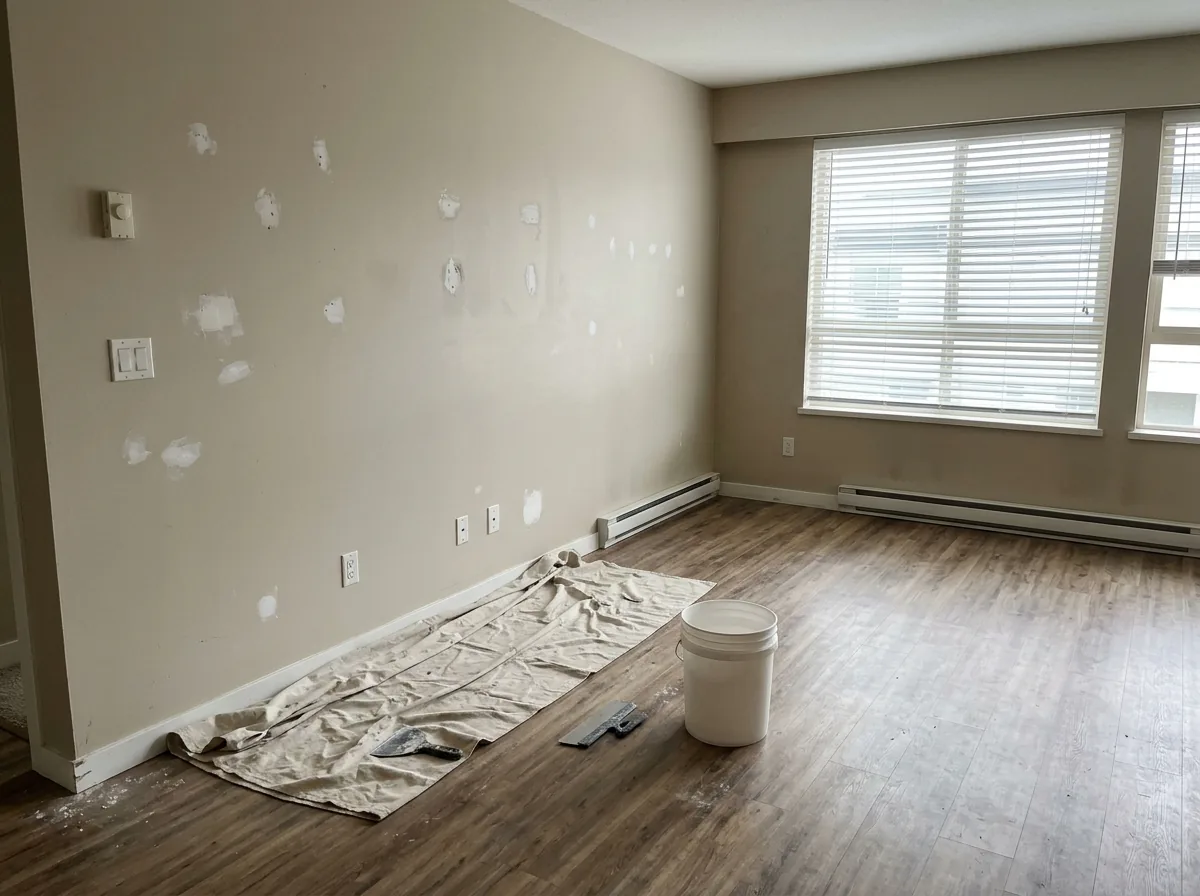
Apartments and Rental Turnovers
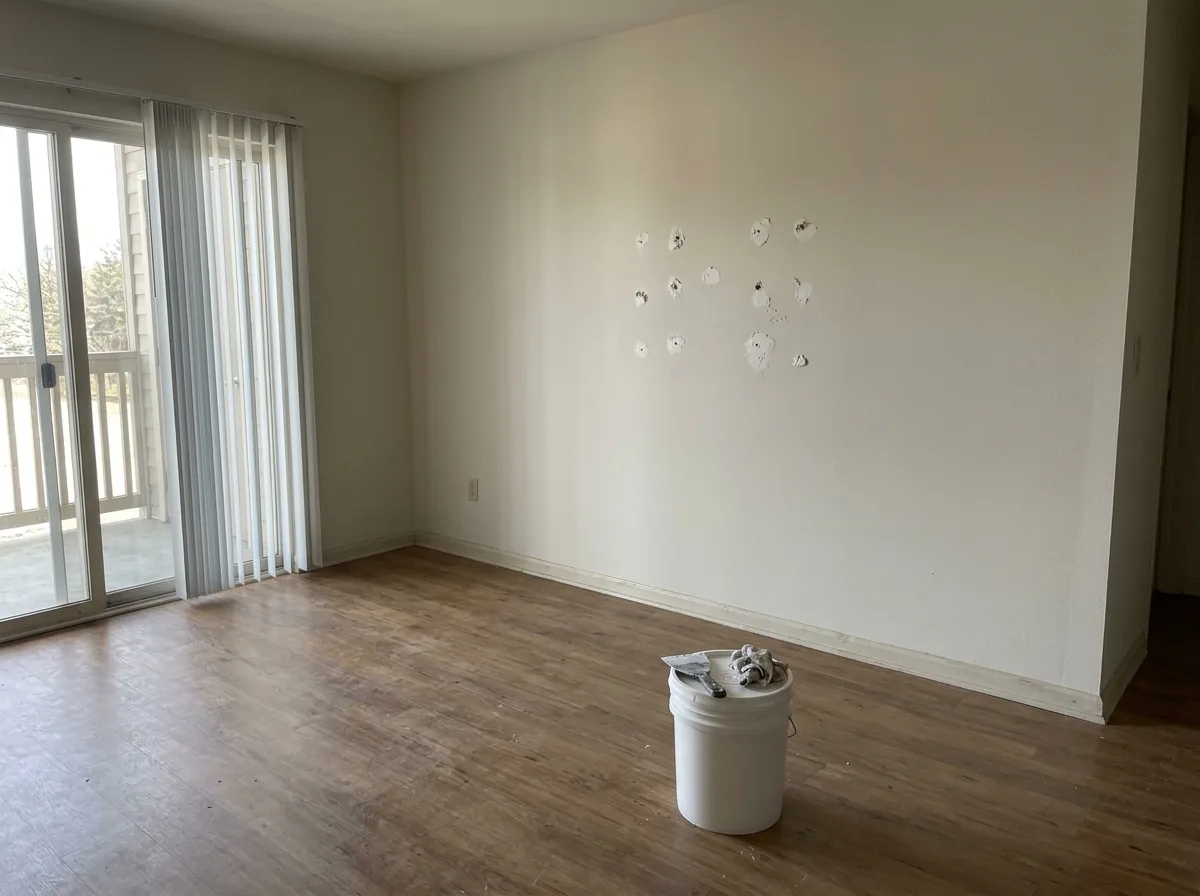
About 20,000 Kent households rent (ACS, 2020-2024), and every move-out leaves anchor holes, a scuffed corner or a TV mount to patch before the paint crew comes in. One rule to know: in a rental, the Puget Sound Clean Air Agency needs an AHERA-certified inspector for the asbestos survey before renovation work, not the owner.
Turnover patching for landlords is on the apartment drywall repair page.
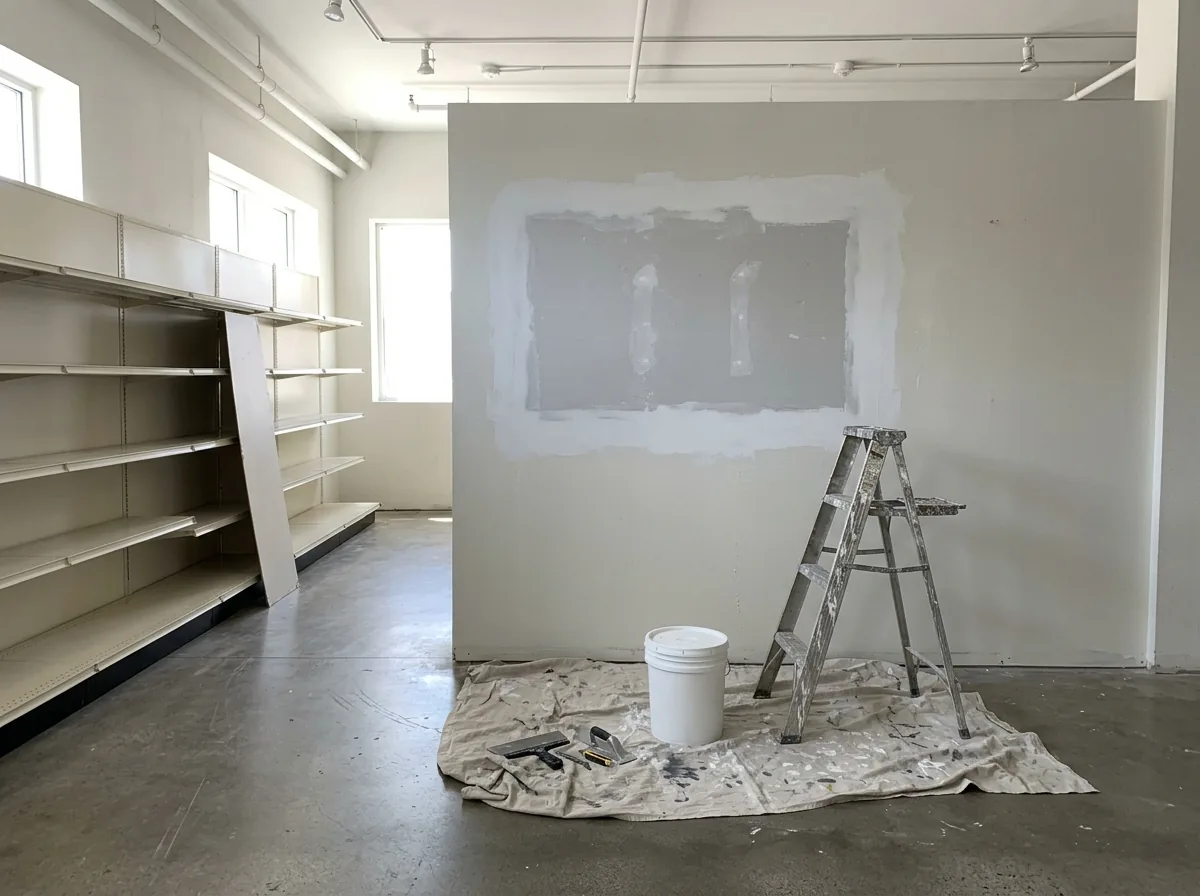
Shops, Restaurants and Clinics
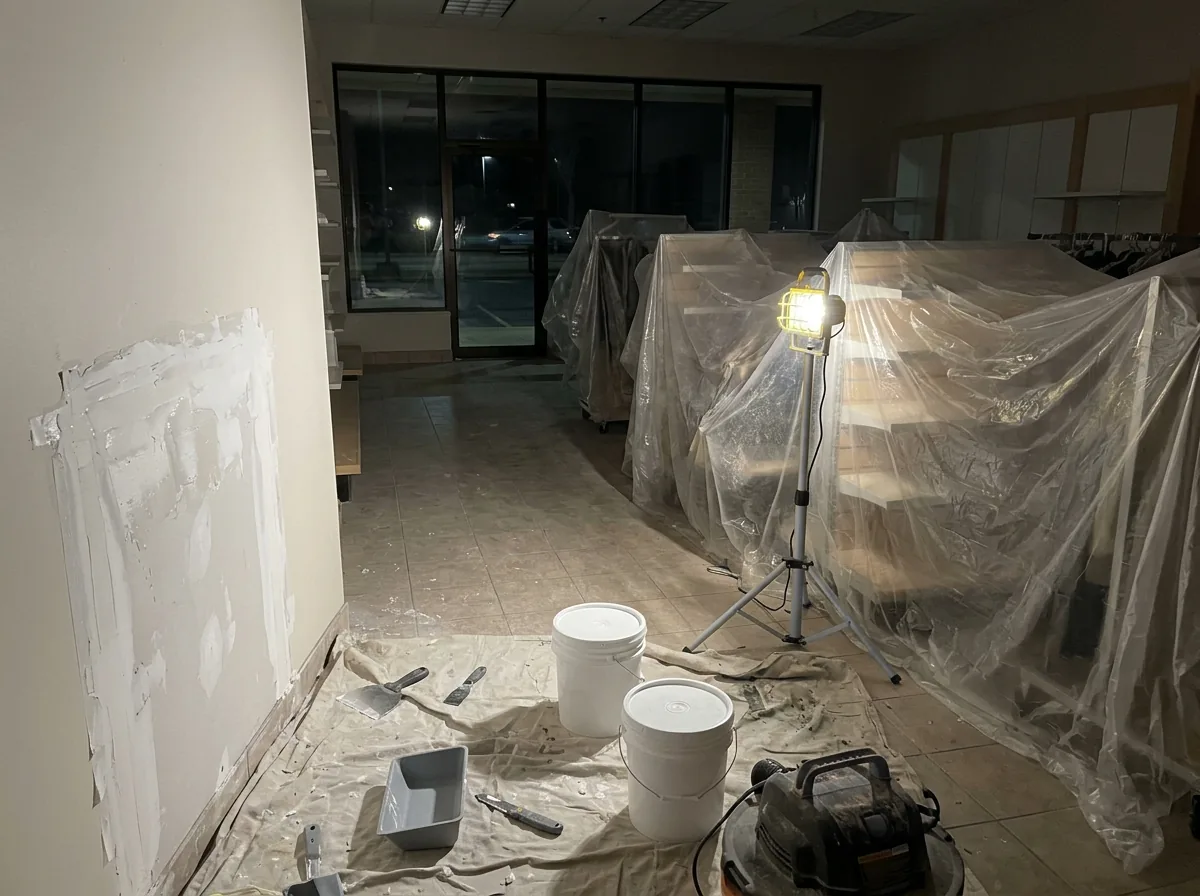
Retail and restaurant walls take hits at cart and chair height and around doors, and many owners want the work done outside opening hours. Tell the contractor your hours and which areas must stay open, so the dusty steps (cutting and sanding) can be planned around them. In a leased space, check with the landlord first: the lease may say who handles wall damage.
See commercial drywall repair for after-hours work and kitchen wall rules.
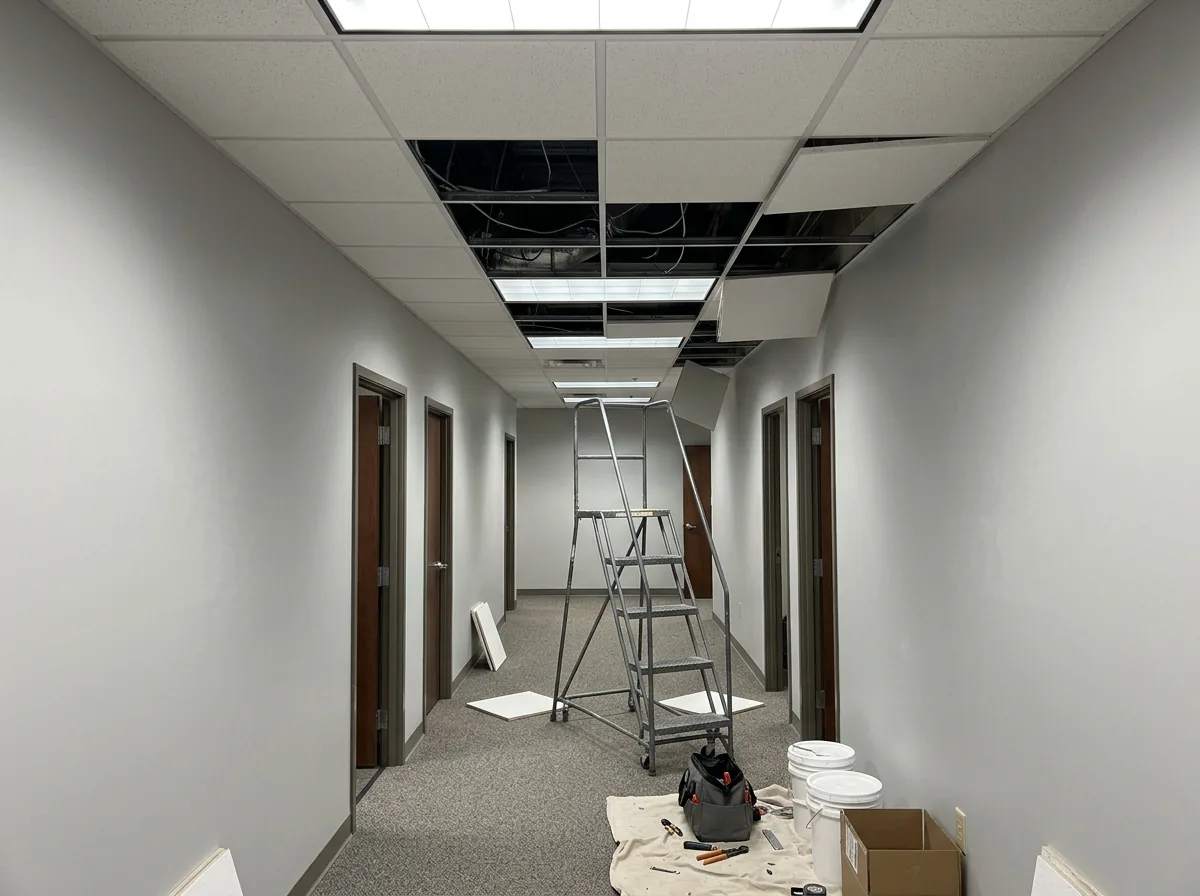
Acoustical Ceilings and Metal Stud Framing
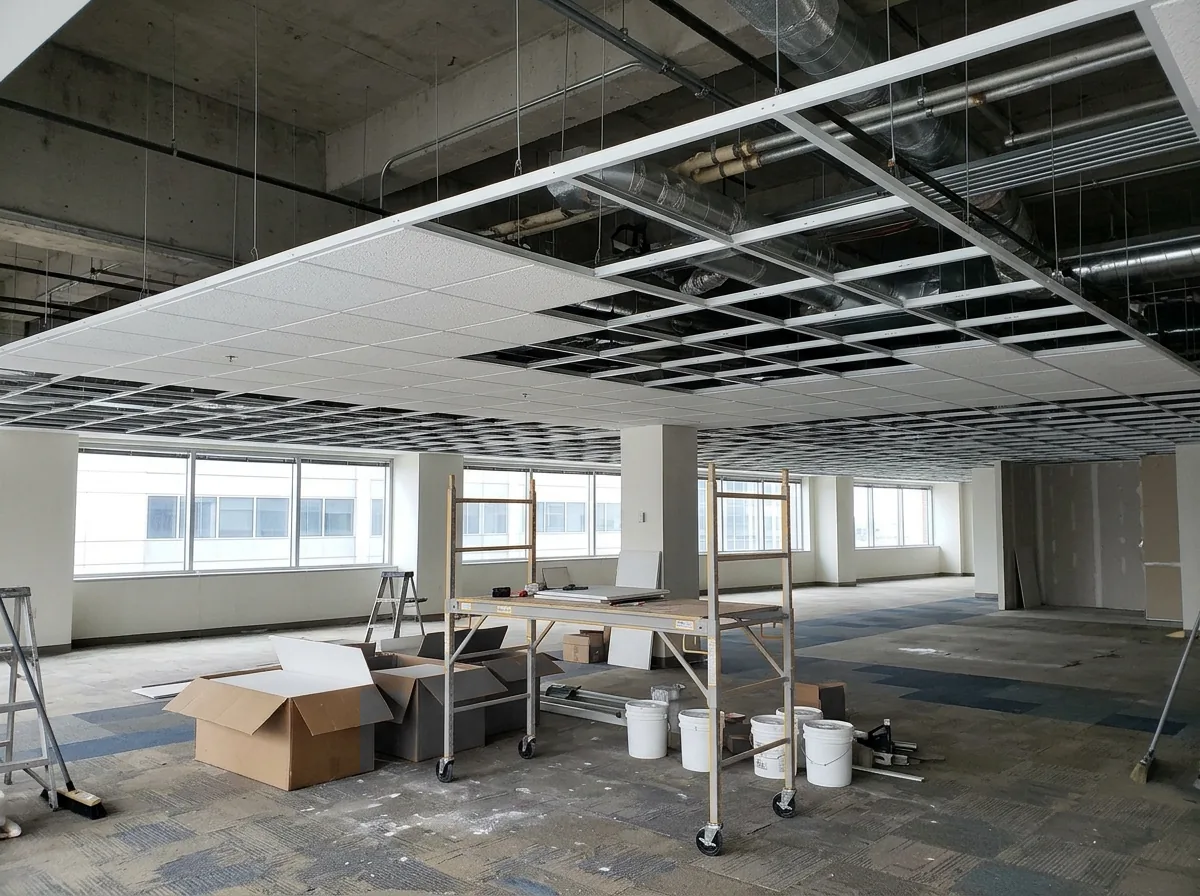
Offices and clinics often sit under suspended ceilings: a metal grid with lay-in acoustical tiles that drop out for access to wiring and ducts. Stained tiles from a roof leak can be swapped one at a time; a sagging grid needs re-hanging. Metal stud framing goes in where wood isn't allowed or straighter walls are wanted.
Grid, tile and drop-ceiling options are on the suspended ceiling installation page.
What Drywall Repair Costs in Kent
No cost guide we found publishes a current Kent figure, so these are national ranges. Treat them as a starting point for comparing written bids.
| Job | National range | Source |
|---|---|---|
| Small hole (under 4 inches) | $300-$500 | HomeGuide |
| Larger section with new board | $500-$800 or more | HomeGuide |
| Water-damaged drywall | $600-$1,550 | HomeAdvisor |
| Ceiling repair | $439-$1,718 | HomeAdvisor |
| New drywall, hung and finished | $1.50-$3.50 per sq ft | HomeGuide |
| Popcorn ceiling removal with refinishing | $2-$6 per sq ft | HomeGuide |
Labor is most of the bill: HomeGuide puts it at 50 to 70 percent or more, with drywall labor at $60 to $150 an hour. Matching paint often adds $125 or more. The fastest way to bring the per-patch cost down is to save small repairs for one visit, since the minimum charge covers the trip either way.
Before Drywall Work in an Older Kent Home
Kent's median home was built in 1985, by Census figures, and that age brings three checks with it.
Asbestos survey
Puget Sound Clean Air Agency rules require one before a renovation in King County, whatever the house's age. EPA lists textured paint and patching compounds among materials that may contain asbestos, and sanding or scraping is what releases fibers. Penalties reach $24,273 a day.Lead paint
Under EPA's RRP rule, anyone paid to disturb paint in a pre-1978 home must be certified, with an exception for 6 square feet or less per room. In Washington that certification comes from the Department of Commerce.Contractor registration
Washington requires every construction contractor to register with L&I and carry a bond ($15,000 for a specialty contractor) and liability insurance. A registered handyman is limited to jobs under $2,000 that need no permit. Check the registration on L&I's Verify a Contractor tool before anyone starts.
On jobs of $1,000 or more, Washington law has the contractor give you a lien-rights disclosure statement; keep it with the contract.
Drywall Contractor, Plumber or Water-Damage Company?
It depends on whether the water has stopped. If it's still running or the ceiling is bulging, shut off the water and call a plumber or a water-damage company first. Their job is to stop the leak and dry the structure. Once the studs read dry, the drywall contractor rebuilds the wall: new board, tape, texture and primer. For a dry hole, a crack or a ceiling stain from a leak fixed long ago, go straight to a drywall contractor.
How a Drywall Request Works
- 1
Tell us about the wall
Call or use the form. A photo helps, and so does the rough size, whether the wall or ceiling is textured, and if the damage came from water.
- 2
One contractor follows up
Your request goes to one independent local drywall contractor. When they get in touch, ask for a written price that lists the finish level, texture match and paint separately.
- 3
The work, in coats
Small patches may take two short visits because of drying time. On a bigger job, ask how dust will be kept out of the rest of the house.
- 4
Pay as it's finished
Keep the deposit small and pay the balance after you've looked at the wall in daylight.
Drywall Repair Across Kent
We take requests from homes and businesses anywhere in the City of Kent. Permits for work inside the city go through the Kent Permit Center at 400 W. Gowe St. (253-856-5300), with applications and inspections handled through the city's online portal.