
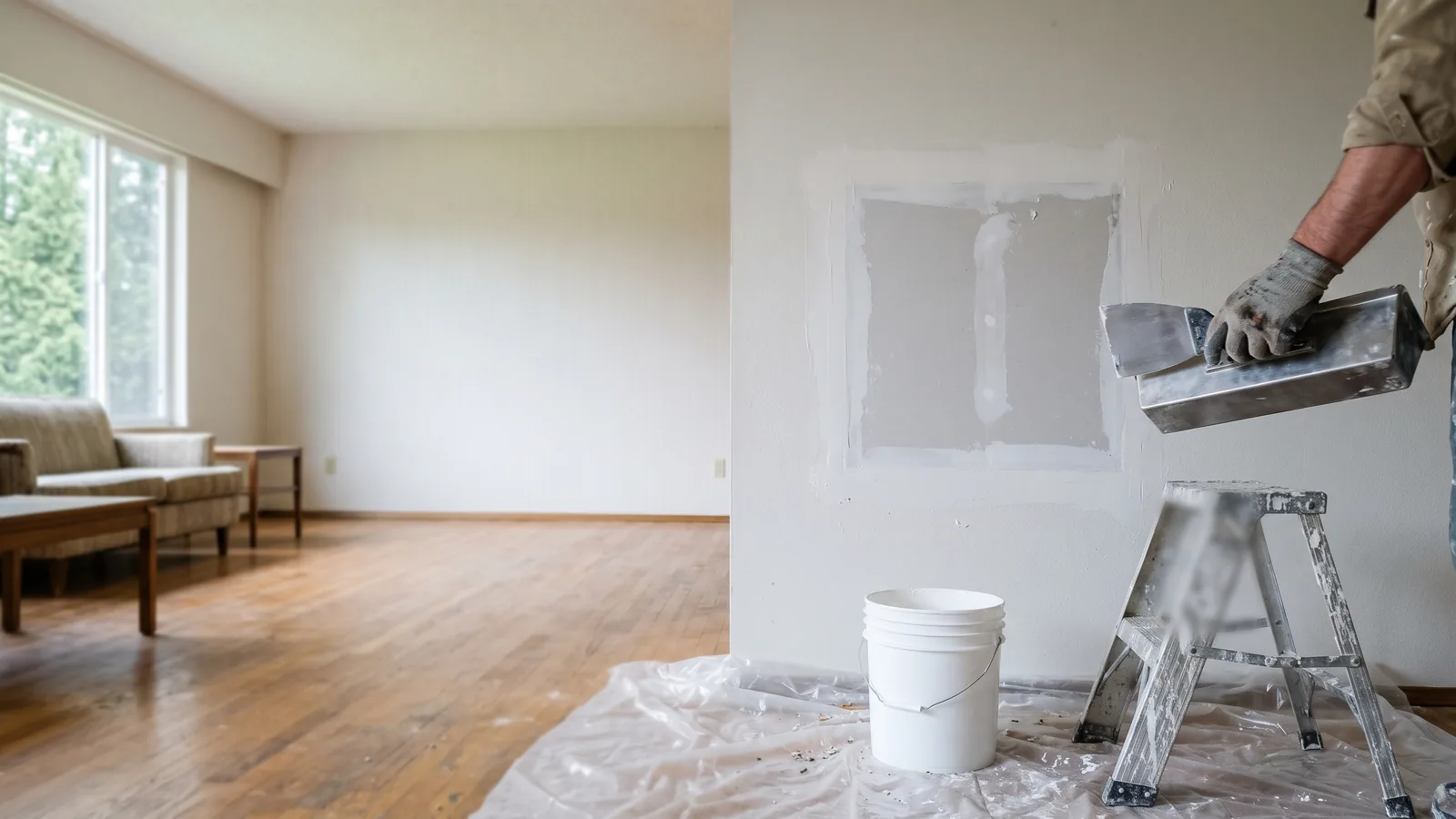
Where Mold Shows Up on Drywall, Room by Room
Mold needs moisture, and the moisture usually comes from one of a few places. EPA's guide lists the hidden ones: the back of drywall, walls behind furniture, cavities around pipes and the top side of ceiling tiles.
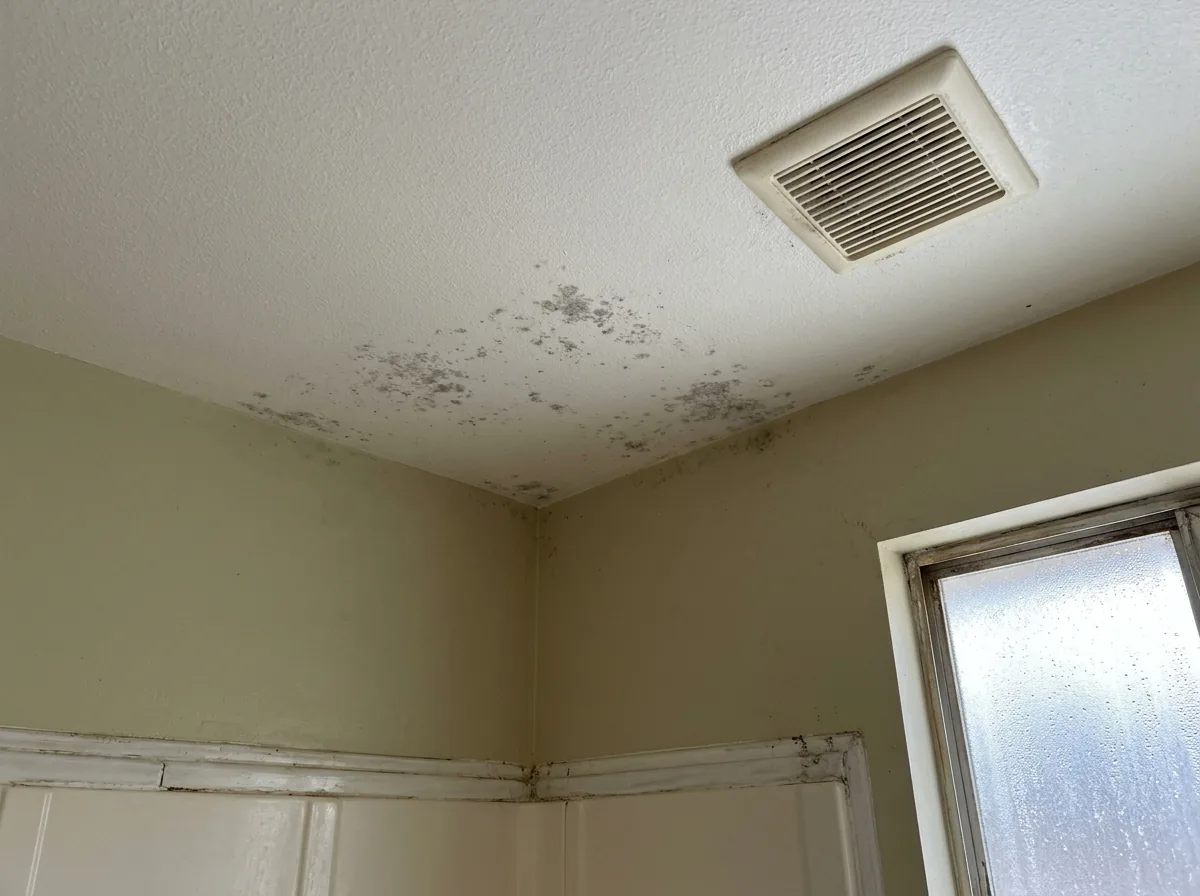
Bathroom Ceilings and Walls Without Enough Venting
Showers are the obvious moisture source, and the paint over the tub is often where spots show first. EPA's bathroom advice is to increase ventilation (a fan or an open window) and clean more often. HomeGuide prices mold removal in a bathroom at $500 to $2,000. When the board is replaced, it's usually a moisture- or mold-resistant sheet; the board types are on the new drywall installation page.
Cold Exterior Walls Behind Furniture and at Window Corners
EPA names "the surface of walls behind furniture (where condensation forms)" as a hidden mold spot. Outside walls are the cold ones, and a dresser or bookcase pushed against them blocks warm air. Window corners show it too. EPA's steps for condensation:
- dry the wet surface quickly and cut the moisture source
- lower the humidity and move more air
- warm the room
The wet months that make this worse are covered on the ceiling water damage page.
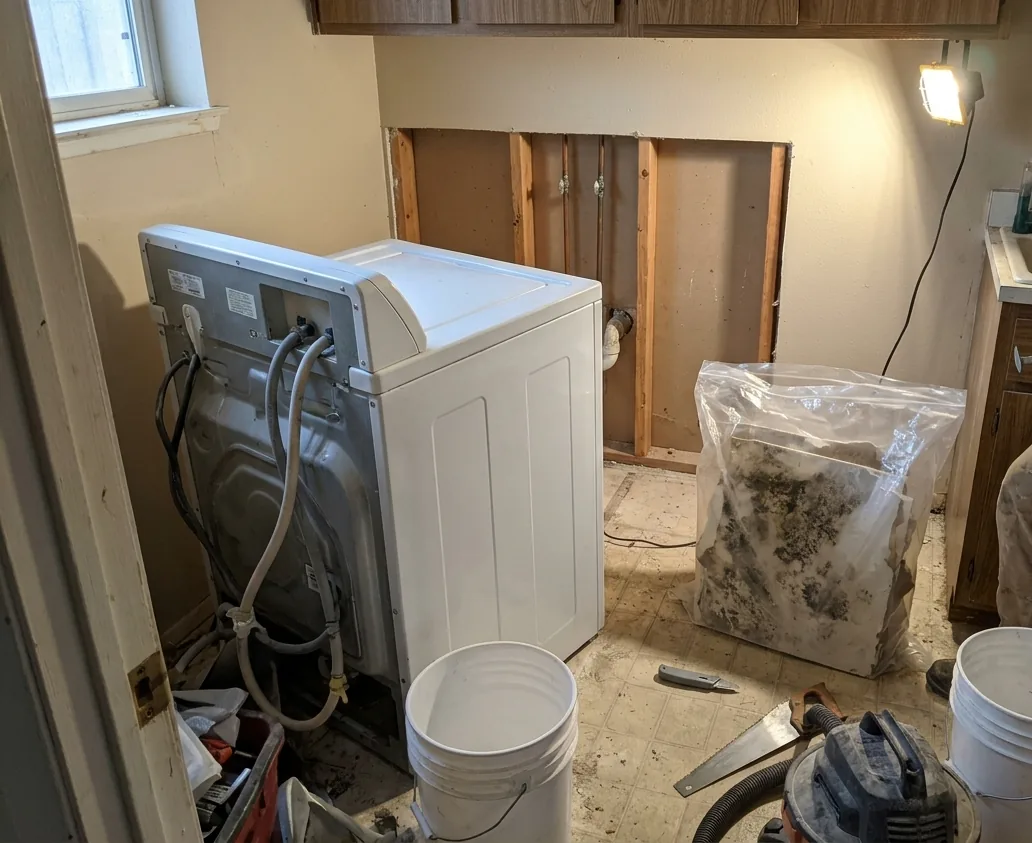
Under Sinks and Behind Washers and Water Heaters
EPA lists "inside walls around pipes (with leaking or condensing pipes)" as a common hiding place. EPA's fixes: vent clothes dryers outside and insulate cold water pipes that collect condensation. If a plumber opened the wall to fix the leak, the after-plumbing page covers closing it.
Below-Grade Basement Walls
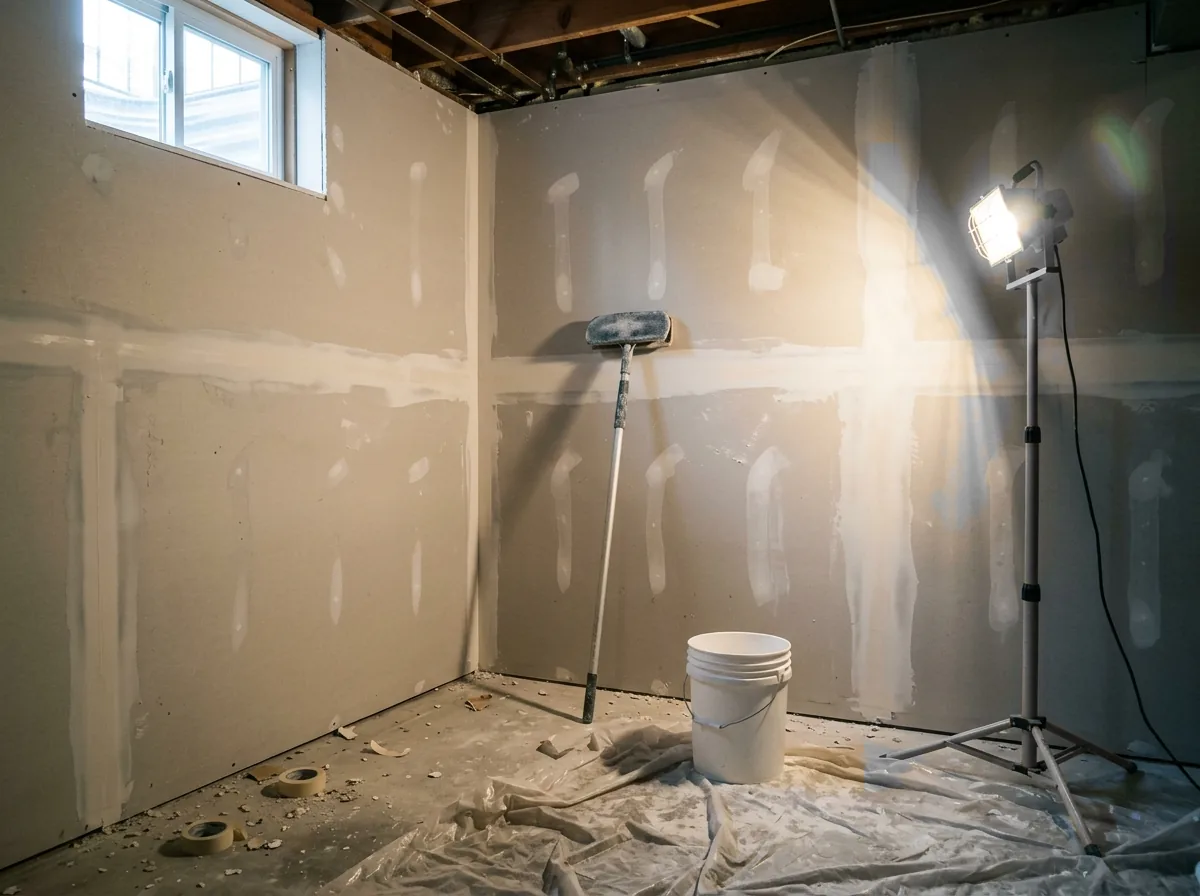
Building America's basement report notes that basement walls are often damp, sometimes only dry on the surface because water is evaporating into the room. Rebuilding below grade calls for a different wall detail, laid out on the basement drywall page.
Ceilings Under a Roof Leak or Thin Attic Insulation
EPA points to roof materials above ceilings, damp "due to roof leaks or insufficient insulation", and to the top side of ceiling tiles. From below you see a stain or nothing at all. Absorbent materials such as ceiling tiles may have to be thrown away once moldy, EPA says. A ceiling stained by an active leak is a ceiling water damage job first.
Why Kent homeowners, landlords and businesses call Drywall Repair Kent
- Your request goes to one independent local drywall contractor, not a bidding list
- The referral is free, and booking is up to you
- Ask for the finish level, texture and paint as separate lines
- Check L&I registration and bond before work starts
- Keep the deposit small and pay as the coats are finished
Small Spot or Remediation Job: EPA's 10 Square Feet
EPA draws the line at about 10 square feet. Below it, most homeowners can handle the cleanup, and replacing a piece of board is ordinary drywall work. Above it, or after heavy water damage, EPA points to its remediation guidance, and HomeAdvisor notes that mold spreading past the drywall may need a remediation specialist ($375 to $7,000 on its numbers). Either way, EPA is blunt about the order: fix the water problem, or the mold will most likely come back.
What to ask before the cut:
- How the work area will be closed off from the rest of the house.
- What gets checked behind the board, since EPA says mold can grow on its back side.
- Whether the studs will be dried and checked before new board goes on.
For anyone handling moldy material, EPA recommends an N-95 respirator, long gloves and goggles without vent holes.
What Moldy Drywall Replacement Costs
HomeGuide's mold page puts replacement drywall at $1.50 to $3.50 per square foot installed and painting afterward at $1 to $3 per square foot. Remediation itself runs $15 to $30 per square foot. These are national cost-guide averages. For your own wall, ask for a written price that lists removal, new board and paint separately. The price moves with how much board comes out once the wall is open.