
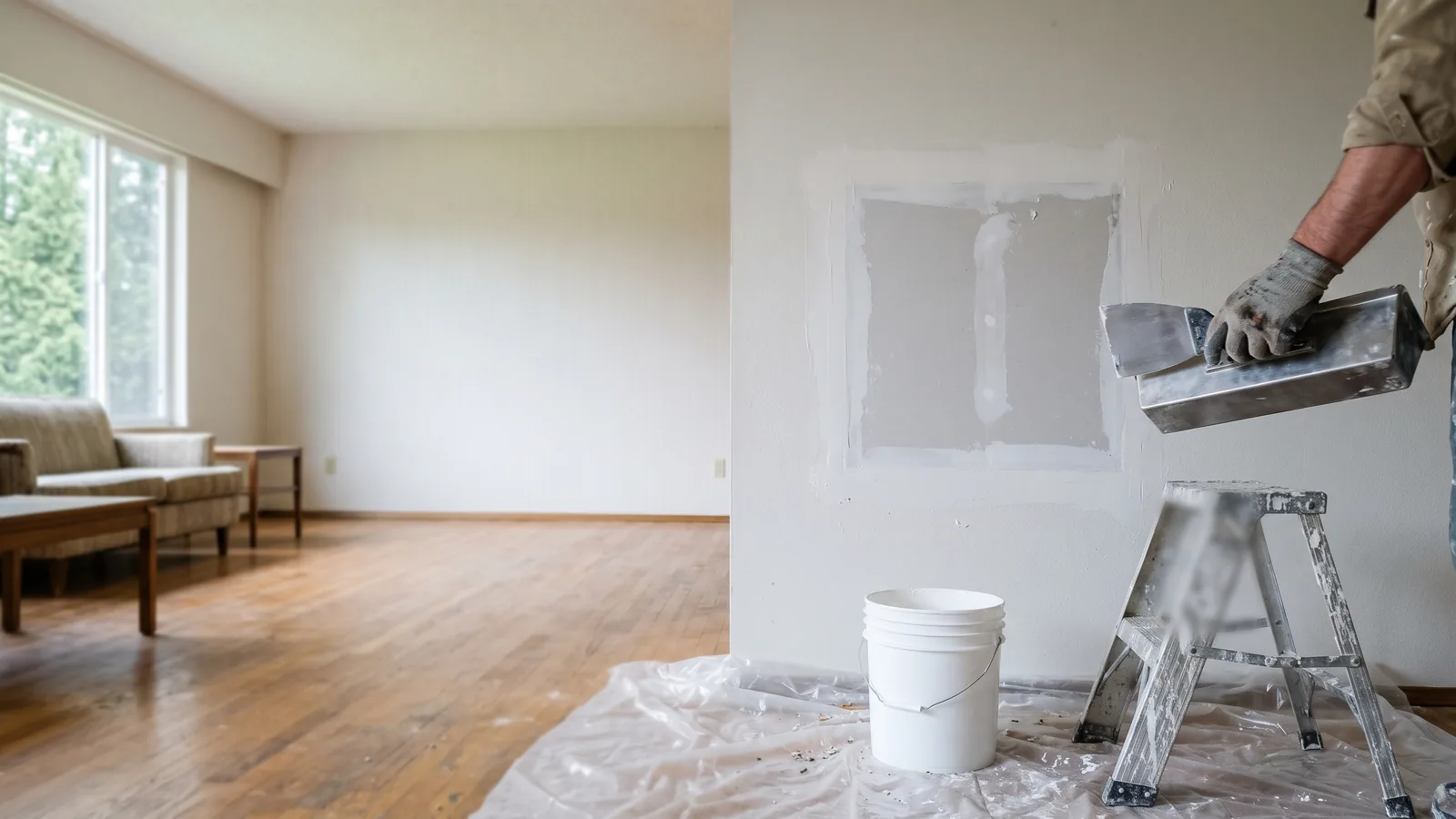
Cracks and Pops, by Where They Show Up
Where a crack starts tells you most of what it means. A crack that runs off the corner of a door reads differently from one that follows a taped seam or a row of bumps along a stud line.
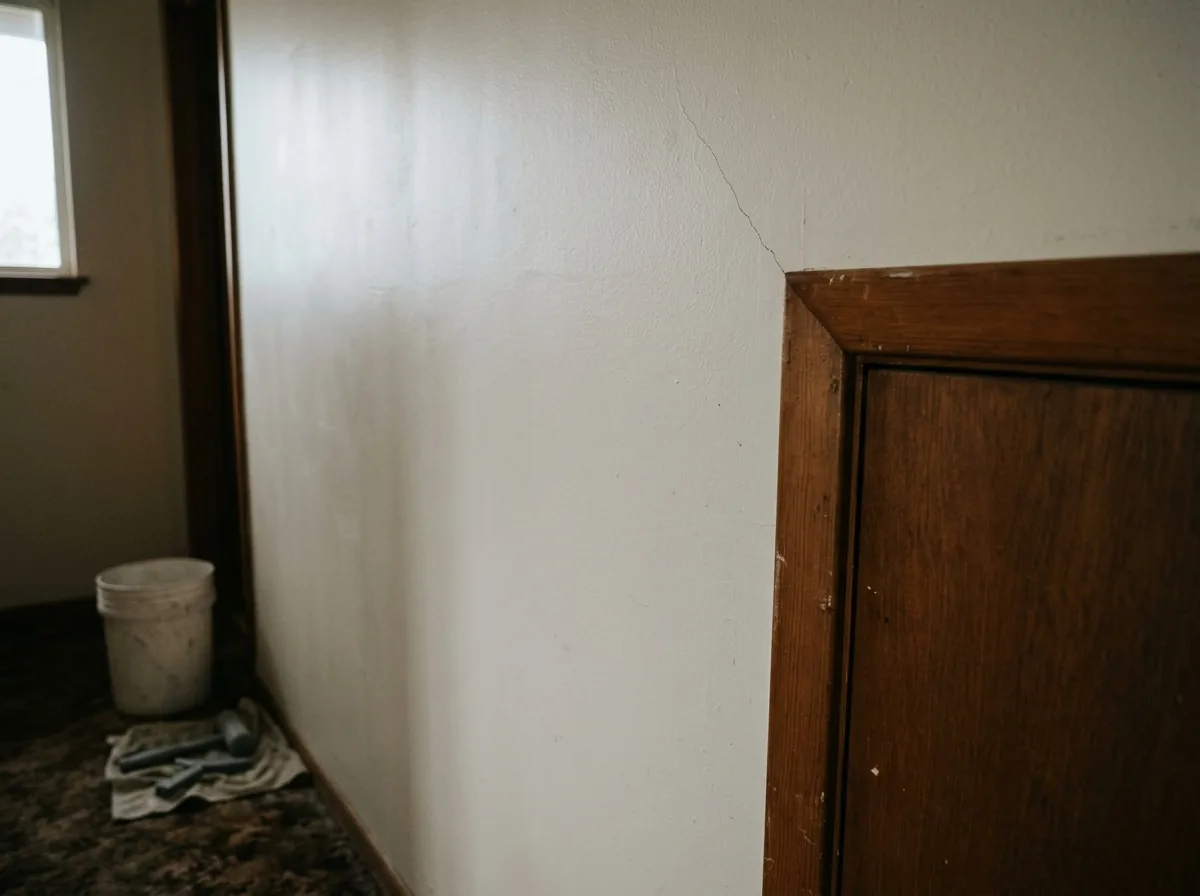
Diagonal Cracks Off Door and Window Corners
A hairline crack angling up from the trim of a door or window is often cosmetic: HomeGuide's ceiling repair guide puts hairline cracks narrower than 1/8 inch down to natural aging and settling. It draws the line at a crack beside a door or window that has also become hard to open, which it treats as a warning of foundation trouble. The usual repair opens the crack slightly, bridges it with tape and feathers compound over it.
- HomeAdvisor: the bigger crack repairs can involve new sections, wood backing, adhesive and several coats
- A crack that comes back at the same corner after a careful repair points to movement, covered further down
Cracks Running Along Taped Seams
A straight crack that follows a seam is the taped joint itself opening up. On ceilings, a crack where the ceiling meets the wall is a common seasonal one: HomeGuide puts it down to truss uplift, the roof framing rising and falling as temperature and moisture change, and mentions crown molding as one way to hide it. Cracks in the ceiling field are covered on the ceiling drywall repair page.
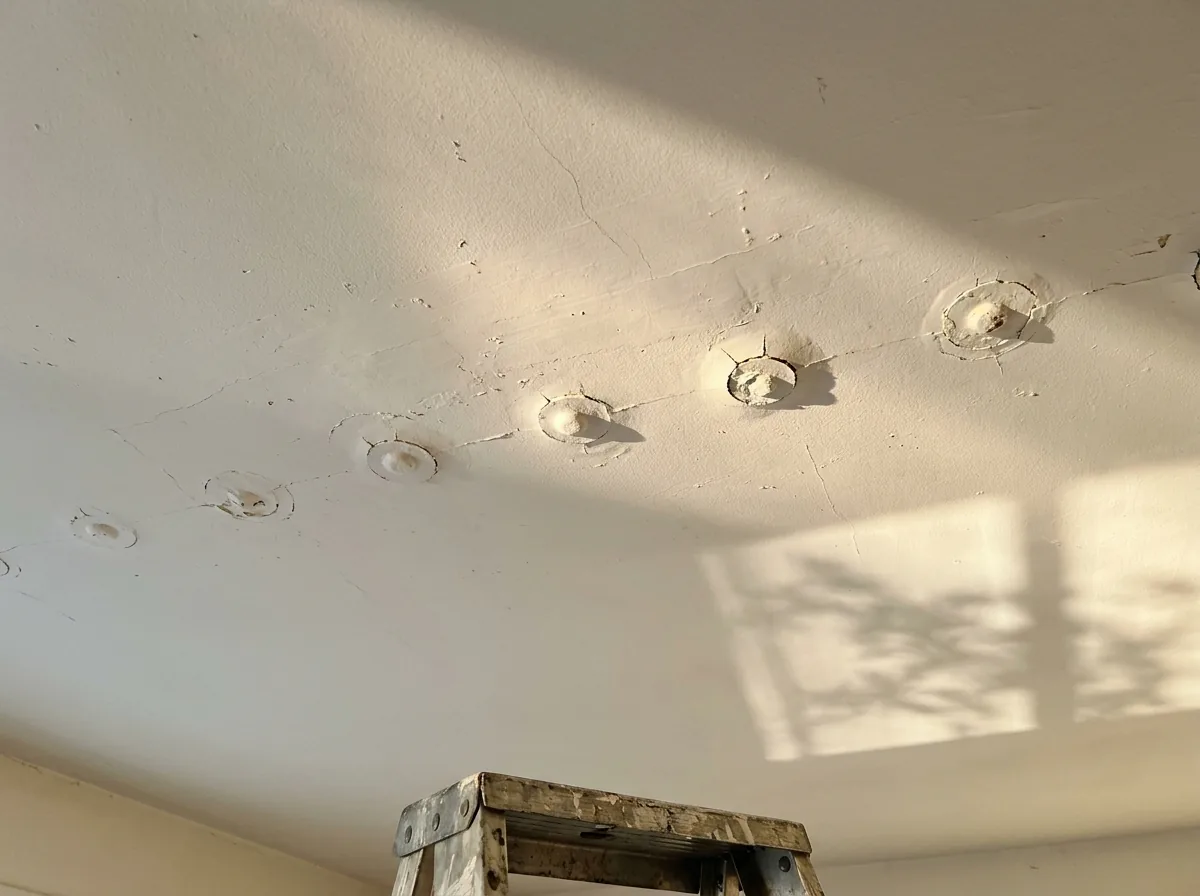
Nail and Screw Pops in a Row
A line of small bumps or round cracks spaced along a stud is a set of fasteners working loose. HomeAdvisor notes that nail pops are more common in older homes, since newer construction is screwed off, and prices each repair at $10 to $60. The repair, as HomeAdvisor describes it, is to remove and replace the nails or screws and patch over them with compound. For how far apart ceiling screws should be, see the ceiling board and screw spacing rule.
Peeling or Bubbled Joint Tape
Tape that has blistered or lifted along a seam has to come out where it's loose; compound over a bubble just hides it until it cracks again. The loose run is cut out, new tape is bedded in compound and the area gets its finish coats. HomeGuide's ceiling page puts "medium to large holes or cracks, corner bead, seams, joints, or light water damage" at $200 to $400. If the tape loosened because the wall got wet, the board behind it may need more than new tape: see drywall water damage repair.
Dented and Cracked Corner Bead
Outside corners take knocks from vacuums, furniture and moving boxes, and dented bead seldom straightens cleanly. The damaged length is cut out and new bead is fastened and coated. USG's instructions call for at least three coats of compound over corner bead, each one feathered wider than the last.
Why Kent homeowners, landlords and businesses call Drywall Repair Kent
- Your request goes to one independent local drywall contractor, not a bidding list
- The referral is free, and booking is up to you
- Ask for the finish level, texture and paint as separate lines
- Check L&I registration and bond before work starts
- Keep the deposit small and pay as the coats are finished
When a Crack Points to Something Bigger
HomeGuide's own advice is to work out what caused a crack before paying to repair it. It lists the usual causes as:
- settling while new construction adjusts over its first few years
- expansion and contraction from swings in temperature and humidity
- poor installation
- foundation movement
- water damage
HomeGuide's ceiling repair guide separates harmless cracks from the ones that signal structural trouble:
Width
cracks wider than 1/8 inch, against hairline cracks narrower than that, which it puts down to aging, settling, brittle old paint or a poor hangPath
a crack that runs from the ceiling down to the middle of a wall, or matching vertical cracks down a wallShape
long cracks that dip, step like a stair or form a VCeiling sag
large cracks in a bowed ceiling, which point to joists that are cracked, undersized or spaced too far apartColor
a discolored crack where the board feels spongy, which means water
For the cracks in that list, HomeGuide sends owners to a structural engineer or foundation specialist and says to deal with the root cause before any drywall work. Taping first means paying for the same crack twice if the movement continues.
What Crack Repair Costs, and Why Batching Helps
Two national guides land in different places. HomeAdvisor's $60 to $400 for cracks and chips is the lower of the two. HomeGuide's $350 to $1,000 or more starts right where its own minimum job fee does (the cost section on our homepage has those minimums), so a single small crack often costs the minimum. HomeGuide also notes that most contractors charge less per crack when several are fixed on the same trip. Both guides survey prices nationwide; the number that counts for your hallway is the one the contractor writes down after seeing it.
That makes it worth walking the house before you call. Note every crack, popped screw and dented corner, including the small ones you'd normally ignore, and send the full list. Ask for the quote to say how many coats each repair gets and whether the price includes priming and paint, since a crack fix that is left in raw compound will still show.