
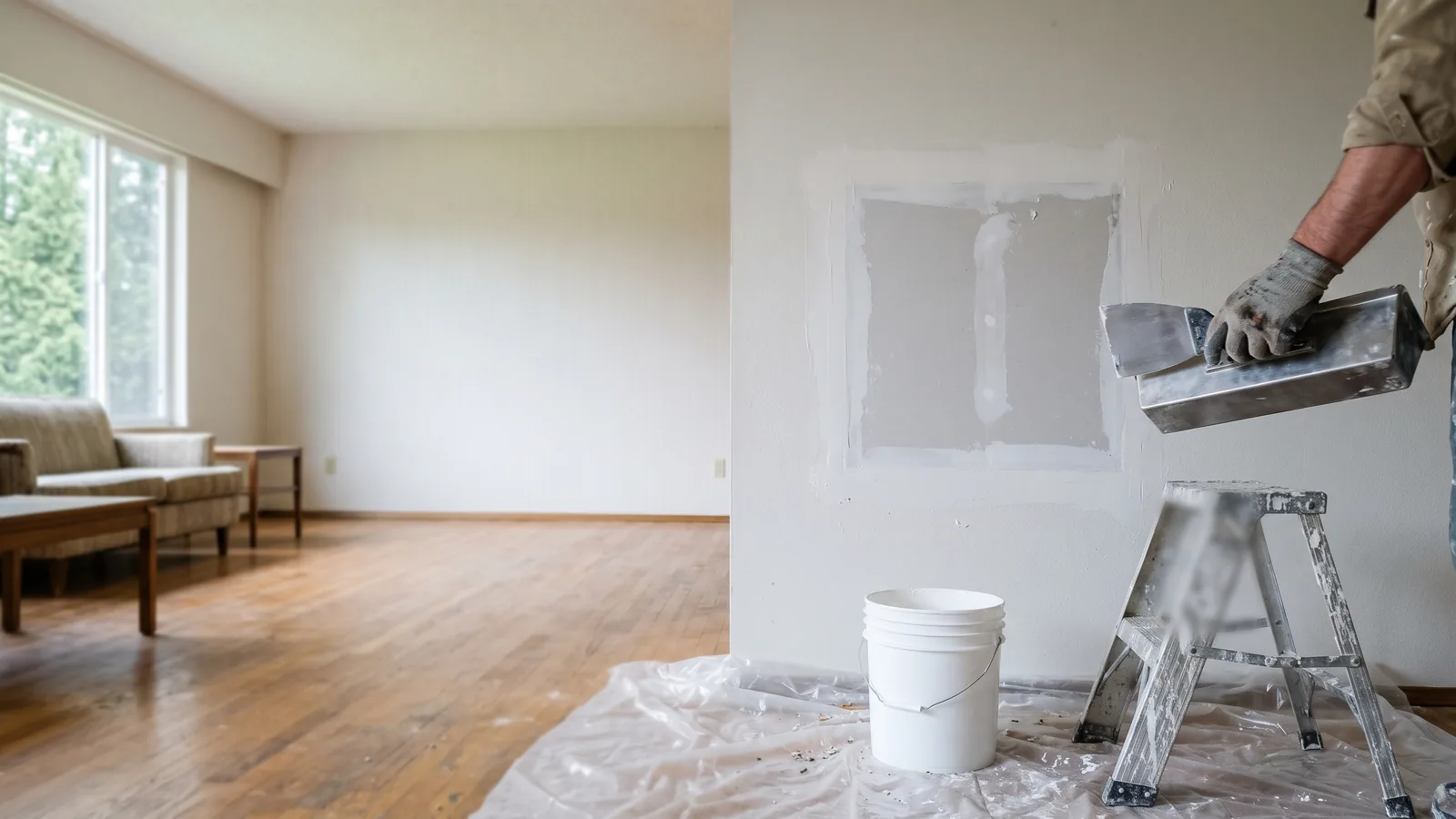
Plaster Problems in Older Houses
Plaster is an old-house material. Census figures count 19,129 of the city's roughly 49,650 homes as built before 1980, 3,959 before 1960 and about 1,070 before 1940 (housing age in Kent). The National Park Service's plaster guide notes that by the late 1930s nearly all residential plaster went over rock lath, gypsum panels about 16 by 36 inches, rather than wood strips. So a Kent plaster wall may sit on either one, and the repair differs.
Fine Cracks in Sound Plaster
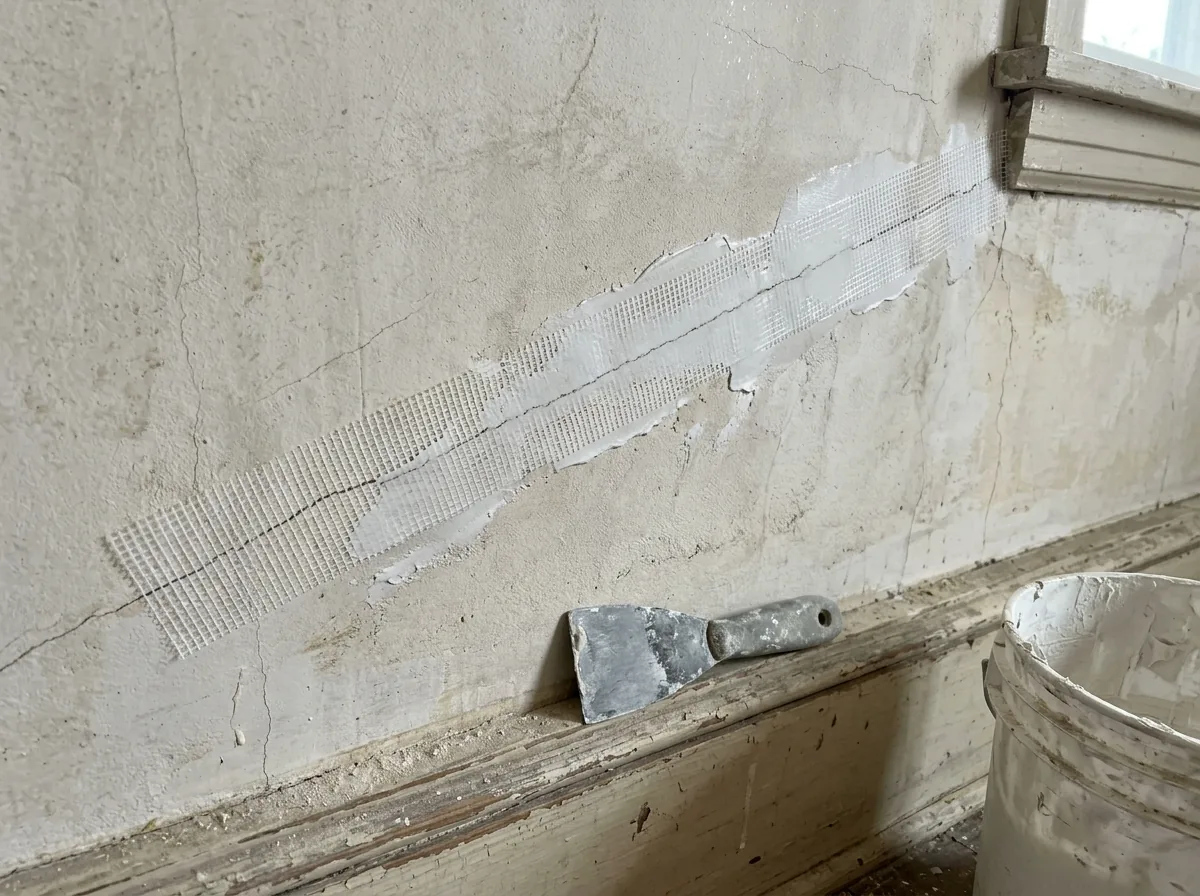
The Park Service's guide calls hairline cracks no cause for concern while the plaster around them is sound. They're filled; cracks that reopen are widened slightly first; persistent ones are bridged with fiberglass mesh tape pressed into quick-setting compound, then covered with a second coat and a third to level it. HomeAdvisor notes that cracks over 1/4 inch wide take more work, with mesh, braces and fasteners before compound.
- Cracked plaster: about $30 per square foot (HomeAdvisor)
- A 5-inch crack about $90, a 48-inch crack about $180 (Angi)
Plaster Letting Go of the Lath
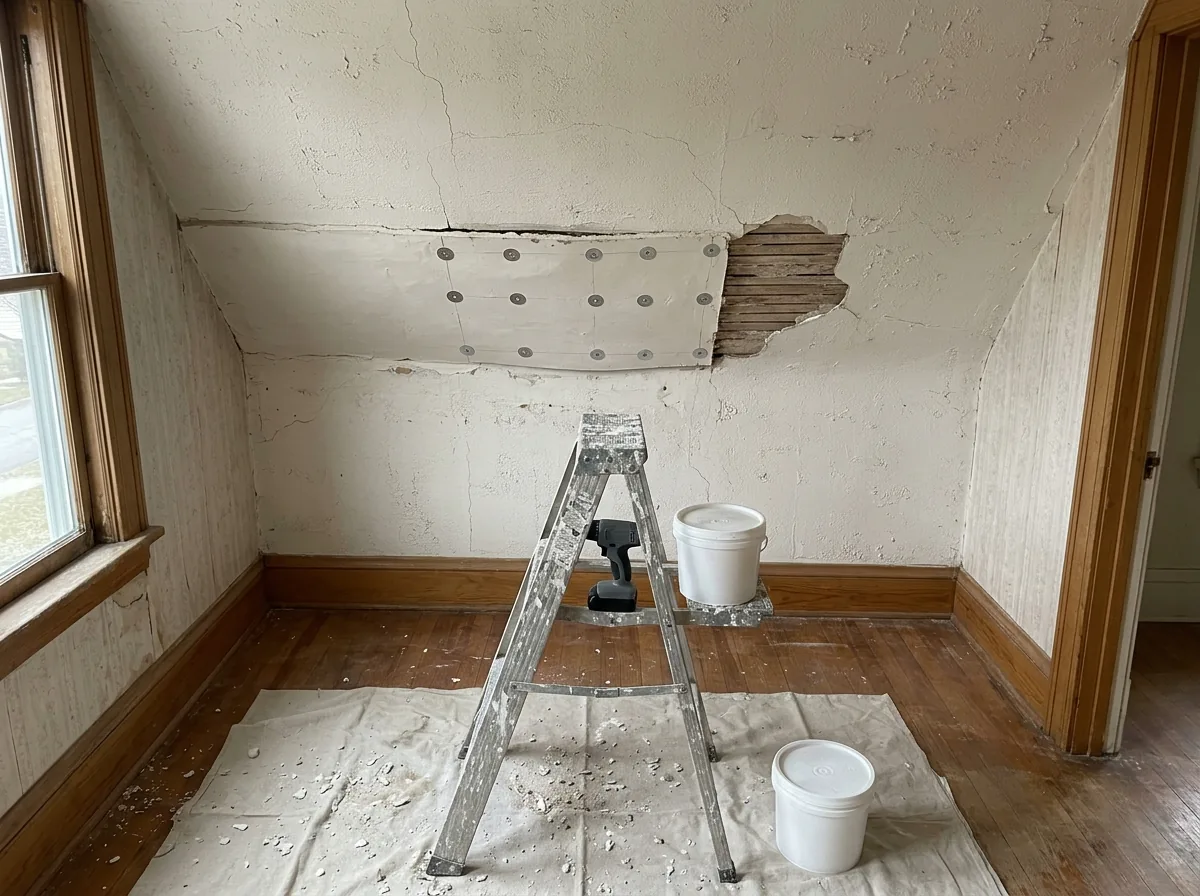
Plaster stays up because wet plaster pushed through the gaps in wood lath curled over and hardened into "keys." When the keys break, from overloading, structural movement, rotting lath or rusted nails, the plaster loosens and bows. If the plaster around the loose area is still sound, the Park Service describes reattaching it with flat-head screws and plaster washers, then taping and skimming over the washers.
Holes Through to Wood Lath
Holes smaller than about 4 inches that go through the finish and brown coats are filled in two applications, a base coat scraped back below the surface and a top coat once it has set. For bigger holes down to the lath, the guide's sequence is:
- clean out loose plaster and renail loose lath
- mist the old lath or coat it with a bonding agent so it doesn't twist
- tie or nail expanded metal lath over the wood lath
- apply plaster in three layers, each one stepped over the old edge
Angi puts a 3-inch hole at about $50 and a 1-foot dent at about $130.
Plaster Ceilings That Sag
A sagging plaster ceiling is the repair not to put off. The Park Service guide warns that once the keys break, gravity brings ceiling plaster down in chunks. HomeAdvisor lists water damage, age and a settling foundation as the usual causes and prices sagging ceiling repair at about $80 per square foot. If the ceiling sagged because of a leak, the ceiling water damage page covers that first step.
Covering Plaster With New Drywall
When a ceiling is too cracked to patch or is sagging but not wet, the Park Service describes plasterers keeping it and replastering over it: 1x3 furring strips screwed through the old plaster into each joist, expanded metal lath or gypsum board lath nailed over them, then two or three coats of plaster. The guide credits that replastering method with saving time, making far less dust than demolition and adding fire protection. The trade-off is a slightly lower ceiling. HomeGuide's ceiling repair guide lists installing drywall over the old plaster as one of the cheaper options. On walls, the guide flags the trim: a thicker wall surface changes how far door and window casings stand out from it. HomeGuide puts lath-and-plaster ceiling repair at $50 to $125 per square foot and replastering a whole ceiling at $5 to $15 per square foot. Covering a drywall ceiling the same way is on the ceiling drywall repair page.
Why Kent homeowners, landlords and businesses call Drywall Repair Kent
- Your request goes to one independent local drywall contractor, not a bidding list
- The referral is free, and booking is up to you
- Ask for the finish level, texture and paint as separate lines
- Check L&I registration and bond before work starts
- Keep the deposit small and pay as the coats are finished
Lead Paint Before the Plaster Is Opened
Paid work that disturbs paint in a house built before 1978 falls under EPA's Renovation, Repair and Painting rule, and most plaster houses are that old. The rule works like this:
Who it covers
anyone paid to do work that disturbs paint in housing or child-occupied facilities built before 1978 must be certified, including sole proprietors.Small jobs
minor repair and maintenance that disturbs 6 square feet of painted surface or less per room inside, or 20 square feet or less outside, falls outside the rule.In Washington
the state Department of Commerce issues RRP certification. A firm pays $25 and must have a certified renovator who does or directs the work.Your own home
EPA says the rule generally doesn't apply to homeowners working on their own pre-1978 home.
Taking down a sagging ceiling section or sanding a whole wall can pass 6 square feet quickly. Ask the contractor for the firm's Commerce RRP certification before work starts. Plaster also carries an asbestos question: the Park Service notes asbestos was used as an additive in mid-twentieth-century plaster, and King County's asbestos survey rule applies to renovation of any age. Registration of whoever does the work is covered under who may patch drywall for pay in Washington; L&I's drywall specialty includes interior lath and plaster repair.
All the prices here come from national cost guides; HomeAdvisor's and Angi's plaster pages share the same data. The figure to rely on is the written one from a contractor who has seen the wall.