
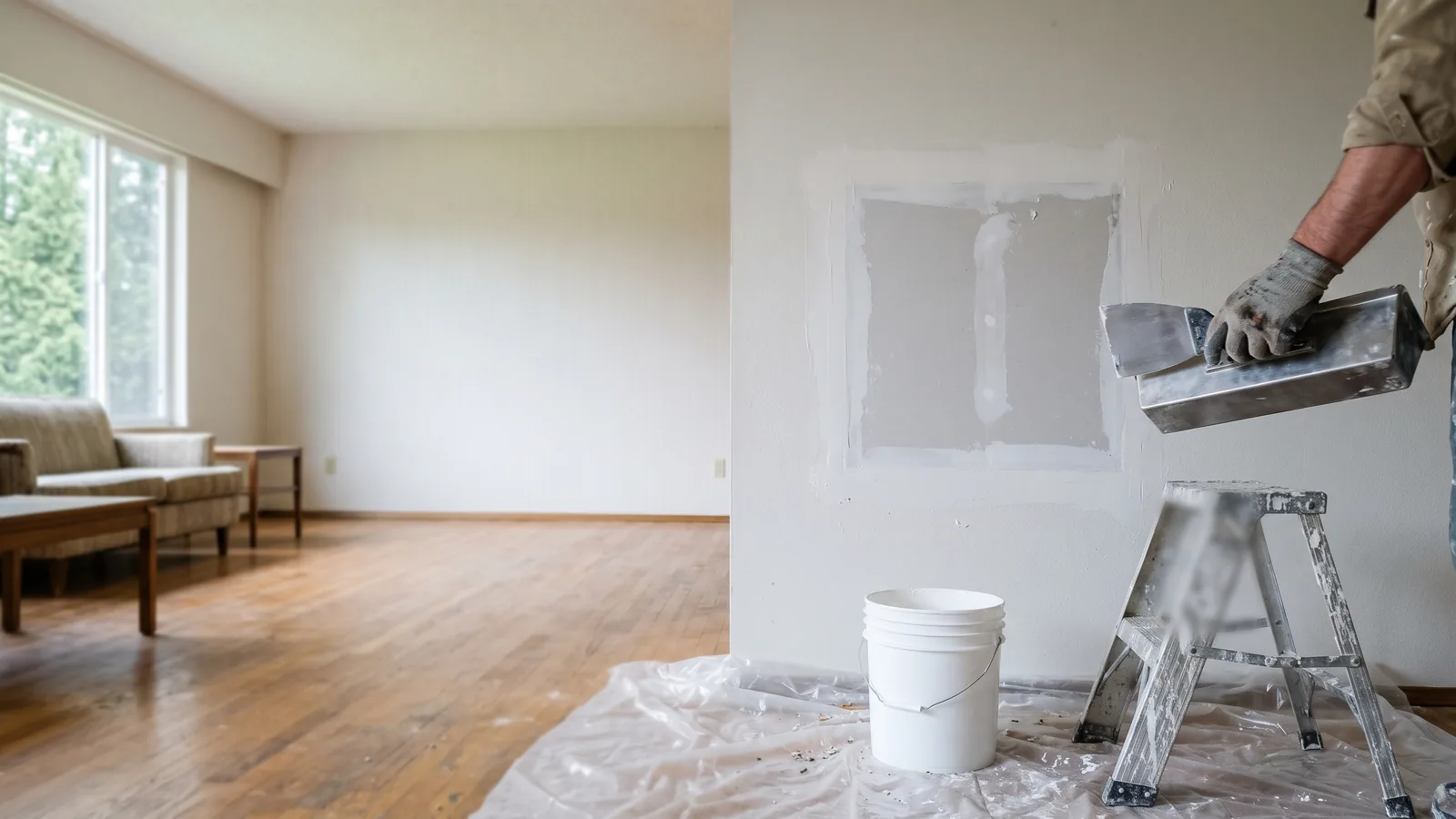
Drywall Repairs in Occupied Commercial Buildings
Repairs in a working building are scheduled around customers and staff, and some of the walls carry ratings the drawings spell out. These are the jobs that come up most, from a dented corridor to a restaurant prep room.
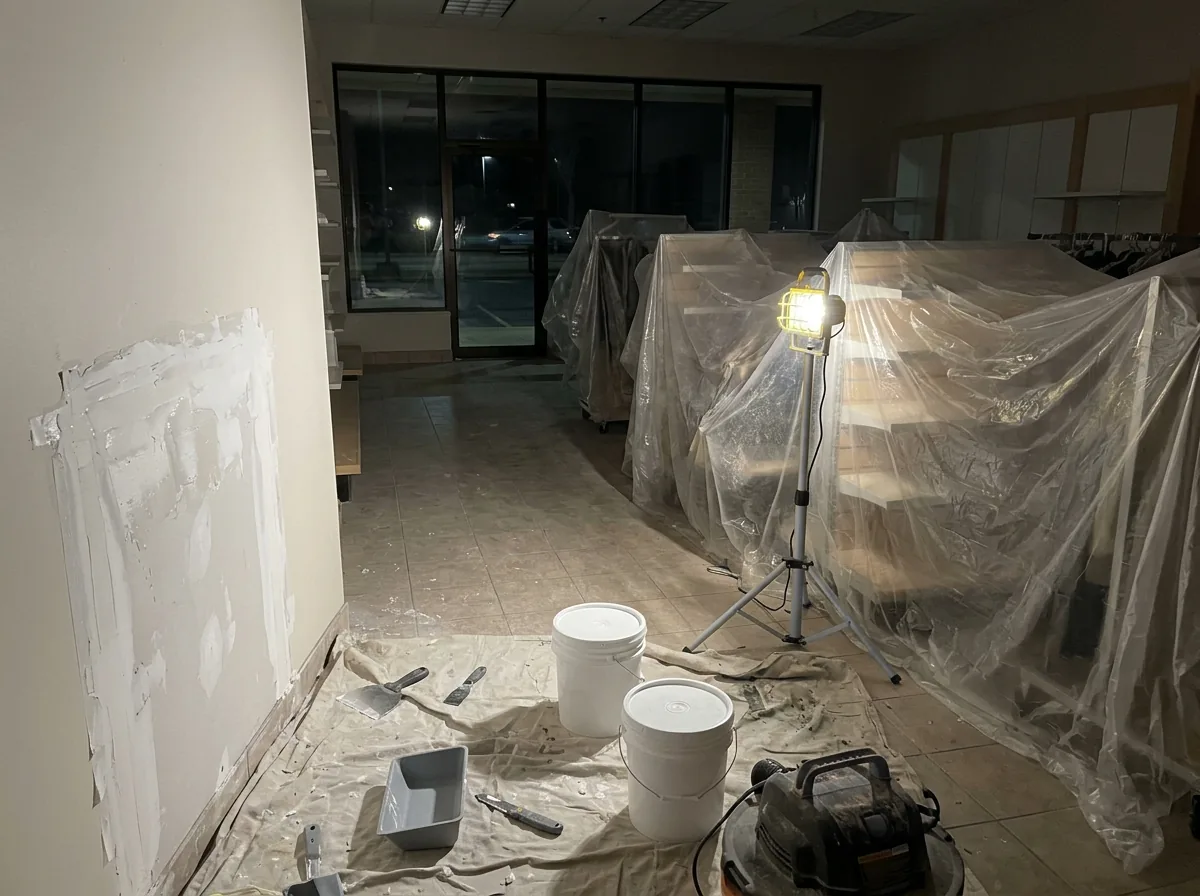
After-Hours Repairs in Open Businesses
The coat-and-dry cycle sets the schedule. With 12 hours or more between coats, a patch that needs tape, finish coats and paint is two or three short visits; ask whether each one can be scheduled after closing. Two things to settle first:
- Heat. USG's compound instructions call for the space to stay at 55°F or warmer while finishing. In a shop or warehouse that drops its heat overnight, ask for it to be left on; the full coat-and-dry method is on the finishing and mudding page.
- Dust. Cutting and sanding are the dusty steps. Ask how they'll be contained and when they'll happen.
Impact Damage in Corridors and Loading Areas
Carts, pallet jacks, chairs and doors tend to hit walls at the same heights. Where one spot keeps getting damaged, impact-resistant board is worth pricing as the replacement (see board types on the new drywall installation page). Dented outside corners need the bead cut out and replaced, as the crack and corner page explains.
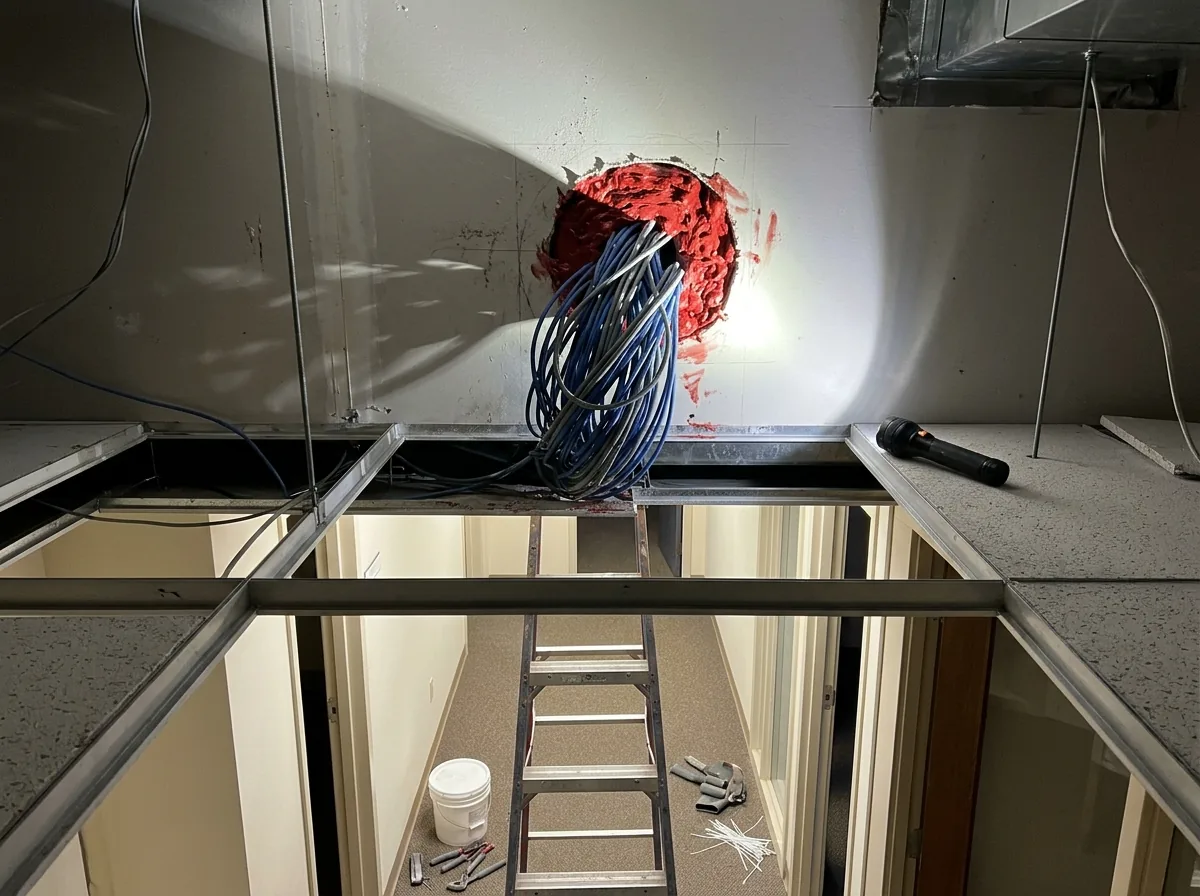
Restoring Rated Walls After New Cabling or Pipes
New data lines, conduit and pipes often pass through rated walls during a refit. IBC section 714 requires each through-penetration to be sealed with an approved firestop system tested to ASTM E814 or UL 1479, with an F rating at least equal to the wall's rating. Boxes and fixtures recessed into one side of the wall can't reduce the rating either (714.4.2). The drywall patch around the penetration matches the wall's existing board type and layers. Ask the building owner for the drawings that show which walls are rated.
Restroom and Kitchen Walls in Food Service
Washington's food code (WAC 246-215-06100) requires wall and ceiling surfaces wherever food is handled to be smooth, durable and easily cleanable, and nonabsorbent in food prep, dishwashing and toilet rooms. A torn or water-stained wall in a kitchen isn't just cosmetic: the repaired surface has to meet that standard. Ask what coating or panel will go over the patched board, and schedule the work for a day the kitchen is closed.
Patch-and-Paint Before an Inspection or Move-In
A suite changing hands often needs a round of patching before the next tenant or the inspector arrives. Kent's commercial page notes that after an inspection you get a list of outstanding items. For flat paint over a patch, the finish level that hides it is laid out on the finishing page. If the work goes beyond repair, such as new walls or a changed layout, it's a tenant improvement with its own Kent permit.
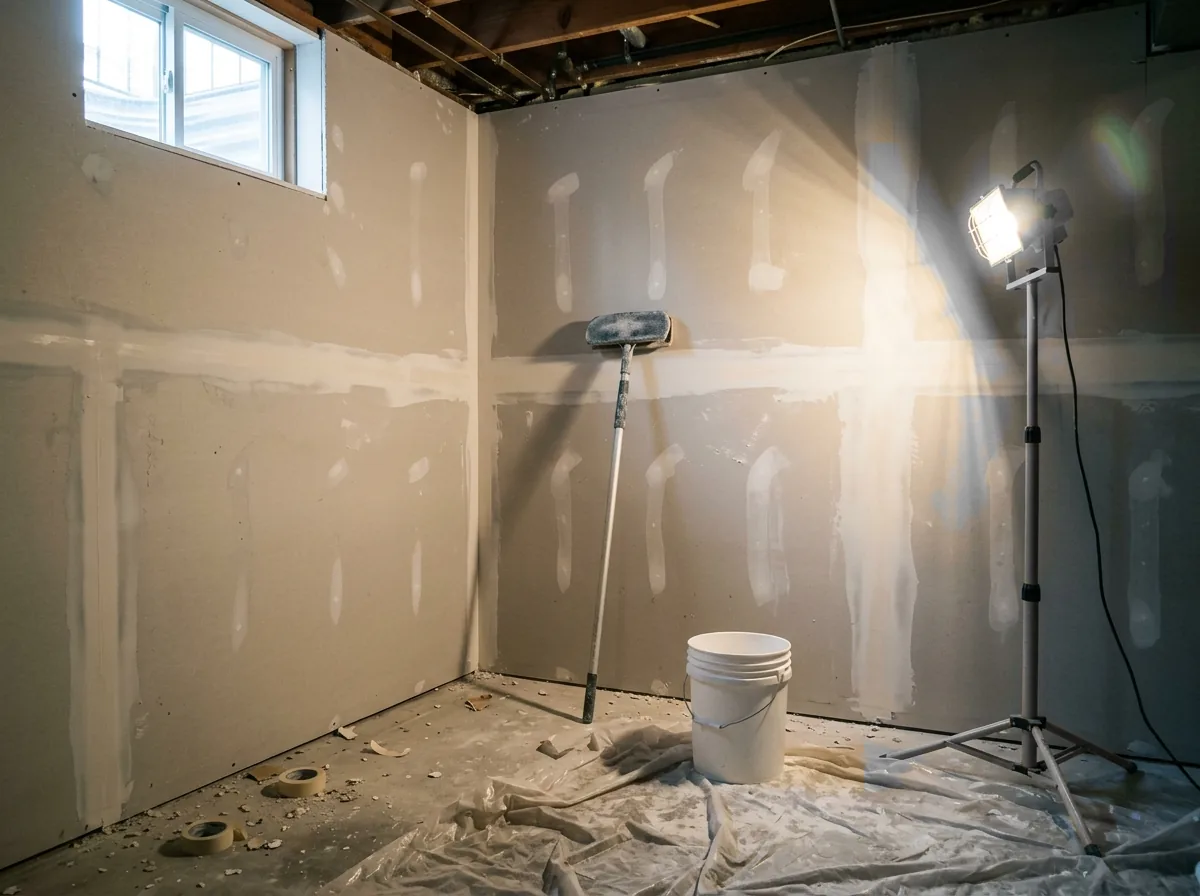
Why Kent homeowners, landlords and businesses call Drywall Repair Kent
- Your request goes to one independent local drywall contractor, not a bidding list
- The referral is free, and booking is up to you
- Ask for the finish level, texture and paint as separate lines
- Check L&I registration and bond before work starts
- Keep the deposit small and pay as the coats are finished
What to Send With a Commercial Request
A commercial repair goes faster when the contractor has the facts before the first visit:
Photos and sizes
of each damaged area, with something in the shot for scale.Access hours
and which areas must stay open during them.Rated walls
the drawings or the building manager's notes on which walls are fire-rated, so the patch and any penetrations can be matched.Who approves the work
owner, tenant or property manager, and who receives the invoice.Paint
the product and color code if you have them, so the patch can be painted to match.
Contractors working inside Kent city limits need a City of Kent business license; that and Kent's commercial permit steps are on the tenant improvement page. Washington's contractor registration rules are on the patching page.