
Soundproof Drywall by Room and Noise Source
What fixes the noise depends on where it comes from. Voices through a wall, bass from a media room and footsteps overhead are three different problems, and the drywall work for each is different.
Shared Walls in Townhomes, Condos and Duplexes
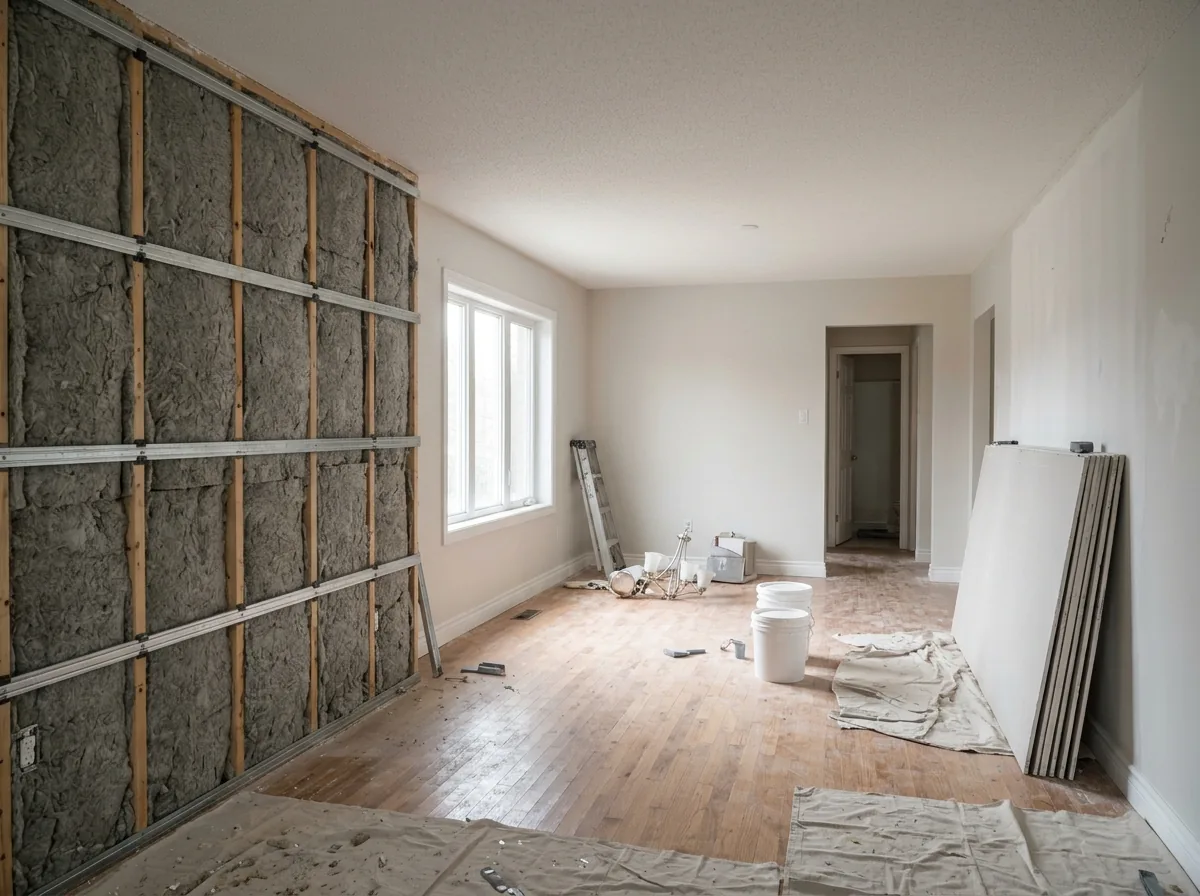
The wall you share with a neighbor is usually a fire-rated wall too, and Washington's townhouse rule (R302.2.2) keeps common walls free of plumbing, ducts and vents. The usual retrofit is a decoupled layer: new board on resilient clips and furring channel, or on resilient channel, over the existing wall. National Gypsum's examples show resilient channel adding 5 STC points and clips doing better than that. For what the separation wall itself must be, see the apartment and rental page.
Bedrooms Beside a Living Room, Laundry or Stairs
If the wall between two rooms has an empty cavity, start there. National Gypsum found that insulating an empty cavity raised its example wall 8 STC points, and that fiberglass and mineral wool give the biggest gains. Spray foam, it notes, adds little, because it hardens into a solid that carries sound. One side comes off, the bays get batts, and new board goes back up, often 5/8-inch, since thicker board transmits less sound than 1/2-inch.
Home Offices and Media Rooms
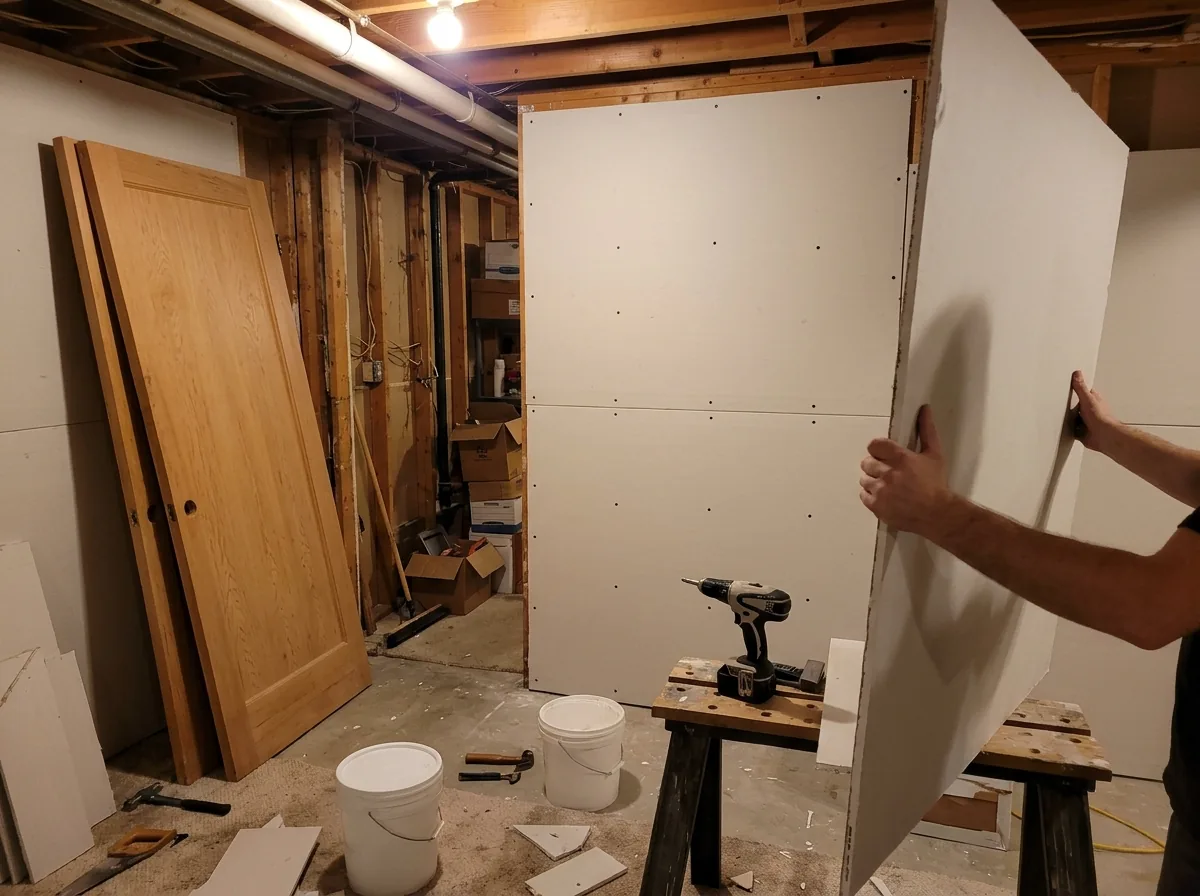
Sound-damping board has a viscoelastic layer between two gypsum faces. National Gypsum reports one layer of it lifting a test wall by 11 points; CertainTeed says its version reaches STC 50 or higher in the right assembly. Two limits to know before paying for it:
- CertainTeed notes STC ratings don't account for low-frequency bass, the noise most media rooms leak.
- A hollow-core door undoes a lot of wall. A heavy solid door passes less sound, per National Gypsum.
Floor-Ceilings Between Levels
Footsteps are impact noise, which STC doesn't measure. The building code rates floors between units separately, asking for an impact rating (IIC) of 50. In a house, the drywall side of the fix is the ceiling below: board hung on resilient channel with insulation in the joist bays. HomeGuide prices soundproofing a ceiling at $150 to $1,200 and a new drywall ceiling at $300 to $600 for a 12x12 room. It also names carpet and rugs as the most effective flooring for sound, which works from the other side.
Walls Facing a Busy Street
On a wall facing the street, look at the window as well as the board. National Gypsum notes energy-efficient windows can raise an exterior wall's STC, and HomeGuide prices a new soundproof window at $550 to $2,000 installed and acoustic caulk at $15 to $100.
Why Kent homeowners, landlords and businesses call Drywall Repair Kent
- Your request goes to one independent local drywall contractor, not a bidding list
- The referral is free, and booking is up to you
- Ask for the finish level, texture and paint as separate lines
- Check L&I registration and bond before work starts
- Keep the deposit small and pay as the coats are finished
What an STC Rating Means, and What Undoes It
STC measures how much airborne sound a whole wall assembly stops; higher is quieter. The test (ASTM E90) plays sound on one side of a lab wall and measures what comes through at 16 frequencies from 125 to 4,000 Hz. National Gypsum stresses that the rating belongs to the assembly, not to a single board, so "STC 50 drywall" only means something inside a tested wall.
The International Building Code, section 1206.2, requires STC 50 for walls and floors between dwelling units (or a field-tested NNIC of 45). The same section lists what breaks a rating: openings for pipes, electrical boxes, recessed cabinets, tubs, soffits and ducts must be sealed, lined or insulated. CertainTeed adds flanking, where sound goes around the wall through floors, ceilings and connected framing.
Ask the contractor which tested assembly the quote is based on, and how the outlets and any recessed lights on that wall will be sealed.
Soundproofing Prices by Room
HomeGuide's national figures with installation:
Bedroom (100-180 sq ft)
$1,000 to $5,400Home office
$1,000 to $5,400Home theater (200-300 sq ft)
$2,000 to $9,000Soundproof drywall
$30 to $100 per 4x8 panel, material only
They're guide averages from across the country, useful for checking whether a written quote is in the right range. For your own room, ask for that quote in writing once the wall has been looked at. HomeGuide's single-wall range is $100 to $2,000.