
Drywall Board Types
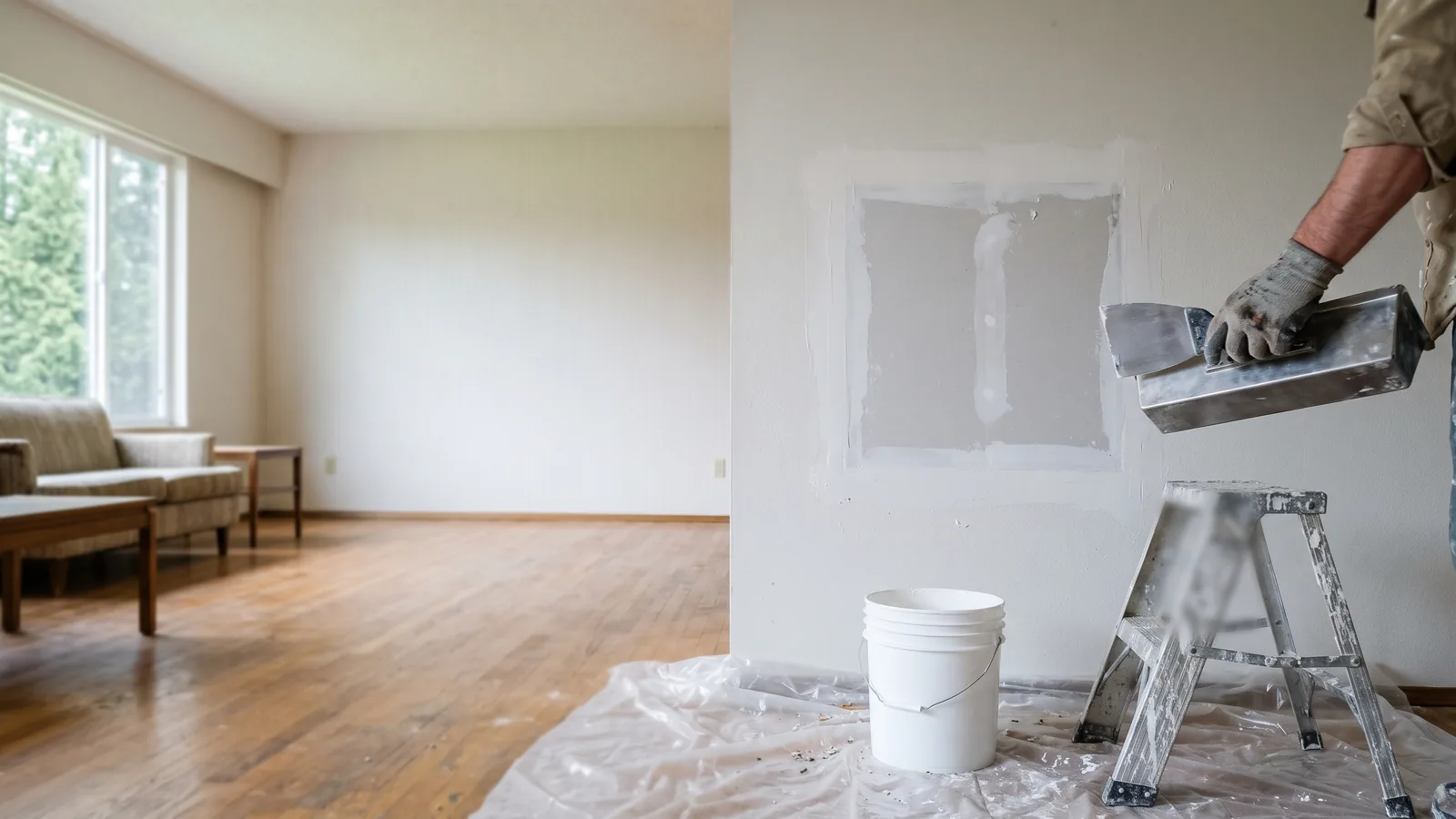
Most new drywall is 1/2-inch or 5/8-inch board in 4-by-8, 4-by-10 or 4-by-12 sheets, and HomeGuide lists the sheets at $10 to $20 each. Thinner 1/4-inch and 3/8-inch panels are kept for repairs and curved walls. What changes from room to room is the core and the face of the board, and the right choice depends on the room.
1/2-Inch Regular Board for Interior Walls
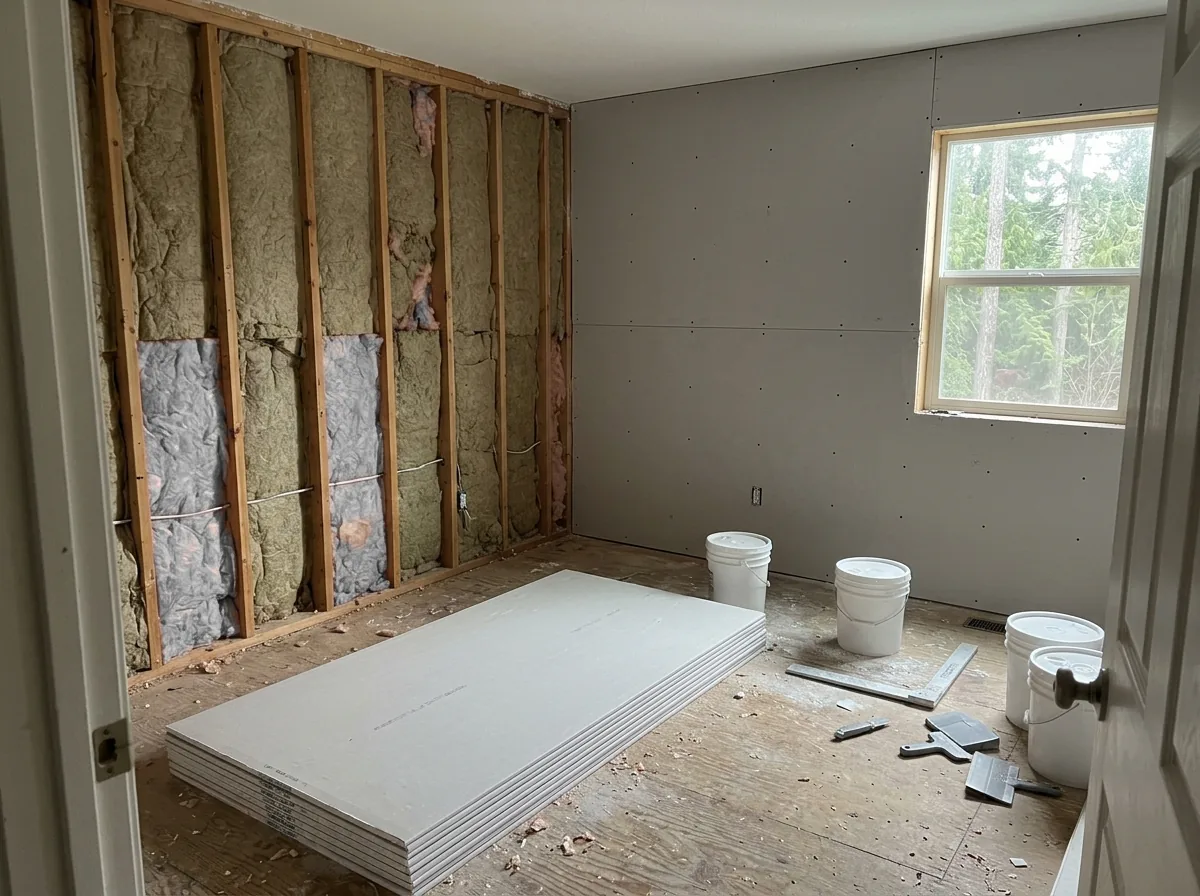
Standard 1/2-inch board covers most bedroom, hallway and living room walls in a house. Hanging it without finishing runs $0.85 to $1.90 per square foot in HomeGuide's data, and taping and mudding adds $0.35 to $1.10. For wood studs, the residential code calls for screws every 12 to 16 inches on walls (depending on framing), driven at least 5/8 inch into the wood. Long sheets mean fewer joints, so ask whether the contractor plans 8, 10 or 12-foot sheets for each wall.
5/8-Inch and Sag-Resistant Board for Ceilings
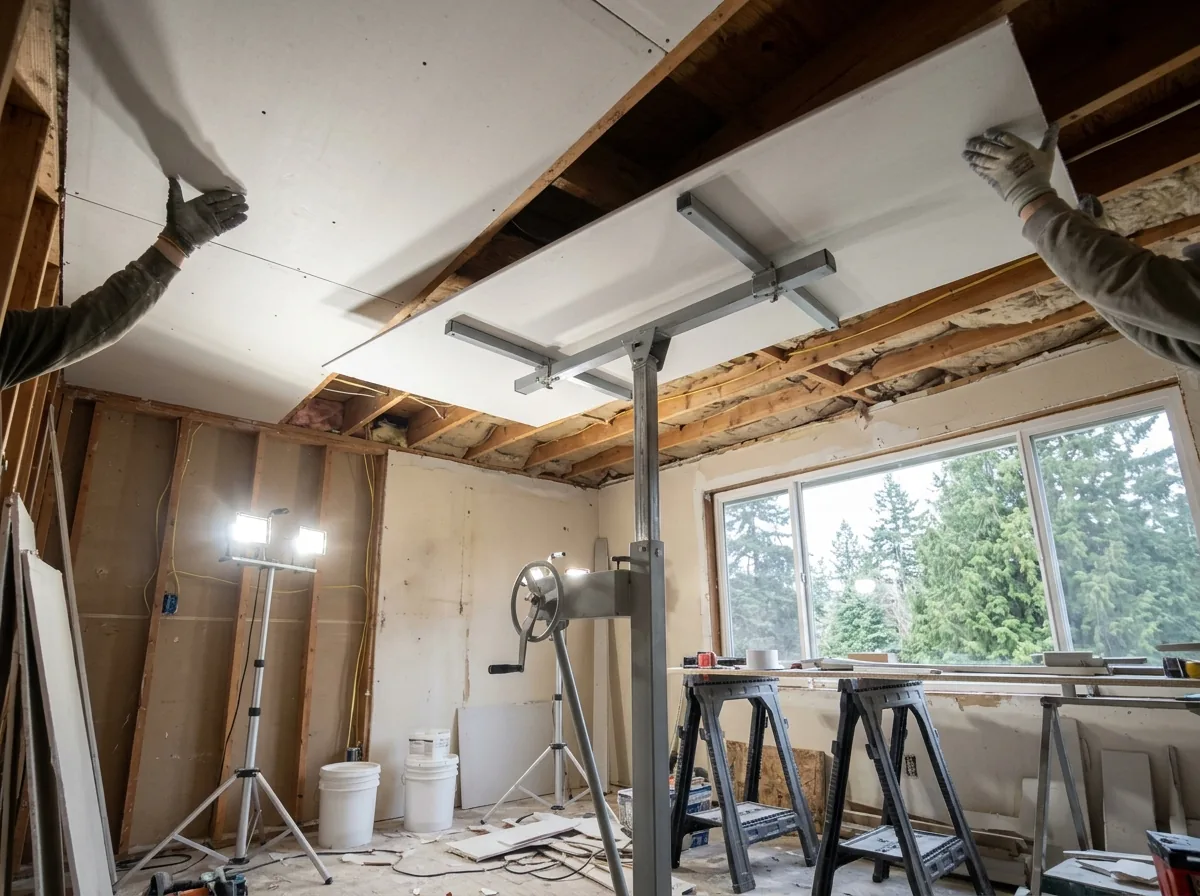
Ceilings carry their own weight plus any texture, and that pulls board downward over time. National Gypsum calls for a sag-resistant 1/2-inch board on ceilings when:
- a water-based texture will be sprayed on,
- the framing is 24 inches on center rather than 16, or
- the ceiling load will exceed 1.3 pounds per square foot.
"Sag-resistant" applies only to 1/2-inch products; it means the board beats the sag limits set for 5/8-inch board. Ceiling board goes on perpendicular to the joists, since gypsum is strongest along the long edge. Code thickness and screw spacing for ceilings are on the ceiling drywall repair page.
Moisture- and Mold-Resistant Board for Baths, Laundry and Basements
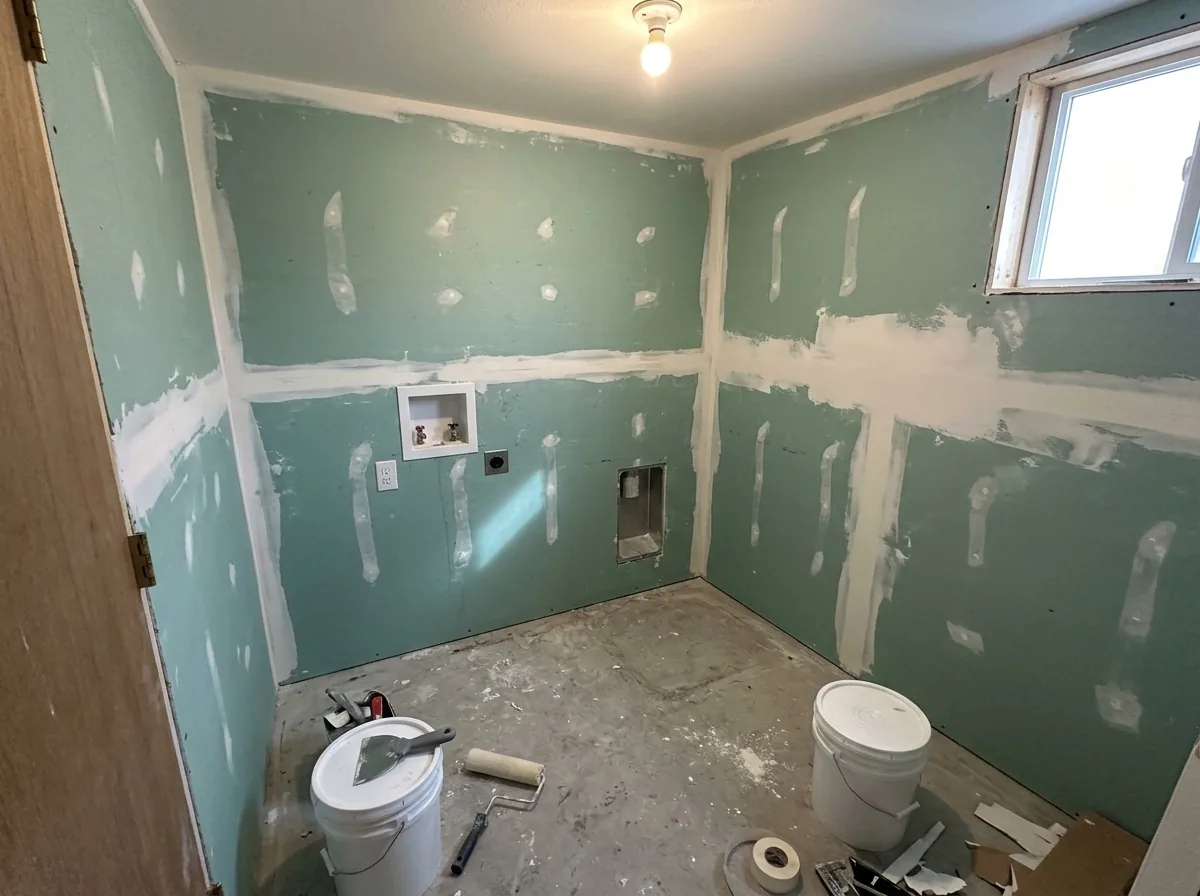
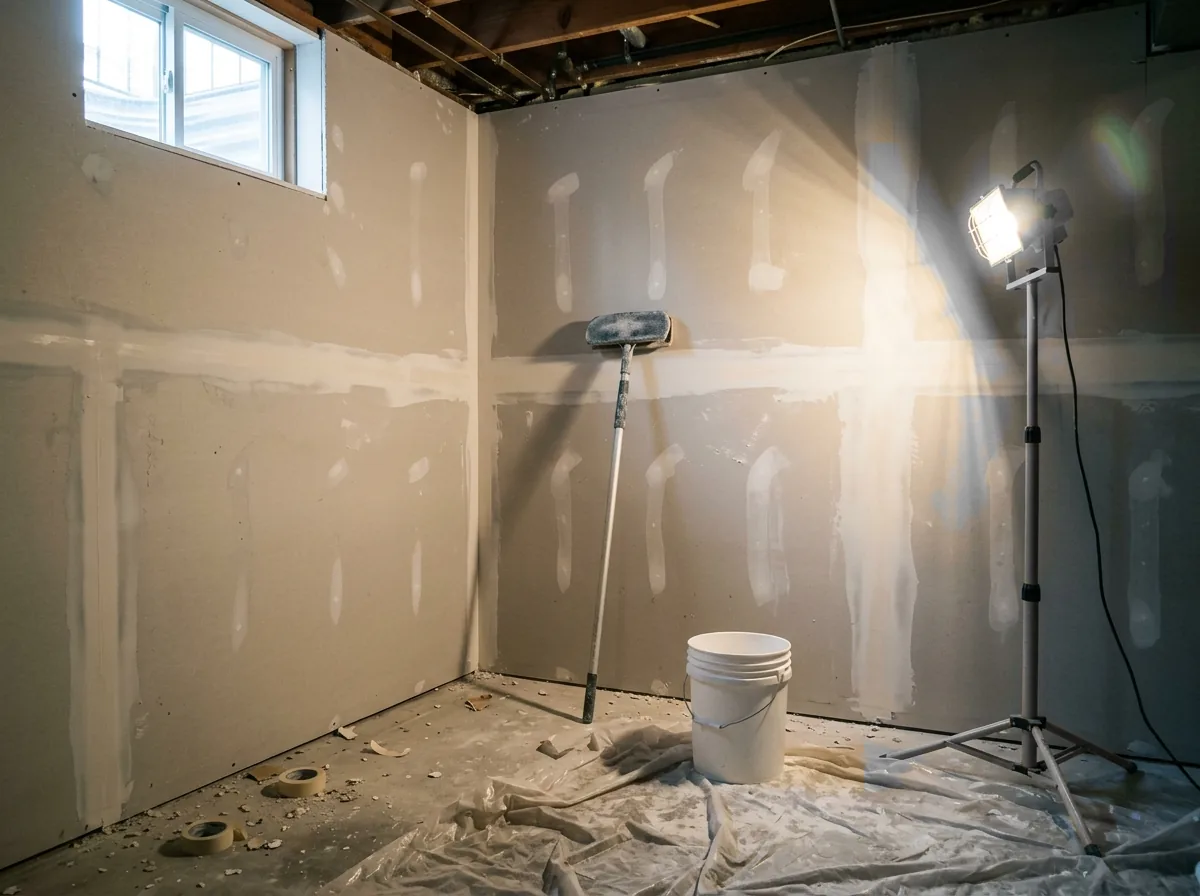
Fixr lists moisture-resistant ("green") board for bathrooms, basements and other damp rooms, and mold-resistant ("purple") board where extra protection is wanted; both run $1.65 to $2.75 per square foot installed. Mold resistance is tested under ASTM D3273, scored 0 to 10, and USG's own page says products alone cannot control moisture or prevent mold: a fan, a dry slab and fixed leaks still matter. Water-resistant board has limits, too. The code keeps it out of areas with direct water exposure or continuous high humidity, and tub and shower walls under tile need a listed backer instead (glass-mat or fiber-reinforced gypsum, fiber-cement, or cement board units). Basement wall and slab details are on the basement drywall page.
Type X Where the Code Calls for Fire Rating
Type X is the fire-resistive board in ASTM C1396; in 5/8-inch thickness it gives at least a one-hour rating in the standard tested wall. Fixr prices it at $1.60 to $3.50 per square foot installed. In a house, the common place for it is a garage ceiling below a bedroom or bonus room. Those rules and fastening details are on the garage firewall drywall page.
Abuse- and Impact-Resistant Board for Hallways, Mudrooms and Garages
National Gypsum splits tougher boards into two groups. Abuse-resistant board has a stronger paper or fiberglass face that resists scuffs and dents. Impact-resistant board adds a mesh layer inside to keep a hard hit from breaking through into the stud cavity. Both are graded Level I to III under ASTM C1629. For homes, the manufacturer points to laundry rooms, hallways and stairwells for abuse-resistant board and to recreation rooms, garages and mudrooms for impact-resistant board. It hangs like standard drywall, though a fiberglass face may need a skim coat for a smooth finish.
Why Kent homeowners, landlords and businesses call Drywall Repair Kent
- Your request goes to one independent local drywall contractor, not a bidding list
- The referral is free, and booking is up to you
- Ask for the finish level, texture and paint as separate lines
- Check L&I registration and bond before work starts
- Keep the deposit small and pay as the coats are finished
Hang-and-Finish Pricing and Schedule
The figures below are national cost-guide ranges. They give you a yardstick for reading a bid; ask the contractor for a written price once they've measured your rooms.
HomeGuide room totals:
| Room | Hung and finished (HomeGuide) |
|---|---|
| 5-by-8 bathroom | $300 to $1,000 |
| 12-by-12 bedroom | $580 to $1,800 |
| 16-by-20 living room | $850 to $3,100 |
| 1,000 square foot basement | $1,500 to $7,000 |
Fixr's national average is $2,000 for 1,000 square feet of 1/2-inch board, hung and finished, within a $1,600 to $3,500 range. Tearing out old drywall first adds $0.50 to $2.50 per square foot, and texture adds $0.80 to $2.00. The finish level also moves the price; HomeGuide's levels run from $0.85 per square foot for Level 0 up to $3.50 for Level 5, explained on the finishing and mudding page.
Most of the schedule is drying time between coats of compound. USG asks for the space to be kept at 55°F or warmer while compound is applied, so a cold garage or an unheated addition in winter may need heat on before finishing starts.
Kent Permits for New Drywall
Kent requires a residential building permit for most construction, alteration or repair work, including changes to the structure or the living space and work on electrical, gas, mechanical or plumbing systems. The city's list of work exempt from permit names "painting, papering, tiling, carpeting, cabinets, counter tops and similar finish work"; drywall is not named. Reading those two together:
Patching and like-for-like repair
reads as finish work and usually needs no permit. HomeGuide says the same nationally.New walls, a finished basement or attic, and any job that opens plumbing, wiring or structure
most likely count as alteration and need a permit; HomeGuide says new walls and basement or attic finishing do, and the Permit Center (253-856-5300) can confirm for your job. Kent's alteration handout says altered portions must meet the 2021 IRC, the 2021 Uniform Plumbing Code and the 2021 Washington State Energy Code.
Kent's 2026 fees are based on project value: $52.82 for work valued at $1 to $500, and $155.95 for the first $2,000 plus $31.55 for each added $1,000 up to $25,000. Reinspections are billed at $193.63 an hour, and an investigation fee applies when work starts before a required permit. Applications and inspection requests go through the city's online portal; the Kent Permit Center is at 400 W. Gowe St. (253-856-5300). Ask the contractor, before the quote is signed, who will apply for the permit and book the inspections.