
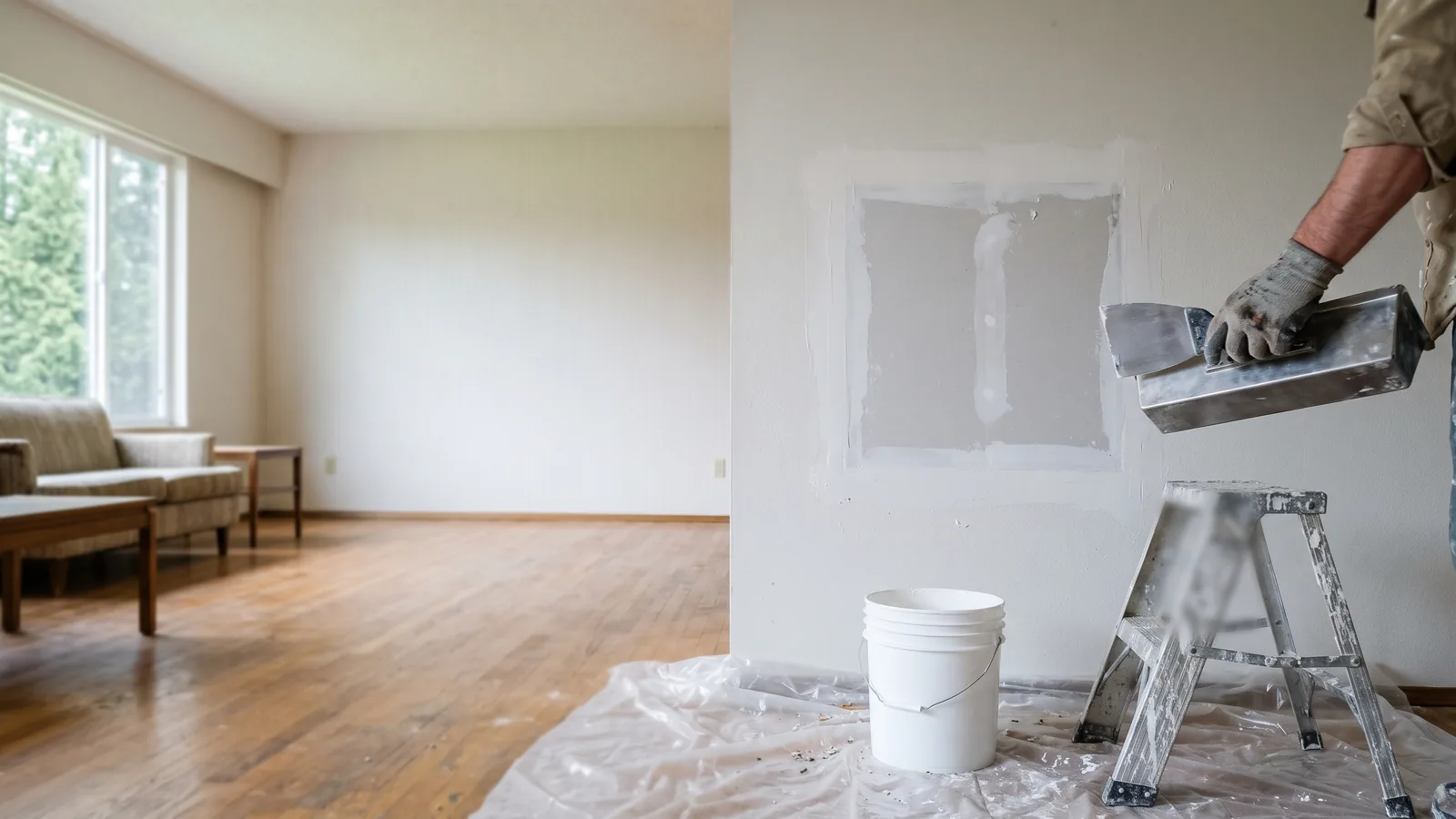
What Can Stay and What Comes Out After a Leak
EPA's water-damage cleanup table, from its mold remediation guide for schools and commercial buildings, gives one rule for wallboard and a separate one for what sits behind it. Taken together, they sort most leak damage into the five cases below. The checks all happen after the water is shut off and the source is fixed.
Stained but Still-Firm Board
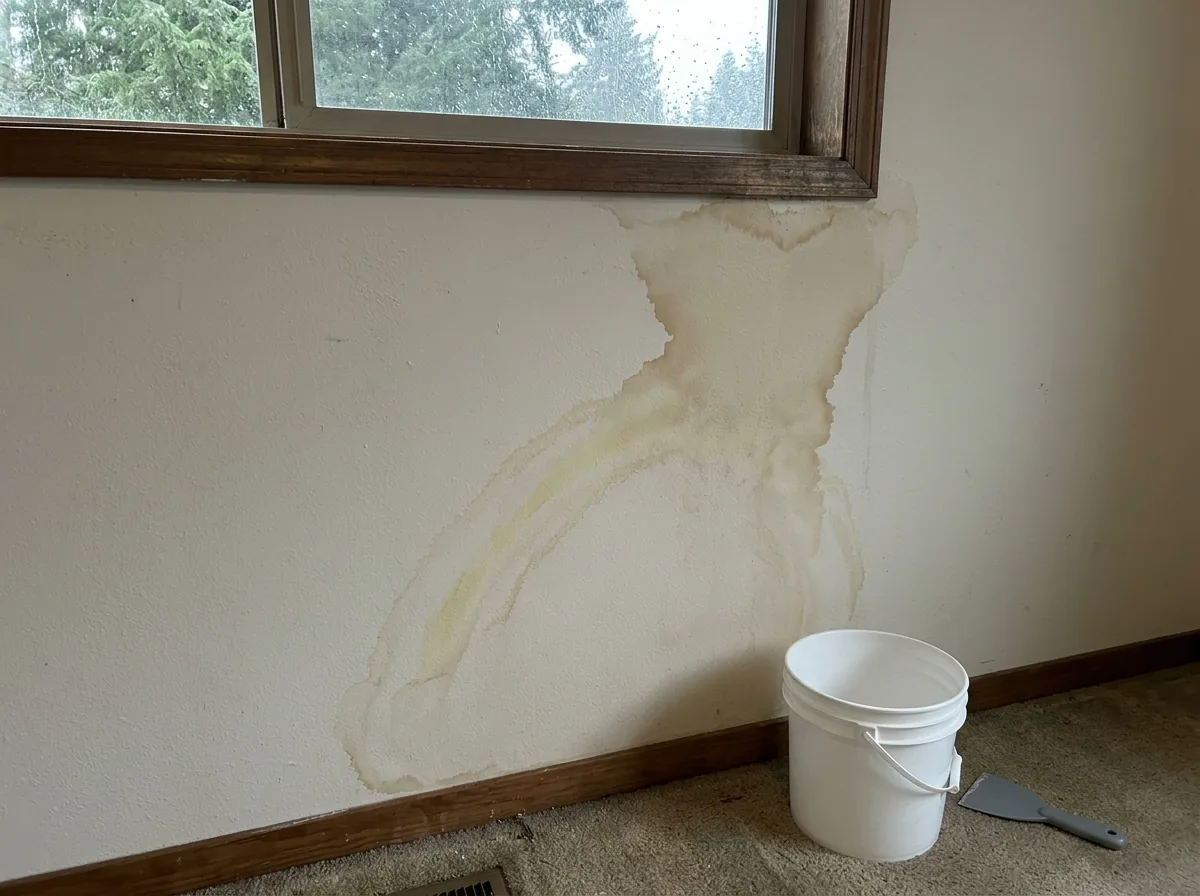
A tide line on a wall that has dried out, with no bulge and no soft spots when pressed, is often a paint job rather than a drywall job. EPA's test is whether the board shows obvious swelling and whether the seams are intact; if both pass, the board may be dried in place. The stain still needs a stain-blocking primer before paint; the ceiling water damage page covers that step.
Soft, Swollen or Crumbling Board
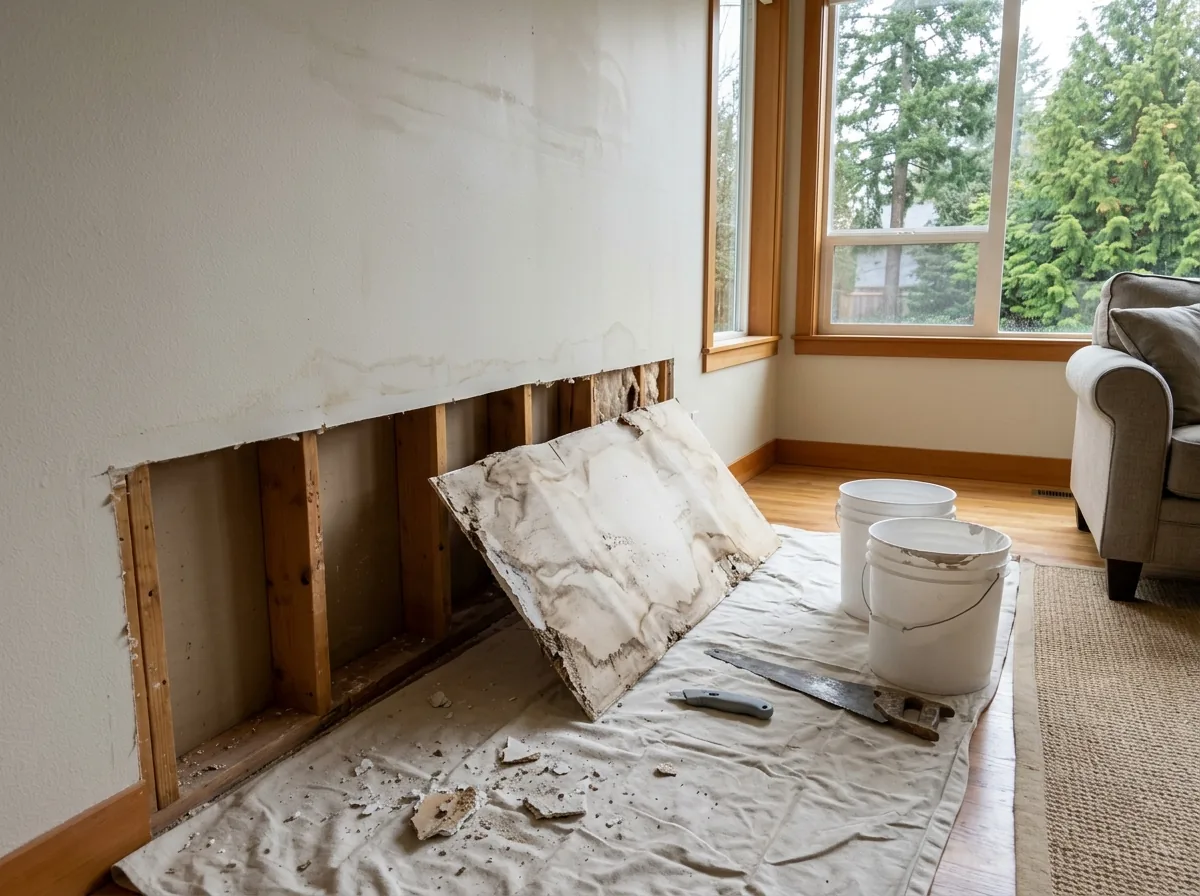
Board that bulges, sags or gives under a thumb fails EPA's swelling test, and the direction for it is to remove, discard and replace it rather than wait for it to dry. On a repair quote this shows up as square feet of tear-out and new board; the per-square-foot figures are in the cost section below.
Wet Insulation and Framing Behind the Board
Once a wall is open, the insulation decides the next step. EPA's table says wet fiberglass and wet cellulose insulation are discarded and replaced, not dried. Wood studs and plates are dried with dehumidifiers, gentle heat and fans, and EPA suggests ventilating the wall cavity where possible. Ask for the new insulation to be listed on the estimate as its own line.
Low Cuts Where Water Wicked Up From the Floor
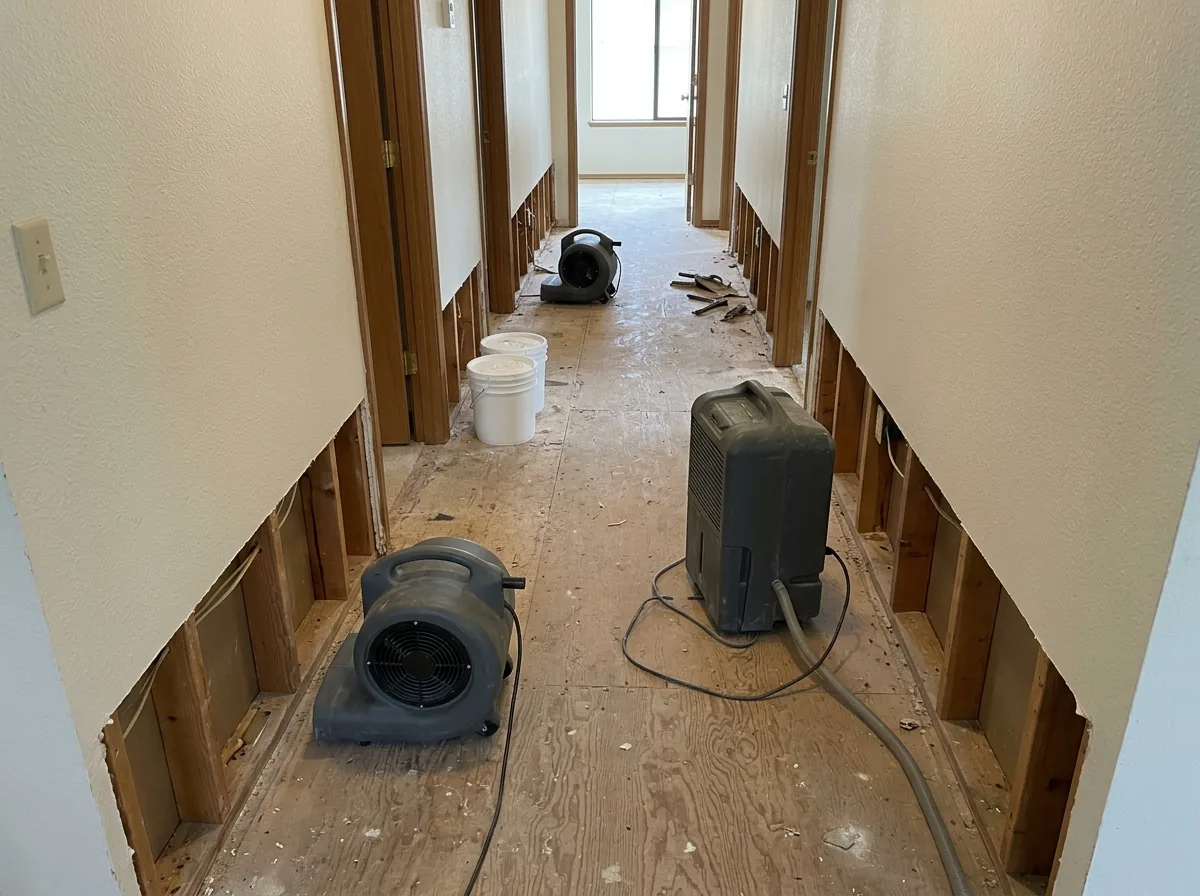
When water spreads across a floor, the bottom of every wall it reaches can wick it up. HomeGuide's restoration guide describes the last step of a cleanup as replacing whatever couldn't be saved below the flood line: flooring, drywall, trim and subfloor. Ask where the cut line will be. A straight, level cut above the wet zone lets one long strip of new board go back in, with a single seam to tape instead of a ragged edge following the stain.
Tape, Seams and Corner Bead Loosened by Water
EPA's test checks the seams as well as the board, so a joint that has opened or bubbled fails it even when the board beside it looks firm. Angi prices joint and seam repairs at $40 to $200 and corner bead at $50 to $160, but a seam that has opened from water usually sits next to board that also needs checking. Cracks and bead damage from other causes are on the crack and nail pop page.
Why Kent homeowners, landlords and businesses call Drywall Repair Kent
- Your request goes to one independent local drywall contractor, not a bidding list
- The referral is free, and booking is up to you
- Ask for the finish level, texture and paint as separate lines
- Check L&I registration and bond before work starts
- Keep the deposit small and pay as the coats are finished
Drying First: The 24 to 48 Hour Window
EPA's guidance on mold and moisture is to dry water-damaged areas and items within 24 to 48 hours. Its cleanup table is written for that same window: past 48 hours, or once growth appears, it sends readers to its mold remediation guidance instead. EPA adds that growth may happen even when materials dry in time, and that it won't always happen after 48 hours; the window is a rule of thumb in both directions.
The kind of water changes the job as much as the timing. HomeGuide's restoration guide sorts it into three categories: clean water from a broken supply line, a faucet or rain; gray water from an overflowing dishwasher or washing machine; and black water from toilets, sewer backups or groundwater. Extraction and drying run $4 to $6, $6 to $9 and $9 to $12 per square foot across those three, and anything black water touches, drywall included, is removed and replaced.
What the window means in practice:
Stop the water first
A plumber or roofer fixes the source; drywall goes back only after that.Find out what kind of water it was
EPA's table assumes clean water. With sewage or other contaminated water, it calls for protective gear and containment and says not to use fans until the water is known to be clean.Dry before closing up
New board over damp studs traps the moisture in the wall. Rain-driven leaks and Kent's wet season are covered on the ceiling leak page.Look for mold before rebuilding
If you see growth, the moldy drywall page explains EPA's size line for small spots versus larger jobs.
Repair or Replace, and What the Bill Covers
National cost guides separate the drywall work from the cleanup around it, and a Kent quote will usually do the same. These are national figures, so treat them as a check on a bid, not as a price:
Drywall repair after water damage
$600 to $1,550 (HomeAdvisor), among the costlier drywall repairs because whole sections come outReplacing drywall, including tear-out
$2 to $6 per square foot (HomeGuide)Water extraction and drying by a restoration company
$4 to $12 per square foot, by water category (HomeGuide)A small leak in one area of one room
$150 to $500 for the whole restoration, in HomeGuide's Class 1 tier
HomeGuide suggests replacing rather than repairing when damage covers more than 60 percent of a wall, along with walls that have widespread cracking. Below that line, cutting out the wet section and setting new board is the usual route. Matching texture and paint over a large replaced area adds to the bill; the texture matching page has those costs.
When two quotes look far apart, compare them line by line. A complete water-damage drywall quote usually names:
- tear-out and haul-away of the wet board
- new insulation, if the old batts got wet
- new board, with its type (standard or moisture-resistant)
- taping and the finish level
- texture match, primer and paint, or a note that painting is yours