
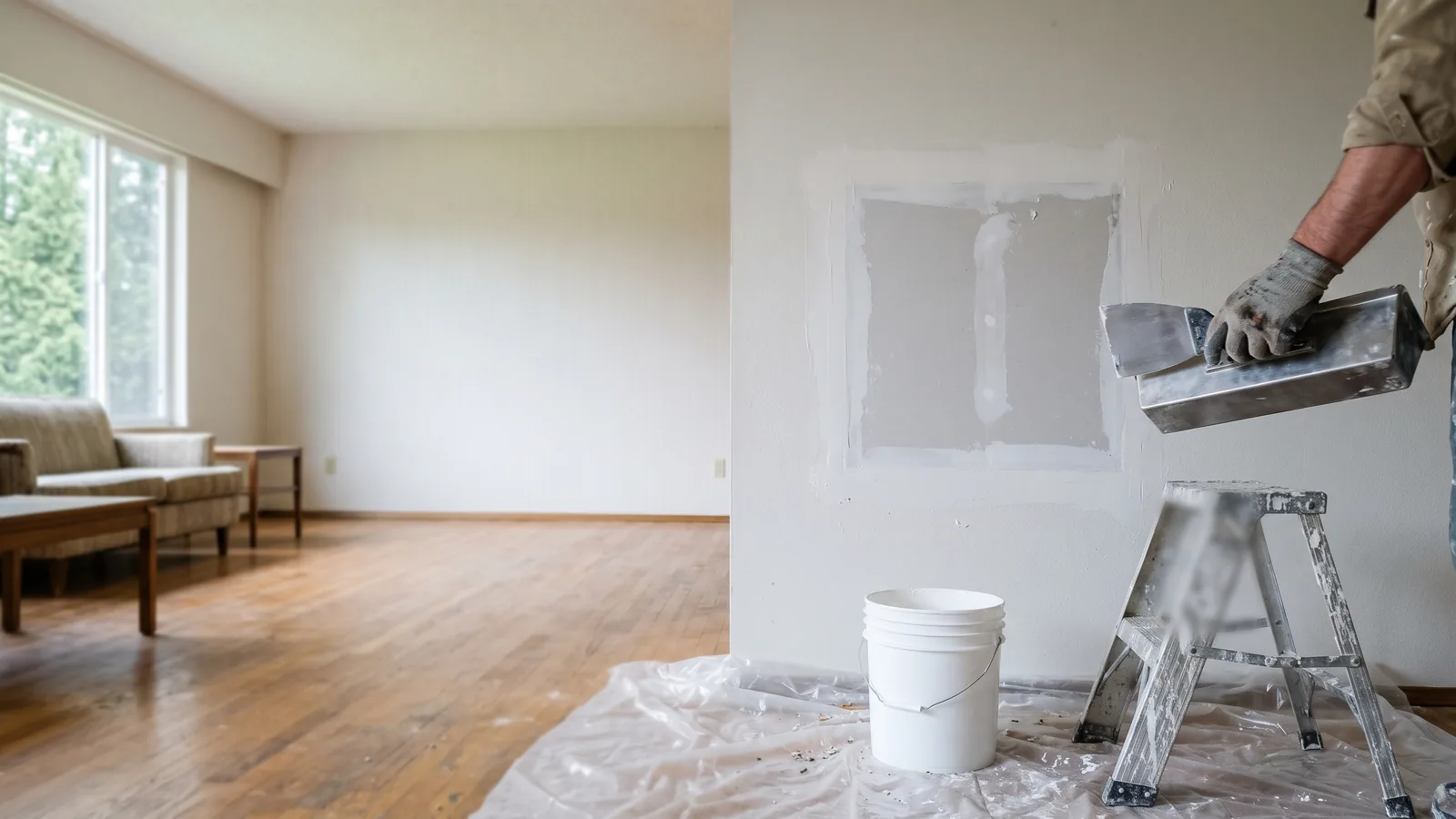
How Holes Get Patched, Smallest to Largest
The method depends on the size of the hole and what sits behind it. Bob Vila's guide breaks the work into three sizes (small, medium and large), and the sections below follow the same order, with one step added for openings too big for a single cut-in piece.
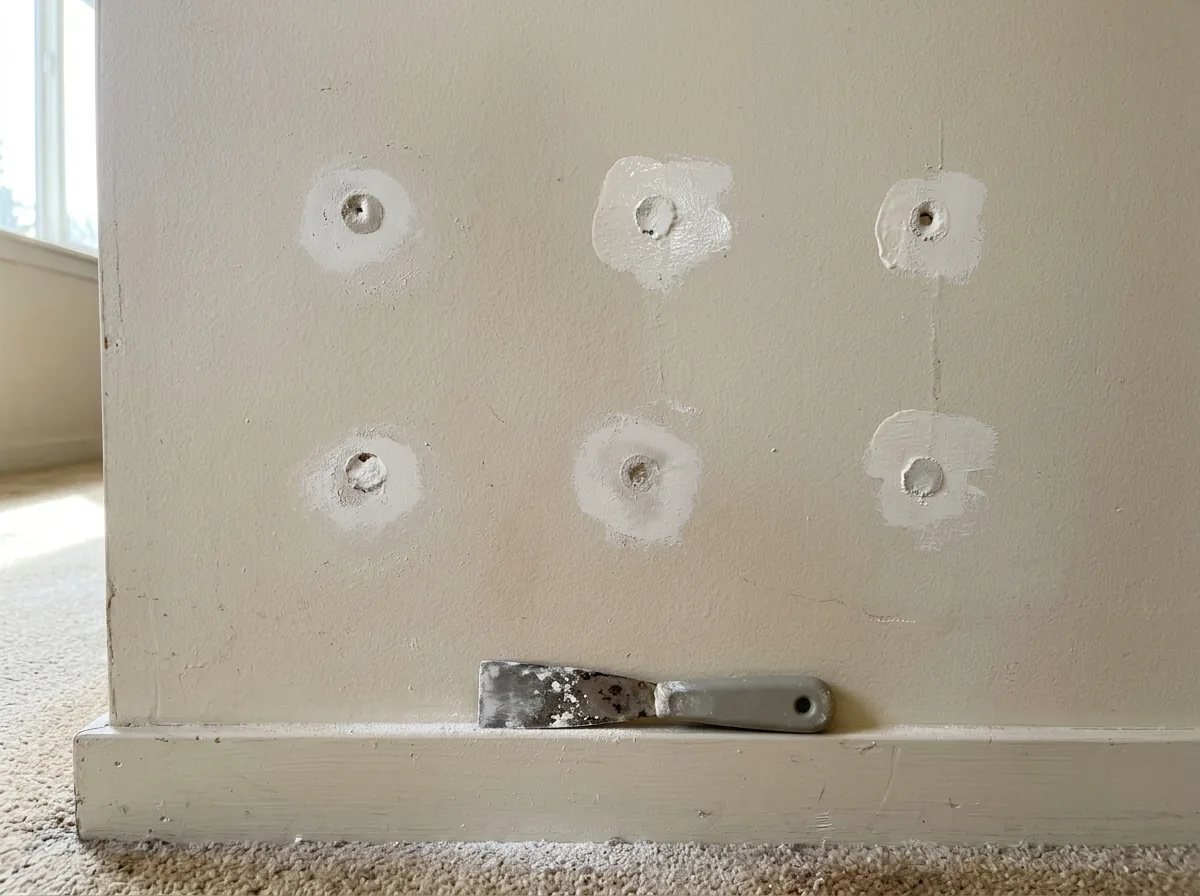
Screw, Nail and Anchor Holes Filled and Spot-Primed
Picture hooks, curtain rods and pulled-out plastic anchors leave the smallest holes. They need no tape, just filler pressed in, scraped flat and spot-primed before paint. The cost guides price these small jobs very differently:
- Anchor holes: $75 to $100 in HomeAdvisor's table
- Small holes up to 4 inches: $20 to $120 each on Angi's 2026 page, up to $300 for several
- The same small hole: $300 to $500 on HomeGuide, which counts the full trip
The gap between those numbers is mostly the visit: HomeGuide says a 1 square foot repair and a 6 square foot one take about the same setup. A row of popped screw heads is a separate fault; see drywall crack and nail pop repair.
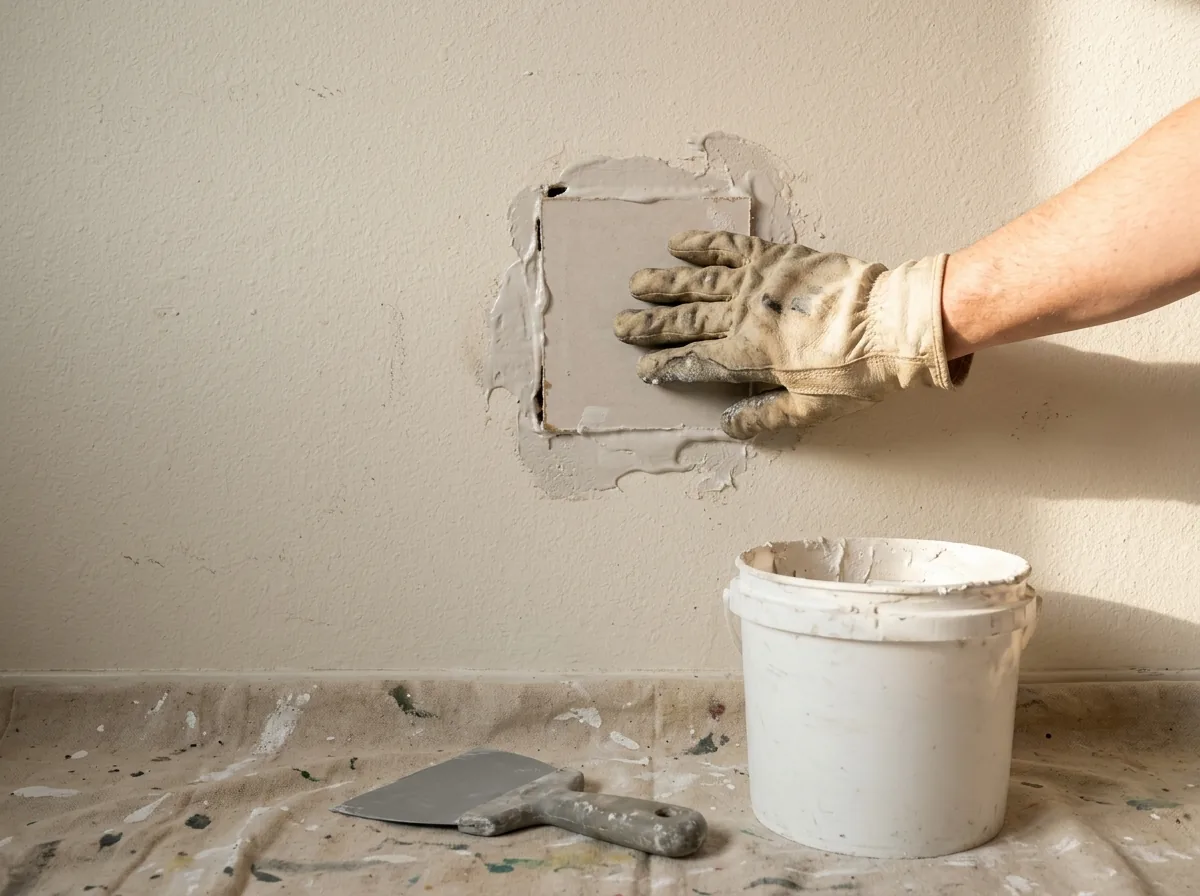
Doorknob and Fist-Size Holes: Mesh or California Patch
A hole of 1 to 2 inches gets self-adhesive mesh tape over it, then joint compound spread past the edges of the mesh (Bob Vila). Once a hole passes about 3 inches, many finishers switch to a California patch: a piece of new board cut an inch larger on every side, with the gypsum snapped off the back of that extra inch so only the face paper is left. The plug fills the hole, and the paper flange gets bedded in compound like tape. Ask which one the contractor plans to use; a mesh patch on a larger hole can leave a slight hump that shows under paint.
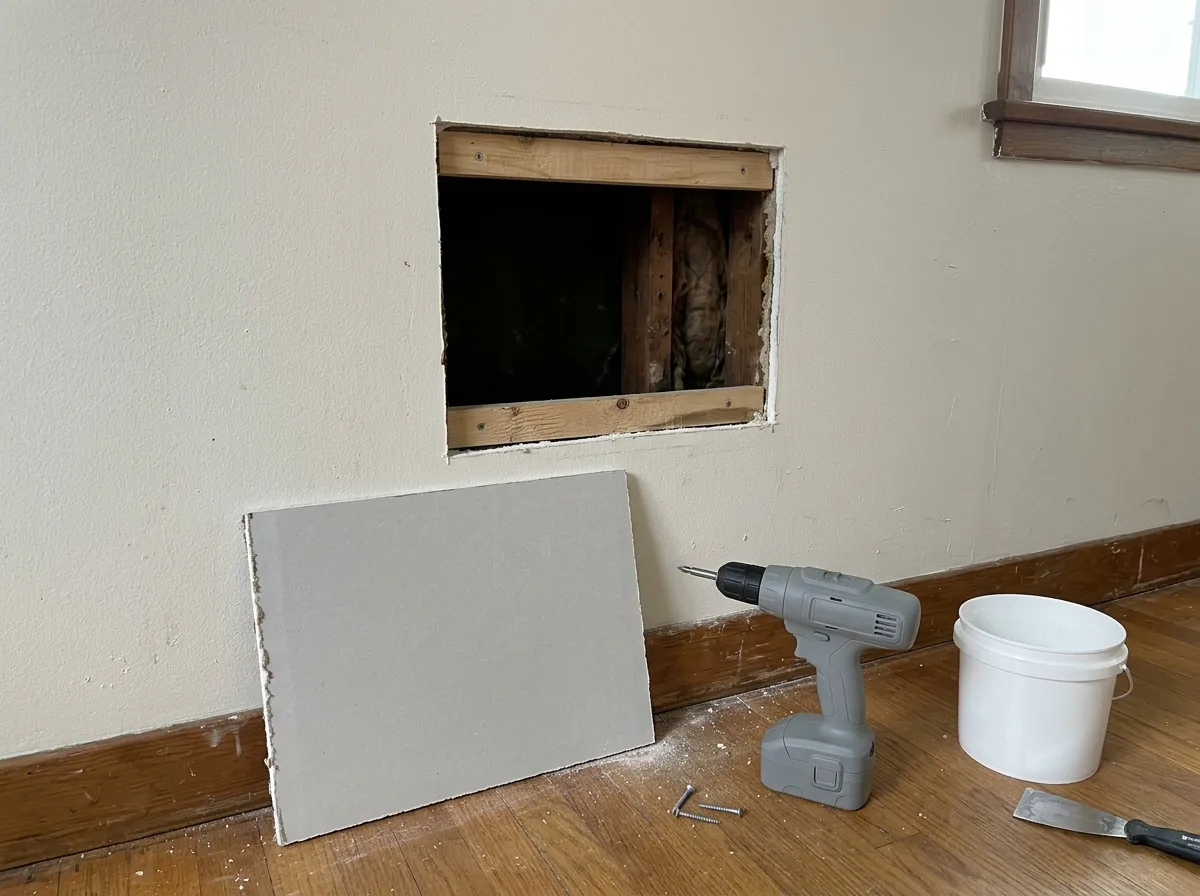
Holes Up to About a Foot: Backed Patch on Wood Cleats
Bigger holes need something solid to screw into. The damaged area is cut to a clean rectangle, and if no stud sits at the edge, a piece of wood is fastened across the opening between the nearest studs (Bob Vila). A new piece of board cut to the exact size is screwed to that backing, the seams are taped, and the screw heads get compound along with them. Angi prices holes of 5 inches and up at $50 to $75 per square foot, so a 2-square-foot patch lands near $100 to $150 before paint.
Openings Bigger Than That: New Board Cut Back to the Studs
For a hole wider than a stud bay, or a run of damage along a wall, HomeGuide prices larger repairs across rooms or whole sheets at $3 to $8 per square foot, and it suggests replacing rather than repairing once damage covers more than 60 percent of a wall. If the board around the hole is soft or stained, the cause is water, not impact; that job is on the water-damaged drywall page. Holes left by a plumber or electrician are covered under drywall repair after plumbing work.
Blending a Patch Into Paint and Texture
A smooth patch on a textured wall shows from across the room, and so does new paint on old. Angi puts retexturing at about $1 per square foot and says painting is almost always needed afterward. Matching orange peel, knockdown or a hand texture is a job of its own; see drywall texture matching for the methods and what paint matching adds.
Why Kent homeowners, landlords and businesses call Drywall Repair Kent
- Your request goes to one independent local drywall contractor, not a bidding list
- The referral is free, and booking is up to you
- Ask for the finish level, texture and paint as separate lines
- Check L&I registration and bond before work starts
- Keep the deposit small and pay as the coats are finished
What Patching Costs, and Why Small Jobs Carry a Minimum
Each cost guide here publishes national figures, and none we found has a current one for Kent, so the contractor's written quote is the number that counts. Labor makes up most of any patch bill: HomeGuide puts it at 50 to 70 percent or more, at $60 to $150 an hour for drywall work. That is why a single nail hole and a fist-size hole can cost close to the same amount, and why many contractors set a minimum charge for each visit (the homepage cost section lists the range).
Ways to get more from one visit:
Say how the wall is finished
smooth, orange peel, knockdown or hand texture. HomeAdvisor's guide says painting and texturing to blend can add $150 to $900.Have the paint can or color name ready
, or ask for primer only if you plan to paint yourself.Mention the age of the house
Patching that disturbs paint in a pre-1978 home falls under lead-safe rules unless it stays at 6 square feet or less per room (lead rules on the plaster page), and King County's asbestos survey rule is explained on the popcorn ceiling page.
Who May Patch Drywall for Pay in Washington
Washington requires every construction contractor to register with the Department of Labor and Industries (L&I) and to be bonded and insured. Drywall is its own L&I specialty: it covers hanging gypsum board and the taping, priming and texturing that follow. The numbers to know:
Bond
$30,000 for a general contractor, $15,000 for a specialty contractor such as drywall (amounts raised July 1, 2024)Liability insurance
$200,000 public liability plus $50,000 property damage, or a $250,000 combined single limitHandyman specialty
one person, no employees, minor repair jobs under $2,000 in time and materials, and nothing that needs a building permitExemption
casual, minor jobs under $500 in total, but not for anyone who advertises or breaks a job into pieces to stay under the limitYour own home
owners working on their own property don't need to register
Working unregistered is a gross misdemeanor for each worksite. Before anyone starts, look the business up on L&I's Verify a Contractor tool, which shows whether the registration is active, the bond, any lawsuits against the bond, and workers' comp coverage. On a residential job of $1,000 or more, state law has the contractor hand you a disclosure statement about lien rights; keep it with the written estimate.